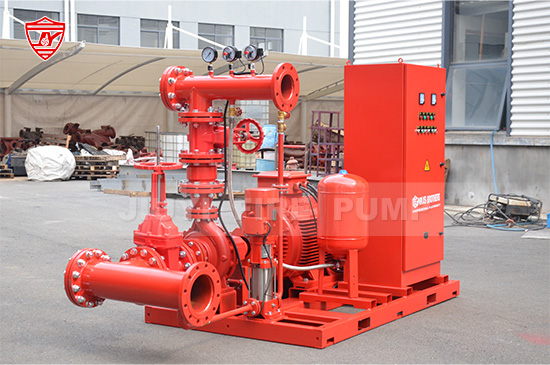
Selecting the right diesel fire pump is an important part of designing a reliable fire protection system. A diesel fire pump provides an independent source of mechanical power for water delivery when electrical power may be unavailable, unreliable, or insufficient for the project requirements.
However, choosing a diesel fire pump is not simply a matter of selecting a pump with a suitable flow rate. The complete system must be evaluated, including the required flow and pressure, pump type, diesel engine power, controller, fuel supply, cooling system, exhaust arrangement, installation conditions, and applicable fire protection standards.
For fire protection engineers, contractors, system integrators, and facility owners, understanding these factors can make the selection process more accurate and help prevent costly problems during installation and commissioning.
This guide explains the key factors to consider when selecting a diesel fire pump for a commercial, industrial, municipal, or other fire protection application.
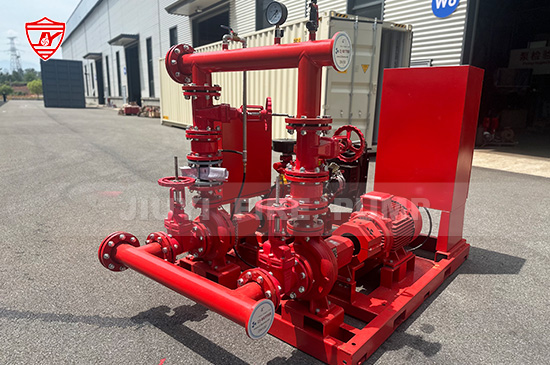
The first step in selecting a diesel fire pump is determining the hydraulic requirements of the fire protection system.
The pump must provide the required water flow at the required pressure to serve the most hydraulically demanding part of the system. These requirements should be established through hydraulic calculations rather than by estimating pump size from the building area alone.
Common parameters include:
Rated flow
Rated pressure
Total dynamic head
Static head
Pipe friction losses
Required residual pressure
Available suction pressure
Elevation differences
Sprinkler and hydrant demand
Flow may be expressed in GPM or LPM, while pressure may be specified in PSI, bar, kPa, or meters of head.
For example, a project may require a diesel fire pump to deliver 1,000 GPM at a specified pressure. Another industrial facility may require several thousand GPM because of its size, occupancy, fire hazards, or water-based suppression systems.
The diesel fire pump should be selected according to the actual duty point required by the system.
The duty point is one of the most important pieces of information when selecting a diesel fire pump.
It represents the combination of flow and pressure that the pump is expected to provide under the specified operating condition.
Pump performance should be reviewed using the manufacturer's certified or tested pump curve. The curve provides information about how the pump performs at different flow rates.
When reviewing a pump curve, pay attention to:
Rated flow
Rated pressure
Shutoff pressure
Pressure at various flow conditions
Efficiency where applicable
Operating range
Engine power requirements
Selecting a pump solely according to its maximum flow can lead to an unsuitable system. The pump must provide the required pressure at the required flow while remaining within the acceptable operating range.
The required diesel fire pump may use different pump configurations depending on the water source, flow requirement, pressure requirement, and installation arrangement.
Horizontal split case pumps are widely used in larger fire protection systems.
They are suitable for many commercial and industrial applications requiring relatively high flow rates. Their construction also allows access to internal components for inspection and maintenance.
A diesel engine can be coupled to the pump through an appropriate drive arrangement to create a complete diesel fire pump set.
End suction pumps can be suitable for applications with lower or moderate flow requirements and where a compact installation is preferred.
The pump must still be selected according to the project's hydraulic calculations and applicable fire protection requirements.
A vertical turbine fire pump is often considered when the water source is located below the pump, such as in a deep reservoir, underground tank, or other water source requiring vertical lift.
The selection of a vertical turbine pump involves additional considerations, including shaft length, bowl assembly, water level, column arrangement, and driver configuration.
The pump type should therefore be determined by both hydraulic requirements and the physical conditions of the installation.
The diesel engine is the power source of the diesel fire pump, so engine selection is critical.
The engine must be capable of driving the selected pump across its required operating range.
Engine power should not be selected simply by matching the pump's rated flow. The manufacturer's pump curve and power requirements should be evaluated to determine the appropriate engine rating.
Important considerations include:
Required pump power
Rated engine speed
Engine operating range
Ambient temperature
Installation altitude
Cooling requirements
Engine starting system
Applicable certification requirements
Environmental conditions can affect engine performance. High ambient temperatures and high elevations may influence available engine output, ventilation requirements, and cooling performance.
For projects in demanding environments, the engine should be evaluated based on the actual installation conditions rather than standard laboratory conditions alone.
The controller is an essential part of a diesel fire pump system.
Its primary functions include monitoring system pressure, controlling automatic starting, managing engine operation, and providing important status and alarm information.
A diesel fire pump controller may monitor conditions such as:
System pressure
Engine running status
Engine speed
Battery condition
Oil pressure
Coolant temperature
Fuel level
Starting attempts
Engine faults
The controller should be properly matched to the diesel engine and fire pump system.
For projects with specific certification requirements, the controller should also meet the applicable standards and approval requirements specified by the project.
Reliable starting is one of the most important considerations for a diesel fire pump.
Diesel fire pump engines commonly use electric starting systems powered by batteries. Depending on the system design, redundant starting arrangements may be required.
The battery system should have sufficient capacity to support the required starting sequence.
Important components can include:
Batteries
Battery chargers
Starting motors
Battery cables
Engine starter circuits
Automatic starting controls
Battery selection and maintenance should not be overlooked. A diesel engine that cannot start when required cannot perform its intended role in the fire protection system.
The complete starting system should therefore be considered during equipment selection and commissioning.
A diesel fire pump requires a reliable fuel supply.
The fuel tank must provide sufficient operating capacity according to the project requirements and applicable regulations. The installation should also provide appropriate fuel piping, isolation arrangements, and monitoring where required.
Consider:
Fuel tank capacity
Fuel quality
Fuel piping
Fuel filters
Fuel level monitoring
Tank location
Ambient temperature
Maintenance access
The fuel system should be designed so that the diesel engine can operate for the required duration without interruption.
Fuel storage conditions are also important. Poor fuel quality, contamination, water accumulation, or long-term storage can affect diesel engine reliability.
Diesel engines generate significant heat during operation, making cooling system design essential.
Depending on the diesel engine and application, cooling may use a heat exchanger, radiator, or another approved configuration.
The cooling system should be evaluated according to:
Engine heat output
Water supply
Cooling water temperature
Ambient temperature
Ventilation conditions
Installation location
Heat exchanger requirements
A pump room with insufficient ventilation can create excessive temperatures and affect diesel engine performance.
For indoor installations, ventilation and heat removal should therefore be considered together with the diesel fire pump selection.
Diesel engines produce exhaust gases and heat, so exhaust system design is an important part of the installation.
The exhaust arrangement should safely remove engine exhaust from the pump room while minimizing excessive back pressure on the engine.
Depending on the installation, the system may include:
Exhaust piping
Muffler
Flexible exhaust connection
Insulation
Exhaust outlet
Ventilation openings
Air intake arrangements
The length and configuration of exhaust piping can influence engine performance. Therefore, the engine manufacturer's requirements should be considered during project design.
Ventilation must also provide enough combustion air and remove heat generated by the engine and exhaust system.
The installation location can significantly affect diesel fire pump performance.
A pump installed in a climate with high temperatures has different requirements from one installed in a cold environment.
Consider:
Ambient temperature
Minimum temperature
Maximum temperature
Altitude
Humidity
Dust
Corrosive atmosphere
Indoor or outdoor installation
Available ventilation
Available space
Cold climates may require additional measures for the engine, batteries, fuel system, and water-containing components.
High-temperature environments may require enhanced ventilation and cooling capacity.
The diesel fire pump should be selected according to the actual project environment.
Fire pump equipment is often subject to specific standards, certification requirements, and approval requirements.
Depending on the project location and specifications, requirements may involve standards such as NFPA 20, UL certification, FM approval, CE requirements, or local fire protection regulations.
If the project requires certified equipment, the exact certification requirements should be confirmed before purchasing the pump.
It is important to verify the certification scope of the complete equipment package. Certification of an individual component does not necessarily mean that the entire diesel fire pump set has the certification required by the project.
The project specification, authority having jurisdiction, consultant requirements, and applicable regulations should all be reviewed before equipment selection.
A diesel fire pump should be evaluated as a complete system rather than as a pump and engine alone.
A typical diesel fire pump set may include:
Fire pump
Diesel engine
Engine controller
Batteries
Battery chargers
Fuel tank
Cooling system
Exhaust system
Coupling and drive components
Base frame
Pressure sensing equipment
Valves and accessories
Compatibility between these components is essential.
For example, the engine must have sufficient power for the selected pump. The controller must be compatible with the engine. The fuel system must support the required operating duration. The cooling and ventilation arrangements must match the installation conditions.
An integrated package can make equipment coordination, factory testing, transportation, installation, and commissioning easier.
Factory testing is an important part of quality control for diesel fire pump equipment.
Testing can verify whether the pump achieves the required flow and pressure and whether the complete system operates correctly.
Depending on the project and certification requirements, testing may involve:
Pump performance testing
Flow testing
Pressure testing
Engine operation testing
Controller testing
Automatic start testing
Alarm testing
Battery testing
Full-load or rated-condition testing
A manufacturer with dedicated pump and engine testing facilities can provide useful documentation for project approval and commissioning.
Factory testing also gives project teams an opportunity to identify potential issues before the equipment reaches the job site.
Initial equipment cost is important, but it should not be the only factor in selecting a diesel fire pump.
The total value of the equipment should also include:
Hydraulic performance
Engine quality
Certification
Controller reliability
Factory testing
Spare parts availability
Technical support
Maintenance requirements
Installation requirements
Long-term serviceability
A diesel fire pump is safety-critical equipment. Selecting equipment solely because it has the lowest purchase price may create additional risks and costs later in the project.
The objective should be to select equipment that satisfies the technical requirements while providing dependable long-term operation.
Before requesting a quotation or placing an order, prepare the essential project information.
A practical checklist includes:
Required flow
Required pressure
Total dynamic head
Water source
Suction conditions
Pump type
Diesel engine rating
Engine speed
Ambient temperature
Installation altitude
Fuel tank requirements
Cooling system
Exhaust arrangement
Ventilation requirements
Controller requirements
Battery and starting system
Applicable standards
Required certification
Factory testing requirements
Installation and delivery schedule
Providing this information to the manufacturer can significantly improve the accuracy of the proposed diesel fire pump solution.
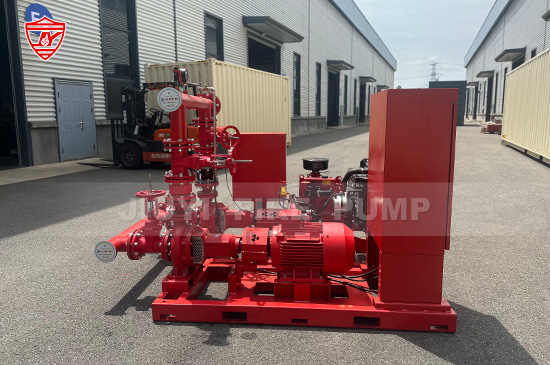
Selecting a diesel fire pump requires a complete understanding of the fire protection system and its operating conditions. The correct equipment must provide the required flow and pressure while also having an appropriately sized diesel engine, reliable starting system, suitable fuel supply, effective cooling, proper exhaust and ventilation, and compatible control equipment.
The pump type and configuration should be selected according to the hydraulic design and installation conditions. Applicable standards and certification requirements should also be confirmed before purchasing equipment.
For commercial buildings, industrial facilities, infrastructure projects, and other applications where reliable water delivery is essential, a properly engineered diesel fire pump system can provide an independent mechanical power source for fire protection.
As a fire pump manufacturer, BETTER Technology Group provides diesel fire pump solutions covering pump selection, diesel engine matching, control systems, testing, and complete fire pump set configuration. By combining accurate hydraulic requirements with appropriate equipment selection and factory testing, project teams can build a fire protection system designed for reliable performance when it is needed most.
.jpg)