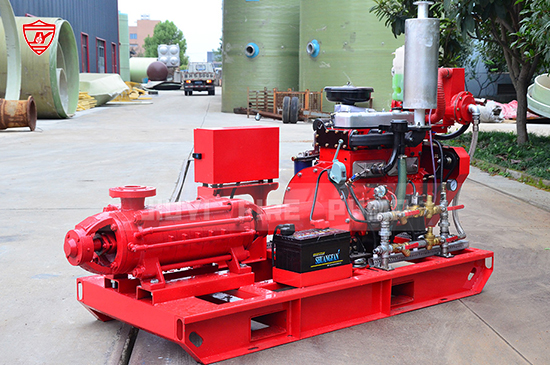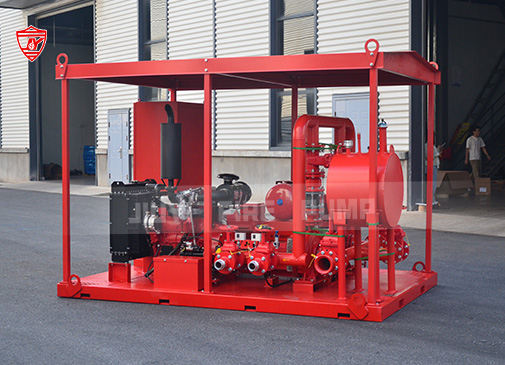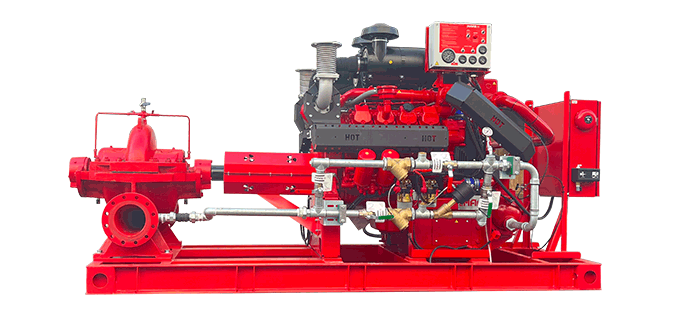
Ensuring that a fire pump operates reliably during an emergency is one of the most critical responsibilities in fire protection engineering. When a fire breaks out, the entire building’s safety depends on whether the fire pump can provide the required water flow and pressure to support sprinklers and standpipe systems. This is why industry standards—including NFPA 20—require several performance evaluations before a fire pump can be approved and placed into service. One of the most important among these evaluations is overspeed testing.
Overspeed testing verifies that a fire pump can safely withstand temporary increases in rotational speed without failing. Although pumps normally run at a fixed rated speed, real-world conditions—especially in diesel-engine fire pump systems—may cause the pump to exceed its rated RPM. Without confirming that a pump can handle these conditions, fire protection systems could face catastrophic failures at the very moment they are needed most.
This article explains why overspeed testing is necessary, how it is performed, what it proves, and what building owners, engineers, and contractors should understand about this critical requirement.
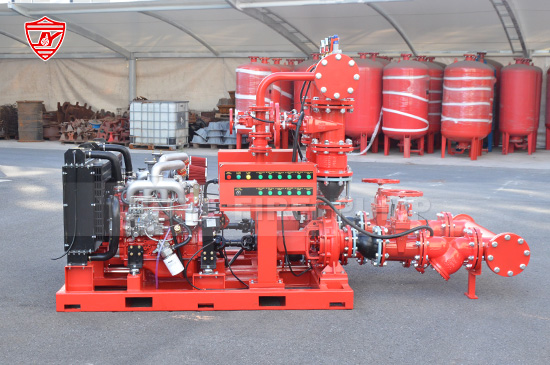
What Is Overspeed Testing in Fire Pumps?
Overspeed testing is a controlled performance test conducted on a fire pump to verify that it can operate safely at a rotational speed higher than its nameplate rated speed. NFPA 20 and UL standards require that a fire pump must endure 120% of its rated speed for a specified duration without experiencing structural damage, vibration failures, or performance issues.
For example, if a pump is rated at 3,000 RPM, it must be tested at 3,600 RPM.
This test demonstrates that even if a controller malfunction, governor issue, or mechanical condition causes the pump to run faster than normal, the pump will not fail under pressure.
Overspeed testing is primarily associated with diesel engine fire pumps, as diesel engines can experience fluctuating speeds under load. However, electrical fire pumps may also undergo overspeed verification when required by certification bodies or project specifications.
Why Fire Pumps Experience Overspeed Conditions
In ideal circumstances, a fire pump operates at a stable speed throughout its life. Yet in reality, several conditions can lead to overspeed events—some predictable, some accidental. These include:
1. Diesel Engine Governor Fluctuation
Diesel engines rely on governors to maintain stable RPM. If the governor malfunctions or is improperly adjusted, speed may temporarily spike above the rated limit.
2. Sudden Reduction in Pump Load
When system demand changes suddenly—such as valves closing or lines becoming obstructed—the pump may accelerate, especially if driven by a combustion engine.
3. Control System or Sensor Failures
Incorrect feedback signals to the engine or controller may command unintended increases in speed.
4. Cold Weather or Fuel Variations
Environmental factors and fuel quality can cause diesel engines to respond inconsistently, potentially increasing RPM.
5. Mechanical Wear and Aging
Worn components can contribute to unstable speed performance over time.
Because these conditions cannot be completely eliminated, it is essential that fire pumps be proven capable of operating safely even under temporary overspeed scenarios.
The Purpose and Importance of Overspeed Testing
Overspeed testing is not just a certification formality—it's a fundamental safety requirement for fire protection. Here are the core reasons why it is necessary:
1. Ensuring Structural Integrity Under Stress
Running a pump above its rated speed significantly increases mechanical stress on impellers, shafts, bearings, seals, and casings. Overspeed testing ensures that all these components can handle the additional forces. If a pump cannot survive this test, it would be unsafe to use in any fire protection system.
2. Confirming Long-Term Reliability
Even though overspeed events are not continuous, a single failure in an actual emergency could result in loss of property or life. Overspeed testing assures building owners and engineers that the pump has sufficient safety margins built into its design.
3. Meeting NFPA 20, UL, FM, and International Standards
Global fire pump standards require overspeed testing before a pump can be listed, certified, or installed. Compliance is not optional. Overspeed testing proves that the pump meets all required safety margins.
4. Protecting the Fire Protection System from Catastrophic Failure
If a pump experiences overspeed without being designed to withstand it, the consequences can be severe, such as:
-
Impeller breakage
-
Shaft fracture
-
Bearing seizure
-
Pump casing failure
-
Sudden pump stoppage
-
Water hammer or system surge
Any of these could disable the fire suppression system during an emergency. Overspeed testing minimizes these risks.
5. Enhancing Safety for People and Property
A building’s fire pump is the heart of its fire protection system. Overspeed testing ensures that even under abnormal conditions, the system will continue to supply critical water pressure to sprinklers, hydrants, and standpipes. This helps protect occupants and prevents large-scale fire losses.
How Fire Pump Overspeed Testing Is Performed
While individual test setups vary depending on manufacturers and certification agencies, overspeed testing generally follows a standardized process:
1. Test Bench Preparation
The pump is mounted on a hydraulic test bench equipped with precise speed controls, instrumentation, and protective barriers.
2. Baseline Performance Measurement
Before overspeeding, the pump is run at its rated speed to verify that it performs according to its published curve.
3. Gradual Increase to Overspeed Condition
Pump speed is gradually increased until it reaches 120% of rated RPM. Instrumentation monitors vibration, temperature, pressure, shaft runout, and sound.
4. Monitoring Under Overspeed Operation
At overspeed, the pump is monitored for a specific duration to detect abnormalities such as:
-
excessive vibration
-
abnormal noise
-
overheating
-
cavitation
-
mechanical instability
All readings must remain within acceptable limits.
5. Shut-Down and Post-Test Inspection
After the overspeed phase, the pump is stopped and disassembled. Technicians inspect critical components to confirm that:
-
no cracks or deformation occurred
-
impeller retains structural integrity
-
bearings and seals remain undamaged
-
shaft alignment is unchanged
-
casing shows no signs of stress failure
Only pumps that pass all evaluations are approved for certification.
Overspeed Testing Requirements in NFPA 20 and UL Standards
NFPA 20 mandates rigorous performance verification for fire pumps. Although overspeed testing is mostly a manufacturer-level requirement, engineers and contractors should understand the basic standard obligations.
Key requirements include:
-
The pump must safely operate at 120% of rated speed without mechanical failure.
-
The pump must maintain structural integrity during and after the test.
-
Overspeed capability must be confirmed before listing or certification.
-
Documentation must be available upon request for inspectors and authorities.
UL and FM standards also include overspeed testing as part of their certification process. These organizations require documented proof that pumps meet overspeed safety limits before receiving a UL or FM label.
Which Fire Pumps Require Overspeed Testing?
Overspeed testing is commonly associated with the following pump categories:
1. UL Listed Fire Pumps
All UL-certified pumps undergo overspeed testing as part of their listing program.
2. Diesel Engine Fire Pumps
Because diesel engines can fluctuate under load, overspeed safety is particularly critical.
3. Vertical Turbine Fire Pumps
These pumps rotate at high speeds and therefore must meet overspeed safety margins.
4. End-Suction and Split-Case Pumps
Both electric and diesel configurations require testing during the certification stage.
5. Any Pump Used in Life Safety Applications
If a pump is designed for fire protection, overspeed capability is mandatory.
Benefits of Overspeed Testing for Building Owners and Engineers
Overspeed testing provides value far beyond simple compliance. Benefits include:
1. Higher Reliability and Longer Lifespan
Pumps that pass overspeed testing prove they can handle stress beyond their typical operating range, contributing to longer equipment life.
2. Reduction of Unexpected Downtime
A pump that withstands overspeed conditions is less likely to experience catastrophic failure.
3. Enhanced Safety and Peace of Mind
Building owners, facility managers, and engineers can trust that the fire pump will perform when needed most.
4. Assurance of Quality from the Manufacturer
Overspeed testing demonstrates that the pump manufacturer follows strict quality control and engineering protocols.
5. Compliance With Insurance and Regulatory Requirements
Many insurance providers and authorities require pump listings that include overspeed verification.
Common Misunderstandings About Overspeed Testing
Despite its importance, overspeed testing is sometimes misunderstood. Here are some clarifications:
Misunderstanding 1: Overspeed Testing Increases Pump Wear
The test is brief and controlled. It does not reduce the pump’s lifespan.
Misunderstanding 2: Overspeed Events Never Happen
Overspeed conditions are rare but real—especially in diesel fire pumps—and could occur during emergencies.
Misunderstanding 3: Only Diesel Pumps Need It
Electrical pumps also undergo overspeed testing during certification.
Misunderstanding 4: Overspeed Testing Can Be Skipped for Cost Savings
Skipping overspeed testing is not allowed under any major standard. It is mandatory for certification.
Why Manufacturers Must Conduct Overspeed Testing
As a fire pump manufacturer, performing overspeed testing is not just about compliance—it demonstrates engineering excellence and commitment to safety. Overspeed testing ensures that your pumps can deliver reliable performance under the harshest conditions. In mission-critical fire protection applications, every component must meet the highest standards of durability and resilience.
By conducting overspeed testing, manufacturers ensure that:
-
pumps meet UL, NFPA 20, and global fire protection requirements
-
each pump is structurally capable of withstanding emergency conditions
-
customers receive equipment designed for maximum reliability
This is why overspeed testing remains one of the most important validation steps in fire pump manufacturing.
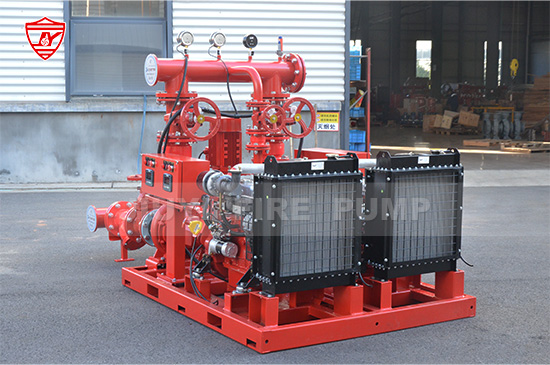
Conclusion
Fire pump overspeed testing is essential for ensuring safety, performance, and compliance in fire protection systems. It verifies that a pump can withstand abnormal conditions and maintain structural integrity, even when operated above its rated speed. Overspeed testing protects lives, property, and mission-critical systems by ensuring that fire pumps operate reliably during emergencies.
For building owners, contractors, engineers, and consultants, understanding overspeed testing helps ensure that selected fire pumps meet the highest safety standards. For manufacturers, it reinforces a commitment to quality and reliability.