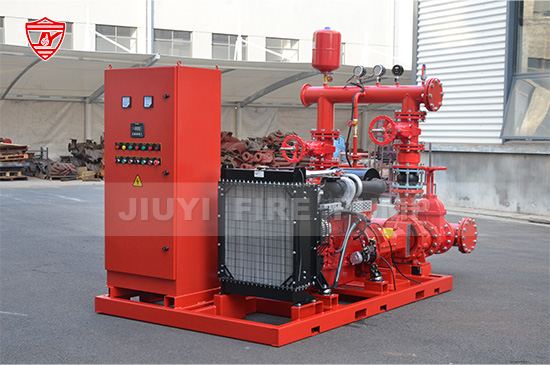
Temperature control is a critical part of designing and operating a reliable containerized fire pump system. Unlike conventional fire pump rooms, containerized fire pump systems place pumps, drivers, controllers, piping, fuel systems, and related equipment inside a dedicated enclosure. This design provides flexibility and saves installation space, but it also creates a controlled environment that must be properly managed.
A containerized fire pump may operate in locations exposed to high outdoor temperatures, cold climates, humidity, dust, or significant temperature changes between day and night. Without suitable ventilation, cooling, heating, and environmental control, excessive heat or low temperatures can affect the performance and service life of critical fire protection equipment.
For fire protection engineers, contractors, facility owners, and system integrators, understanding temperature control is therefore essential when selecting and specifying a containerized fire pump system.
.jpg)
A containerized fire pump system is a packaged fire protection solution installed inside a purpose-designed enclosure, often based on a steel container or customized equipment housing. Depending on the project requirements, the enclosure can accommodate electric fire pumps, diesel fire pumps, jockey pumps, controllers, control panels, fuel tanks, batteries, exhaust systems, ventilation equipment, and associated accessories.
The main advantage is that much of the fire pump system can be assembled and tested before delivery to the project site. This can simplify installation and reduce the need to construct a conventional pump room.
However, enclosing the equipment changes the thermal environment. Heat generated by diesel engines, electric motors, exhaust systems, lighting, and other equipment can accumulate inside the enclosure. At the same time, external weather conditions can make the internal temperature too low or too high.
Temperature control is therefore not simply a comfort feature. It is part of the overall reliability strategy for the fire pump system.
Fire pumps are emergency equipment. They may remain inactive for long periods and then be required to start immediately when a fire protection system demands water.
This operating pattern makes environmental conditions particularly important.
During normal standby conditions, a diesel engine may need to remain ready for starting even when the surrounding temperature is very low. During operation, the engine produces substantial heat that must be removed from the enclosure. Electric motors and other electrical components also generate heat, particularly when operating under high loads.
If this heat is not properly managed, the internal temperature can rise rapidly.
Excessive temperatures can affect electrical components, batteries, controllers, lubricants, engine components, wiring, and other equipment. Very low temperatures can create different risks, including reduced battery performance, increased lubricant viscosity, freezing of water or cooling components, and difficulty starting diesel engines.
The objective of temperature control is to keep the equipment environment within the operating conditions required by the specific components and project specifications.
A well-designed containerized fire pump enclosure normally considers several methods of temperature management rather than relying on a single solution.
The first is ventilation.
Ventilation provides a controlled path for fresh air to enter the enclosure and for hot air to leave. For diesel fire pump systems, ventilation is particularly important because the engine consumes combustion air and generates considerable heat.
The ventilation system must be designed according to the equipment installed inside the enclosure. Airflow requirements depend on factors such as engine output, enclosure dimensions, outdoor temperature, combustion requirements, and heat generated during operation.
Simply installing several fans without calculating the required airflow may not provide adequate temperature control.
A properly designed system considers air intake locations, exhaust air locations, airflow direction, fan capacity, louvers, filters, and the interaction between ventilation and the engine's exhaust system.
Diesel fire pumps are frequently selected for applications where an independent engine-driven water supply is required or where electrical power reliability is a concern.
A diesel engine produces heat through combustion and mechanical operation. During a fire event, the engine may operate continuously for an extended period. This means the container must be capable of removing heat while maintaining suitable operating conditions.
The engine cooling system and enclosure ventilation system work together, but they serve different functions.
The engine cooling system controls the temperature of the engine itself, while enclosure ventilation removes heat from the surrounding environment. Exhaust systems must also safely discharge hot exhaust gases outside the enclosure.
If the enclosure becomes excessively hot, the temperature of components surrounding the engine can increase even if the engine's own cooling system is functioning correctly.
This is why temperature control should be considered at the complete system level rather than focusing only on the fire pump or diesel engine.
Ventilation is one of the most important elements in a containerized fire pump system.
For diesel-powered systems, adequate ventilation generally needs to address several requirements simultaneously:
Supplying sufficient combustion air
Removing heat generated by the engine
Controlling enclosure temperature
Supporting safe operation of electrical equipment
Managing hot air and exhaust-related heat
Maintaining suitable conditions during extended operation
Airflow should follow a planned path through the enclosure. Fresh air should enter from an appropriate location, pass through the equipment area, and exit through a suitable exhaust route.
Poor airflow design can create hot spots even when the overall enclosure temperature appears acceptable. Components located near the engine, exhaust piping, or other heat sources may experience significantly higher temperatures than the average room temperature.
For this reason, the position and capacity of ventilation equipment are as important as the simple presence of fans.
Containerized fire pump systems installed in hot regions face a different set of challenges.
Outdoor temperatures can become extremely high, while solar radiation can further increase the temperature of the steel enclosure. Once the equipment starts operating, internal heat generation can raise the temperature even further.
This can be particularly important for projects in tropical, desert, and subtropical environments.
A containerized fire pump designed for a hot climate may require enhanced ventilation, appropriately sized fans, thermal insulation, sun protection, air-conditioning for certain electrical areas, or other engineered solutions.
The design should be based on the actual environmental conditions of the installation site rather than assuming standard indoor conditions.
For international projects, the manufacturer's design team should understand the project's maximum ambient temperature and determine whether the proposed equipment and enclosure arrangement can operate under those conditions.
Cold environments create different problems.
Diesel engines can become more difficult to start at low temperatures. Batteries can lose available starting capacity, lubricants can become more viscous, and water-containing systems may be exposed to freezing risks.
For containerized fire pump systems installed in cold regions, heating may therefore be necessary.
Depending on the application, solutions can include enclosure heaters, engine heaters, battery heaters, thermal insulation, controlled ventilation, and temperature monitoring.
The goal is to maintain the equipment within the environmental range required for reliable standby and starting conditions.
Cold-climate design is especially important when the fire pump enclosure is installed outdoors and is exposed directly to winter weather.
Temperature control is also important for electrical equipment inside the container.
Fire pump controllers, monitoring devices, sensors, starters, batteries, control panels, and other electrical components have specified environmental operating ranges.
High temperatures can accelerate aging of electrical and electronic components. Batteries are also sensitive to temperature, and elevated temperatures can reduce service life.
At the same time, excessive humidity and condensation can create additional problems when temperature changes occur rapidly.
For this reason, temperature control should be considered together with humidity management, ventilation, enclosure sealing, and electrical equipment ratings.
The objective is not simply to make the enclosure cooler. It is to create an environmental condition that supports reliable operation of the complete fire pump package.
Temperature control is most effective when temperature conditions can be monitored.
Depending on the project requirements, a containerized fire pump system may incorporate temperature sensors, thermostats, alarms, ventilation controls, and monitoring devices.
A temperature monitoring system can provide information about abnormal conditions before they become more serious equipment problems.
For example, if the enclosure temperature rises beyond a predetermined level, the ventilation system may increase airflow or an alarm may notify operators of an abnormal condition.
In cold climates, temperature monitoring can also support automatic heating control.
The specific control strategy should be selected according to the equipment, environmental conditions, project specifications, and applicable fire protection requirements.
The most important purpose of temperature control is reliability.
A fire pump system cannot be treated like ordinary mechanical equipment because its primary purpose is emergency fire protection. The system may spend most of its life in standby mode but must be capable of performing when required.
Temperature control supports this objective in several ways.
First, it helps maintain suitable conditions for engine and motor operation.
Second, it helps protect controllers, batteries, wiring, sensors, and other electrical components.
Third, it helps reduce excessive thermal stress during extended pump operation.
Fourth, it supports reliable starting of diesel engines in cold environments.
Finally, it can help extend the service life of equipment by reducing unnecessary exposure to extreme environmental conditions.
These benefits make temperature control an important part of the overall reliability engineering of a containerized fire pump system.
Temperature control should be considered from the beginning of the project rather than added after the container design is complete.
Several factors should be evaluated.
Determine the minimum and maximum expected outdoor temperatures at the installation site. Consider seasonal variations and extreme weather conditions.
Calculate the heat produced by diesel engines, electric motors, controllers, lighting, exhaust systems, and other equipment.
Determine the airflow required for combustion, equipment cooling, and heat removal. Consider both normal and fire pump operating conditions.
Hot exhaust gases must be safely discharged outside the enclosure. Exhaust routing should also minimize unnecessary heat transfer into the container.
For cold-weather installations, determine whether heaters or other measures are required to maintain suitable standby and starting conditions.
Check the environmental operating requirements of every major component, including the pump, driver, controller, batteries, sensors, and electrical equipment.
Consider temperature sensors, alarms, thermostats, and control systems where appropriate.
Ventilation equipment, heaters, sensors, filters, and other temperature-control components must remain accessible for inspection and maintenance.
One of the advantages of purchasing a containerized fire pump package from an experienced manufacturer is that the thermal environment can be considered together with the mechanical and electrical design.
The pump, driver, controller, ventilation system, exhaust system, fuel system, enclosure, and monitoring equipment should work as an integrated system.
A manufacturer can evaluate the relationship between equipment capacity and enclosure design, helping ensure that the system is appropriate for the intended operating environment.
Factory assembly and testing can also provide an opportunity to inspect ventilation arrangements, equipment installation, control functions, and other system details before shipment.
For project owners and contractors, this integrated approach can simplify site installation and help reduce coordination problems between different equipment suppliers.
.jpg)
Temperature control is an essential consideration for containerized fire pump systems because the enclosure creates a controlled environment around equipment that must remain ready for emergency operation.
High temperatures can result from outdoor conditions, solar radiation, diesel engine operation, electric motor operation, and exhaust heat. Low temperatures can affect diesel starting, batteries, lubricants, and water-containing components.
Effective temperature management therefore requires more than simply installing a fan or heater. It requires consideration of ambient conditions, heat generation, ventilation, exhaust, heating, electrical equipment, monitoring, and maintenance as part of one integrated system.
For fire safety professionals, selecting a containerized fire pump should involve more than checking pump flow and pressure. The environmental design of the enclosure is equally important to long-term system reliability.
By incorporating appropriate ventilation, cooling, heating, monitoring, and equipment protection into the design, a containerized fire pump system can be better prepared to operate under the environmental conditions expected at the installation site.
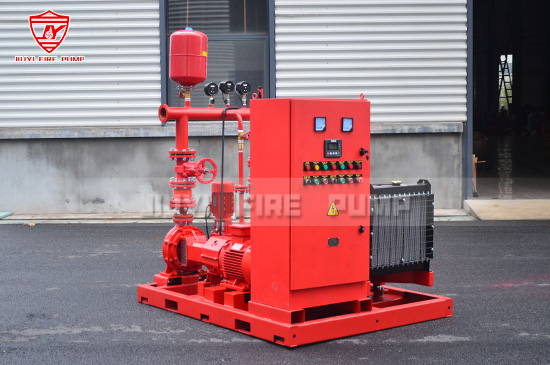
.jpg)