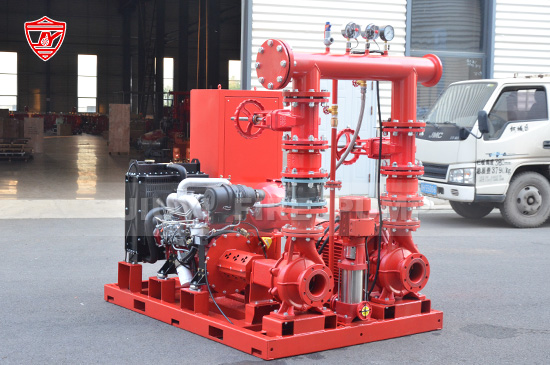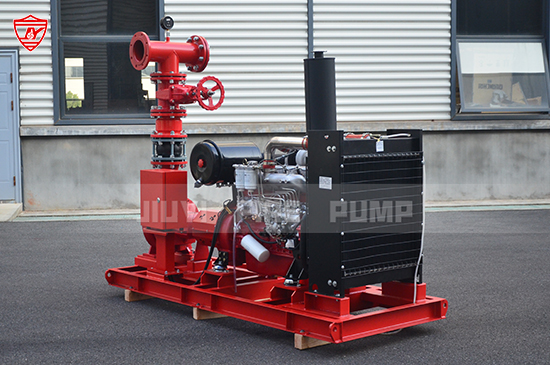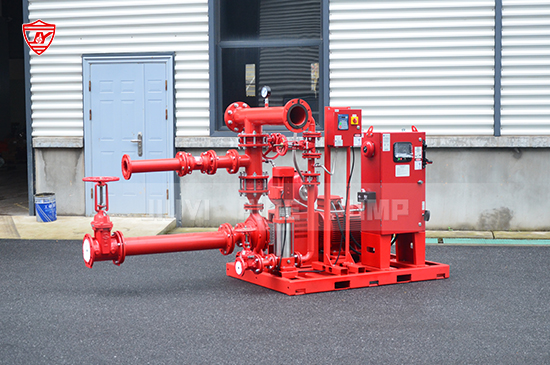
Fire protection systems must remain reliable even when the surrounding environment is challenging. Industrial plants, oil and gas facilities, mining sites, remote infrastructure, construction projects, ports, warehouses, and large outdoor facilities may face extreme temperatures, heavy rain, dust, humidity, corrosive atmospheres, strong winds, and limited infrastructure. In these applications, installing conventional fire pump equipment in an open or poorly protected area can create additional risks for system reliability and maintenance.
A containerized fire pump system provides a practical solution by integrating the fire pump, driver, controller, piping, valves, fuel system, ventilation, and other necessary components inside a purpose-designed enclosure. Depending on the project requirements, the container can be configured for electric fire pumps, diesel fire pumps, jockey pumps, or complete fire pump packages.
But why are containerized fire pumps particularly suitable for harsh environments? The answer is not simply that the equipment is placed inside a container. A properly engineered containerized fire pump system creates a controlled environment around critical fire protection equipment while simplifying installation, transportation, and operation.
.jpg)
A containerized fire pump system is a packaged fire protection solution in which the major components of a fire pump installation are assembled inside a specially designed container or enclosure.
A typical system may include a main fire pump, diesel engine or electric motor, jockey pump, fire pump controller, control panels, piping, valves, fuel tank, batteries, ventilation equipment, exhaust system, lighting, monitoring devices, and maintenance access.
The exact configuration depends on the application. For example, a remote industrial facility may require a diesel fire pump with a dedicated fuel system, ventilation, exhaust arrangement, and environmental protection. A project with a reliable electrical supply may use an electric fire pump package combined with a jockey pump and appropriate control equipment.
The container is engineered around the equipment rather than functioning simply as a standard shipping container. Its structure, ventilation, insulation, access doors, drainage, electrical arrangement, and internal layout can all be considered according to the operating environment and project requirements.
Water is one of the most obvious environmental challenges for outdoor fire pump installations.
Rain, snow, condensation, and high humidity can affect electrical components, controllers, motors, batteries, connections, instrumentation, and other equipment. Long-term exposure to moisture can also accelerate corrosion and deterioration.
A properly designed containerized fire pump enclosure provides a physical barrier between the fire pump equipment and the external environment. The enclosure can incorporate weather-resistant construction, sealed or protected electrical components, appropriate drainage, ventilation, and other measures to reduce the impact of moisture.
This is particularly useful when the fire pump must be installed outdoors and a permanent pump room is impractical or expensive to construct.
For facilities located in regions with seasonal heavy rainfall, tropical climates, coastal weather, or snow, enclosure design should be considered an important part of the fire pump system rather than an afterthought.
Dust can be a serious concern in mining, construction, cement production, desert regions, agricultural facilities, and other industrial environments.
Fine particles can accumulate around motors, controllers, ventilation openings, electrical connections, and mechanical equipment. Depending on the equipment and environmental conditions, excessive dust can increase maintenance requirements and affect equipment operation.
A containerized fire pump system helps isolate critical equipment from the surrounding environment. The ventilation system can be designed according to the equipment's requirements, while access openings and enclosure construction can help reduce uncontrolled exposure to dust.
For desert and semi-desert applications, this can be particularly valuable. However, the enclosure should never be treated as completely eliminating environmental risks. Proper ventilation, filtration where required, temperature control, and equipment selection remain important.
Fire pumps may need to operate in locations with very high or very low ambient temperatures.
High temperatures can affect diesel engines, batteries, electrical equipment, lubricants, and other components. Low temperatures can create different problems, including difficulty starting diesel engines, freezing of water-containing systems, and reduced battery performance.
A containerized fire pump system allows environmental control measures to be integrated into the package.
For hot climates, ventilation, air circulation, insulation, shading, and cooling strategies can help manage the internal environment. For cold climates, insulation, heaters, engine heating systems, battery protection, and other cold-weather measures may be incorporated according to project requirements.
The key advantage is that these environmental protection measures can be engineered as part of the overall fire pump package.
Coastal facilities, chemical plants, wastewater facilities, offshore-related infrastructure, and certain industrial sites can expose equipment to corrosive substances or salt-laden air.
Corrosion can affect structural components, piping, fasteners, electrical connections, fuel systems, and other equipment over time.
Containerized systems can be specified with suitable materials, protective coatings, corrosion-resistant components, and enclosure treatments based on the environmental conditions.
The appropriate protection depends on the actual environment. A coastal installation, for example, may require different corrosion considerations from a chemical processing facility.
For fire protection equipment, this is especially important because the system may remain inactive for long periods and must still be ready when an emergency occurs.
Many fire protection projects are located far away from established infrastructure.
Mining operations, oil and gas facilities, agricultural projects, temporary construction sites, power infrastructure, pipelines, warehouses, and remote industrial plants may not have a suitable building available for a dedicated fire pump room.
Constructing a permanent pump house can increase civil engineering work, project cost, construction time, and coordination requirements.
A containerized fire pump provides an alternative by combining the major fire pump equipment into a transportable package. The system can be manufactured and tested at the factory before being shipped to the project site.
Once the foundation, utilities, water supply, electrical or fuel connections, and other site requirements are prepared, installation can be significantly more straightforward than building and equipping a complete pump room from the beginning.
One of the major advantages of a containerized fire pump system is the ability to perform substantial assembly before delivery.
With conventional site-built installations, numerous components must be transported individually and assembled, aligned, wired, connected, and tested at the project site. This creates more opportunities for installation errors and coordination problems.
A packaged system allows many of these activities to take place in a controlled manufacturing environment.
Piping, valves, controllers, pumps, drivers, fuel systems, ventilation equipment, and other components can be integrated according to the approved design. Factory assembly also allows manufacturers to inspect the overall arrangement before shipment.
Where applicable, factory testing can provide additional confidence that the packaged system operates as intended before it reaches the project site.
For EPC contractors and system integrators, this can simplify project management and reduce the amount of mechanical and electrical work required in difficult site conditions.
Diesel fire pumps require special consideration because the engine generates heat and exhaust gases during operation.
In a conventional pump room, ventilation and exhaust systems must be designed and installed as part of the building. In a containerized diesel fire pump system, these requirements can be integrated directly into the enclosure.
Ventilation can be designed to provide the airflow required by the diesel engine and to manage heat inside the container. The exhaust system can be arranged to safely discharge engine exhaust outside the enclosure.
This integrated approach is particularly useful when installing diesel fire pumps in remote locations or areas where constructing a dedicated mechanical room would be difficult.
The ventilation and exhaust design must still be carefully matched to the engine, operating conditions, ambient temperature, container layout, and applicable fire protection requirements.
Harsh environments are often associated with difficult logistics.
A remote project may require equipment to travel long distances by truck, ship, or other transportation methods. Sending many separate components to the site can increase logistics coordination and installation time.
A containerized fire pump package consolidates much of the required equipment into one transportable unit.
This can be especially useful for emergency infrastructure, temporary facilities, mining projects, construction projects, and remote industrial installations where speed of deployment is important.
The containerized approach can also support project standardization. Multiple facilities using similar fire protection systems can receive packages manufactured according to a consistent engineering concept.
A harsh environment can make maintenance difficult. Technicians may have to work outdoors in rain, extreme heat, dust, or cold weather.
A properly designed containerized fire pump enclosure provides a protected working environment around the equipment.
Access doors, lighting, internal walkways, equipment spacing, ventilation, and service clearances can be considered during the design stage. This can make routine inspection and maintenance more manageable.
For diesel fire pumps, technicians may need access to the engine, batteries, fuel system, controller, exhaust system, and other components. A well-planned container layout should provide sufficient space for inspection and servicing rather than simply maximizing equipment density.
Good accessibility is an important part of reliability because equipment that is difficult to inspect or maintain can create avoidable operational risks.
Another reason containerized fire pumps are suitable for harsh environments is their flexibility.
Different projects have different fire protection requirements. A system may need an electric main fire pump and jockey pump, a diesel main fire pump, or a combination of electric and diesel fire pumps with a jockey pump.
The container can be configured around the required equipment and site conditions.
For example, a remote facility with limited electrical infrastructure may require a diesel-driven fire pump system with an integrated fuel tank. Another industrial facility may require an electric fire pump package with a backup diesel fire pump.
Container dimensions, equipment arrangement, ventilation, insulation, heating, cooling, fuel storage, access, and control systems can be considered during engineering.
This flexibility allows the fire pump package to be adapted to the actual project instead of forcing every application into the same configuration.
A dedicated fire pump room can be an effective solution, but it is not always practical.
Projects may face limited land availability, difficult construction conditions, temporary operating requirements, or strict project schedules.
A containerized fire pump can reduce the need for a conventional building dedicated solely to fire pump equipment. This can simplify civil construction and allow the fire protection system to be positioned closer to the required water source or protected facility, subject to the project's hydraulic and installation requirements.
For temporary or expandable facilities, the ability to relocate or modify a packaged system can also provide additional flexibility.
Although containerized fire pumps offer many advantages for harsh environments, the container itself does not automatically guarantee reliable operation.
Buyers should evaluate the complete system based on the actual project conditions.
Important considerations include ambient temperature, humidity, rainfall, snow, dust, corrosive atmosphere, altitude, wind conditions, electrical supply, fuel availability, water source, drainage, ventilation, exhaust routing, maintenance access, transportation requirements, and applicable fire protection standards.
The fire pump capacity and pressure must also be selected according to the hydraulic requirements of the fire protection system.
For projects requiring certified or listed equipment, buyers should verify the applicable certification requirements for the complete system and for individual components. Pump certification, driver certification, controller requirements, and packaged-system requirements may vary depending on the project and jurisdiction.
A manufacturer experienced in fire pump engineering can help integrate these requirements into the container design from the beginning.
.jpg)
Containerized fire pumps are well suited to harsh environments because they combine fire pump equipment with a purpose-designed protective enclosure and integrated supporting systems.
They can provide protection against weather, dust, moisture, and challenging temperatures while offering advantages in transportation, factory assembly, installation, maintenance, and deployment.
For remote industrial facilities, mining operations, oil and gas projects, construction sites, ports, warehouses, utilities, and other outdoor applications, a containerized fire pump system can provide a practical way to deploy reliable fire protection without relying on a conventional permanent pump room.
The most important factor is proper engineering. The container, fire pump, driver, controller, ventilation, exhaust, fuel system, electrical equipment, and environmental protection measures should be designed as one integrated system based on the project's actual operating conditions and applicable requirements.