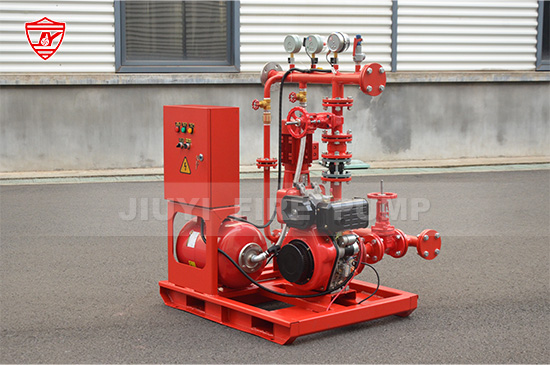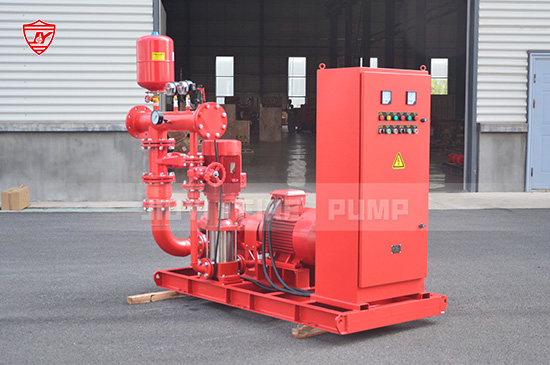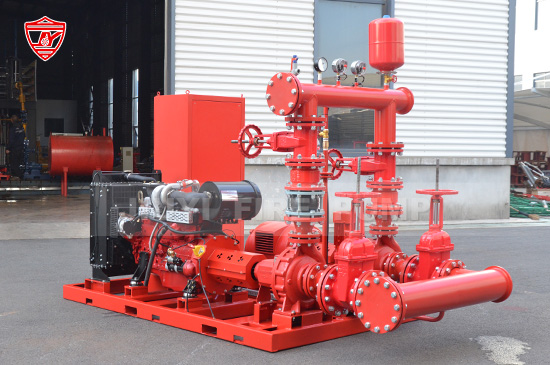
Fire pump capacity determines whether a fire protection system can deliver enough water at the required pressure. Learn how to size, select, and verify capacity.
When designing or selecting a fire protection system, fire pump capacity is one of the most important technical factors to consider. A fire pump must provide sufficient water flow and pressure to meet the hydraulic demand of the sprinkler system, standpipe system, hydrants, hose stations, or other fire protection equipment it serves.
Choosing a pump based only on horsepower, connection size, or maximum pressure can lead to an improperly designed system. The correct approach is to understand the relationship between flow, pressure, system demand, pump performance, and operating conditions.
For fire safety engineers, contractors, EPC companies, system integrators, and building owners, understanding fire pump capacity is essential for selecting reliable equipment and ensuring that the fire protection system performs when it is needed most.
Fire pump capacity generally refers to the amount of water a fire pump can deliver at a specified pressure. In practical fire protection applications, capacity is primarily expressed as a flow rate, while pressure is specified separately.
Common units for fire pump flow include:
For example, a fire pump may be described as a 500 GPM pump, meaning its rated flow capacity is 500 gallons per minute at its rated pressure.
However, saying that a pump has a capacity of 500 GPM does not provide enough information to determine whether it is suitable for a particular project. The system also requires a specific pressure at that flow rate.
This is why fire pump selection should always consider both flow and pressure rather than treating capacity as a single number.
Flow and pressure are closely related, but they are not the same thing.
Flow describes how much water the pump can move over a period of time. Pressure describes the force available to move that water through the fire protection system and overcome elevation, pipe friction, valves, fittings, and equipment losses.
For example, a fire protection system may require:
500 GPM at 100 PSI
A pump that can produce 100 PSI at low flow but cannot maintain the required pressure at 500 GPM may not be suitable.
Likewise, a pump capable of delivering 1,000 GPM may not be appropriate if the system only requires 500 GPM and the resulting pressure is excessive.
The correct fire pump is therefore determined by the system's hydraulic demand and the pump's performance curve.
The primary purpose of a fire pump is to provide the water flow and pressure required by the fire protection system under emergency conditions.
Insufficient capacity can result in inadequate water delivery to sprinklers, hydrants, hose stations, or other fire protection equipment. Excessive capacity can also create problems, including unnecessarily high system pressure, increased equipment costs, larger electrical or diesel power requirements, and potential difficulties with system components.
A properly selected fire pump provides an appropriate balance between:
Capacity therefore plays a central role in the overall reliability and efficiency of a fire protection system.
Fire pump capacity should normally be determined from the hydraulic requirements of the complete fire protection system.
The process typically begins with identifying the most demanding fire protection scenario. Engineers calculate the required flow and pressure based on the sprinkler system, standpipes, hydrants, hose stations, or other connected systems.
The calculation may consider several factors.
The first question is how much water the system needs.
Sprinkler system demand depends on factors such as hazard classification, design density, design area, sprinkler characteristics, and the specific system layout.
Hydrant and hose systems may create additional flow requirements.
The fire pump rated capacity should be selected to satisfy the applicable system demand rather than simply choosing the largest available pump.
Once the required flow is established, the system must also provide adequate pressure.
Pressure requirements can include:
The pump must be capable of delivering the required flow while maintaining sufficient pressure at the point of demand.
Building height can have a major effect on required pump pressure.
Water pressure decreases as elevation increases. In a multi-story building, the fire pump may need to provide additional pressure to deliver adequate water to upper floors.
This means a pump suitable for a low-rise warehouse may not be suitable for a high-rise building, even if both systems have similar flow requirements.
Water loses pressure as it moves through pipes, fittings, valves, and other components.
Longer pipe runs and smaller pipe diameters can increase friction losses. The system designer must account for these losses when calculating the required pump discharge pressure.
A fire pump may therefore need to generate significantly more pressure than the pressure required directly at the sprinkler or hydrant.
Fire pumps are commonly identified by a rated capacity, such as 250 GPM, 500 GPM, 750 GPM, 1,000 GPM, or larger capacities.
The rated capacity represents a standardized reference point on the pump performance curve.
It is important to understand that a centrifugal fire pump does not operate at only one flow rate. Its performance changes as system flow and pressure conditions change.
The pump performance curve normally shows the relationship between:
This curve is essential when evaluating whether a fire pump can meet the actual system demand.
The performance curve is one of the most important documents for fire pump selection.
At zero flow, a centrifugal pump can develop its shutoff pressure, also known as churn pressure. As flow increases, discharge pressure generally decreases.
The curve allows engineers to determine how the pump performs at different flow conditions.
For example, a pump rated at 500 GPM may operate at:
The important question is not simply whether the pump is labeled "500 GPM." The key question is whether the pump's curve satisfies the required pressure at the system's design flow.
Churn pressure is the pressure developed by a centrifugal fire pump when there is essentially no water flow through the pump.
It is also commonly referred to as shutoff pressure.
Churn pressure is important because system components must be able to withstand the pressures that can occur when the pump operates without significant flow.
When the system begins demanding water, flow increases and pump pressure generally decreases according to the pump's performance curve.
For this reason, fire protection system designers should consider both churn pressure and operating pressure when selecting system components.
Fire pump performance is commonly evaluated not only at the rated flow but also at higher flow conditions.
For many centrifugal fire pumps covered by NFPA 20, the pump is evaluated at 150% of rated capacity. The required pressure at this higher flow condition is an important part of evaluating pump performance.
For example, a 1,000 GPM fire pump may be evaluated at:
The exact acceptance criteria and application requirements should always be verified against the edition of NFPA 20 and other standards applicable to the project.
This is one reason why purchasing a fire pump based solely on its rated GPM can be misleading. The complete performance curve is much more important.
Fire pump capacity should be based on hydraulic calculations rather than a simple formula using building size.
A simplified conceptual process is:
Required Pump Flow = Required System Water Flow
The required pump pressure can then be considered as:
Required Pump Pressure = Required System Pressure + Elevation Loss + Friction Loss + Other System Losses
These calculations become more complex in large or multi-zone systems.
For example, a sprinkler system may require a specific flow at a remote area. The engineer must determine the pressure needed at the most hydraulically demanding point and then calculate the additional pressure required to overcome elevation and friction losses between that point and the fire pump.
The result establishes the approximate pump duty point.
The best fire pump is not necessarily the pump with the highest flow rate.
A practical selection process should include the following steps.
Establish the required flow and pressure based on the fire protection system design.
Determine the required flow and pressure at the fire pump discharge. This becomes the primary reference point for pump selection.
Review available fire pump performance curves and identify a pump capable of satisfying the required duty point.
Consider water temperature, suction conditions, elevation, installation arrangement, power supply, and other site-specific conditions.
The electric motor or diesel engine must provide sufficient power for the selected pump across the applicable operating range.
For projects requiring listed equipment, verify that the selected pump, driver, controller, and associated components have the required certifications and comply with applicable standards.
For many international fire protection projects, NFPA 20 and UL Listed or FM Approved equipment may be important requirements. However, certification requirements vary by project, authority having jurisdiction, and market.
Several common mistakes can affect fire pump selection.
A 500 GPM rating does not tell you whether the pump can produce the required pressure at 500 GPM.
High-rise and multi-level buildings may require substantial additional pressure because of elevation.
Pipe length, diameter, fittings, valves, and other components can significantly affect system pressure.
A significantly oversized pump can increase cost and may create unwanted pressure conditions.
The pump curve provides much more useful information than the rated capacity printed on the nameplate.
A fire pump does not operate independently. Electric motors, diesel engines, controllers, suction piping, discharge piping, valves, and other components must work together as a complete system.
Both electric and diesel-driven fire pumps can be designed for a wide range of capacities.
The required capacity is determined primarily by the fire protection system, not simply by the type of driver.
Electric fire pumps require an appropriate electrical power supply and motor sizing. Diesel fire pumps require an appropriately sized diesel engine, fuel system, cooling arrangement, exhaust system, and associated controls.
For projects where the normal power supply may not be reliable, a diesel fire pump can provide an important alternative source of mechanical power.
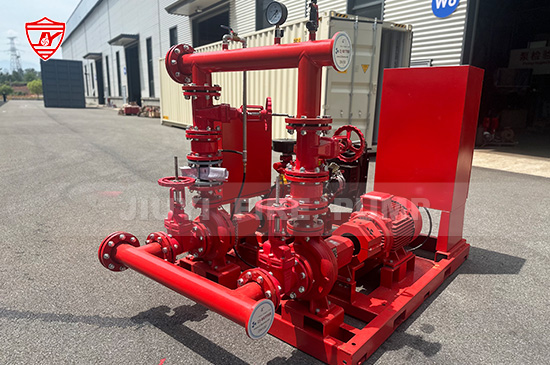
In many complete fire pump systems, the electric fire pump, diesel fire pump, and jockey pump work together to maintain and deliver the required fire protection water supply.
When requesting a fire pump quotation, providing accurate project information can significantly improve product selection.
Useful information includes:
The more complete the technical information, the easier it is for a manufacturer to recommend an appropriate pump.
As a fire pump manufacturer, BETTER Technology Group focuses on the complete performance of fire pump systems rather than capacity alone. Pump hydraulic design, manufacturing quality, driver matching, testing, and system integration all contribute to reliable fire protection performance.
Correct capacity is fundamental to fire protection system reliability.
A properly selected pump should provide the required flow and pressure under the design conditions while operating with suitable performance characteristics across the applicable range.
Manufacturers should therefore evaluate fire pumps through comprehensive performance testing. Testing can verify flow, pressure, power consumption, and other critical performance parameters.
For fire protection applications, reliable testing and quality control are especially important because the equipment may remain unused for long periods but must perform immediately during an emergency.
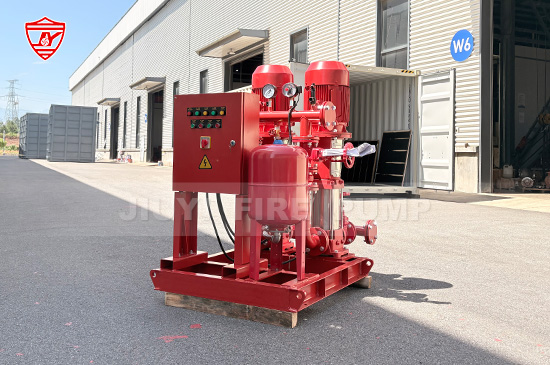
Fire pump capacity is much more than a number such as 500 GPM or 1,000 GPM. It represents the pump's ability to deliver the required water flow at the required pressure under defined operating conditions.
The correct selection process should consider hydraulic demand, flow rate, pressure, elevation, friction loss, pump performance curves, driver power, applicable standards, and project-specific requirements.
Understanding these factors helps engineers, contractors, distributors, and building owners avoid common selection mistakes and build more reliable fire protection systems.
For fire pump manufacturers, accurate hydraulic design, strict manufacturing controls, comprehensive performance testing, and appropriate certification are equally important. A properly selected and tested fire pump can provide the dependable water supply that a fire protection system is designed to deliver when it matters most.
Whether the project requires an electric fire pump, diesel engine fire pump, jockey pump, or a complete electric-diesel-jockey fire pump system, capacity should always be evaluated together with pressure and the complete system duty point.