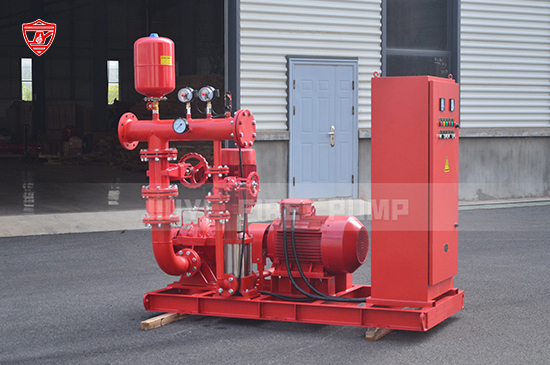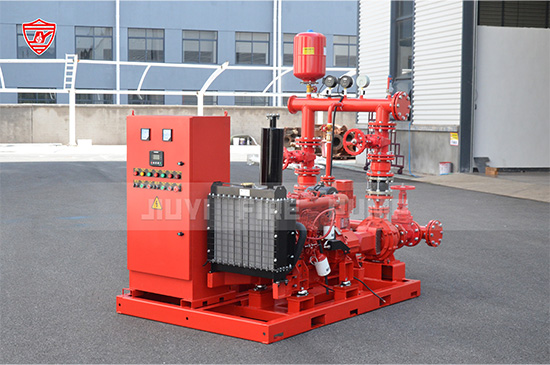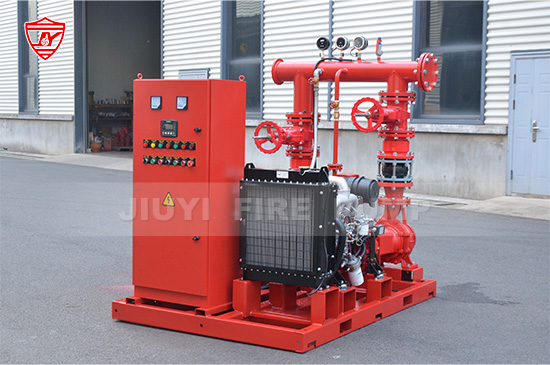
Fire pumps are critical components of any fire protection system. During a fire emergency, the fire pump is responsible for maintaining water pressure and ensuring adequate water flow to sprinkler systems, hydrants, and hose reels. While much attention is often given to pump selection, controller configuration, and system installation, one essential factor is frequently underestimated: fire pump room ventilation.
A properly ventilated fire pump room directly affects equipment reliability, operational safety, and compliance with fire protection standards. Poor ventilation can lead to overheating, moisture accumulation, engine performance issues, and even premature equipment failure. Whether your facility uses an electric fire pump or a diesel engine fire pump, ventilation should be considered a fundamental part of fire pump room design.
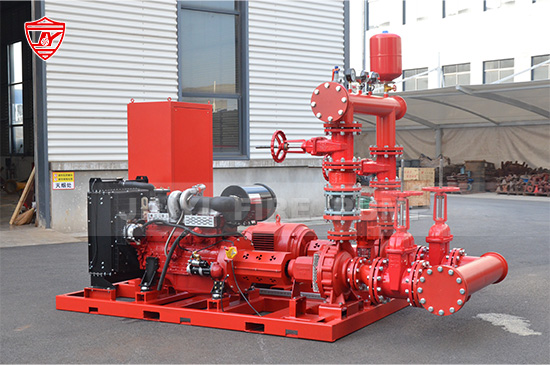
Fire pump room ventilation refers to the process of supplying fresh air to the fire pump room while removing heat, humidity, fumes, and contaminated air.
The ventilation system typically includes:
The goal is to maintain a suitable operating environment for all fire pump equipment, including pumps, controllers, diesel engines, batteries, fuel tanks, and related accessories.
Without proper airflow, the fire pump room can quickly become a hostile environment for sensitive equipment.
Fire pumps generate heat during operation. This is especially true for diesel engine fire pumps, which produce substantial heat from engine combustion, cooling systems, exhaust piping, and radiator discharge.
If this heat is trapped inside the pump room, temperatures can rise rapidly.
Excessive heat may cause:
High temperatures can also shorten the service life of electrical components.
Proper ventilation removes excess heat and helps maintain stable operating temperatures, ensuring the fire pump remains ready for emergency use.
Diesel fire pumps require a large amount of combustion air.
A diesel engine consumes oxygen continuously while operating. If the room does not provide sufficient fresh air, engine performance may decline significantly.
Insufficient airflow can lead to:
In severe cases, inadequate ventilation can cause engine shutdown, which is unacceptable during a fire emergency.
A properly designed diesel fire pump room ventilation system ensures:
For diesel fire pump installations, ventilation is not optional—it is essential.
Temperature management is one of the main purposes of fire pump room ventilation.
Fire pump rooms must remain within acceptable temperature ranges to ensure equipment can start and operate properly.
Extremely high temperatures can damage electrical equipment, while low temperatures may freeze water-filled components or reduce battery efficiency.
Typical temperature concerns include:
Maintaining proper fire pump room temperature helps protect both mechanical and electrical systems.
Ventilation systems are often combined with heating or cooling solutions depending on climate conditions.
Diesel engines produce exhaust gases, including:
These gases can accumulate inside an enclosed fire pump room if exhaust systems or ventilation are inadequate.
This creates safety risks such as:
Ventilation helps remove contaminated air and improves room safety.
In diesel fire pump rooms, exhaust systems should be carefully coordinated with ventilation design to prevent heat recirculation.
Fire pump rooms are often exposed to moisture from:
Without ventilation, moisture can accumulate and lead to condensation.
Excess humidity may cause:
A well-ventilated room improves air circulation and reduces moisture buildup.
This helps maintain equipment integrity and lowers maintenance costs over time.
A poorly ventilated fire pump room is uncomfortable and potentially unsafe for maintenance personnel.
Hot, humid, or fume-filled spaces make inspections and repairs more difficult.
Good ventilation improves working conditions by:
This encourages regular inspections and reduces maintenance challenges.
Routine maintenance is easier when technicians can safely access equipment.
NFPA 20 provides standards for the installation of stationary fire pumps for fire protection.
The standard includes requirements related to fire pump room environmental conditions, including:
For diesel engine fire pumps, NFPA 20 specifically addresses airflow requirements for combustion and cooling.
Failure to meet ventilation requirements can lead to:
When designing a fire pump room, ventilation should always be considered alongside pump sizing, piping layout, and controller placement.
Compliance is not just about passing inspections—it is about ensuring reliable emergency performance.
Proper ventilation design depends on multiple factors.
Larger rooms may require higher airflow volumes to maintain temperature control and proper air exchange.
Electric fire pumps generate less heat than diesel fire pumps.
Diesel systems require significantly more ventilation capacity because of:
Hot climates require stronger cooling and ventilation systems.
Cold climates may require balanced systems that prevent freezing while still ensuring fresh air circulation.
Common methods include:
Mechanical ventilation is often preferred for more precise airflow control.
Fresh air should enter and move efficiently across the equipment before exiting the room.
Poor airflow layout can create hot spots or ineffective circulation.
Diesel exhaust piping should be insulated and routed to minimize indoor heat release.
Ventilation systems should prevent exhaust heat from re-entering the room.
Many fire pump room issues originate from ventilation design errors.
Common mistakes include:
Insufficient intake or exhaust openings restrict airflow.
Diesel engines produce much more heat than many designers expect.
Improper intake or exhaust placement can create airflow dead zones.
Without room temperature monitoring, overheating issues may go unnoticed.
Dirty filters, blocked louvers, and failed fans reduce ventilation effectiveness.
Regular inspection of ventilation systems is just as important as pump maintenance.
To improve fire pump room performance, consider the following best practices:
Ventilation should be treated as part of the fire pump system, not an afterthought.
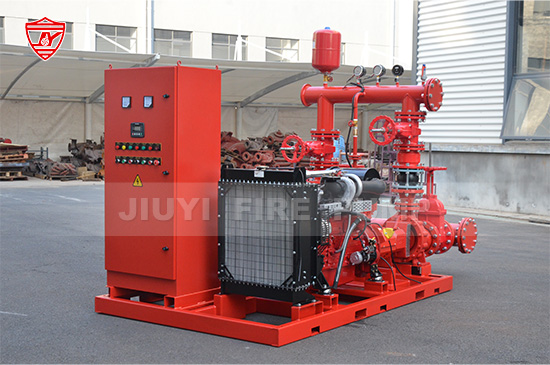
Fire pump room ventilation plays a critical role in fire protection system reliability.
Without proper ventilation, fire pump rooms can experience overheating, moisture buildup, exhaust gas accumulation, and equipment degradation. These issues threaten system performance and may compromise emergency readiness.
A well-designed ventilation system supports:
Whether you are designing a new fire pump room or upgrading an existing facility, ventilation should be a top priority.
In fire protection, equipment reliability is everything. A fire pump that cannot operate when needed is not simply an equipment issue—it is a system failure.