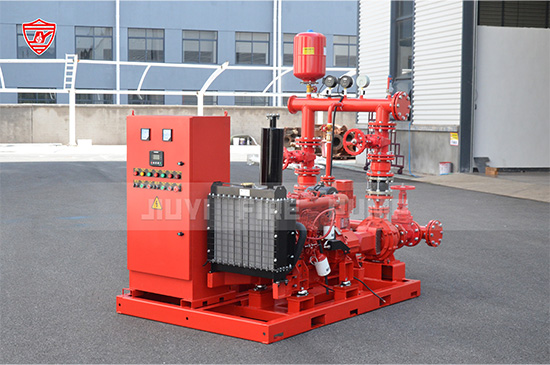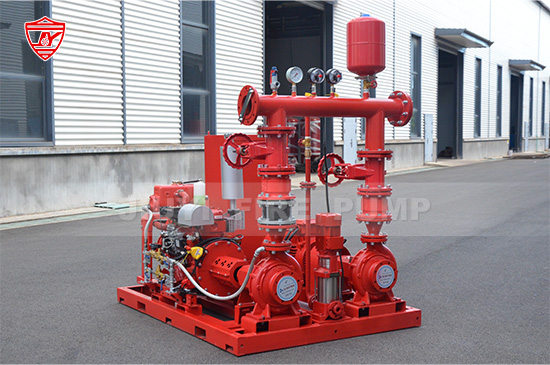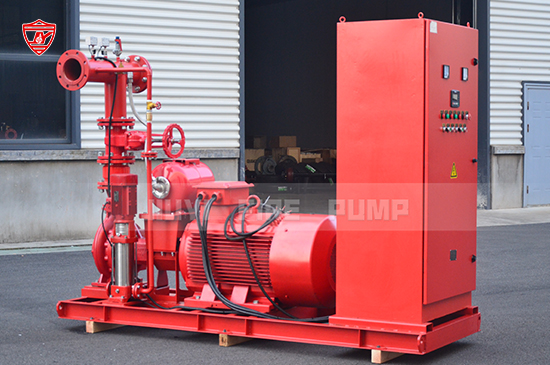
Fire pumps are the heart of any fire protection system. When a fire breaks out, there is no second chance for failure. A fire pump must deliver the required flow and pressure instantly and reliably, regardless of whether it has been idle for weeks or months. This is exactly why fire pump performance testing is not optional, but mandatory across international fire codes and standards.
For building owners, fire protection contractors, consultants, and authorities having jurisdiction, performance testing is the only way to verify that a fire pump system will operate as designed under real emergency conditions. From a manufacturer’s perspective, it is also the final confirmation that design, manufacturing, installation, and commissioning have been executed correctly.
This article explains in detail why fire pump performance testing is mandatory, what risks it addresses, and how it protects lives, property, and compliance.
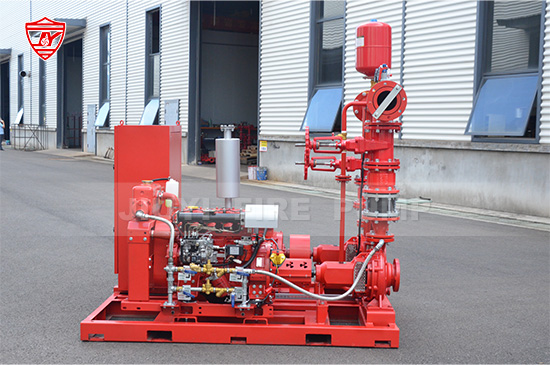
Unlike process pumps or domestic water pumps, fire pumps are classified as life-safety equipment. They may operate only a few times in their entire service life, but when they do, failure is unacceptable.
A fire pump that looks perfect on paper or during visual inspection may still fail to deliver rated performance. Common hidden issues include improper impeller trimming, incorrect motor speed, suction pipe restrictions, air entrainment, or driver output limitations. These problems often remain undetected until the pump is tested under flow.
Performance testing transforms assumptions into verified facts. It proves that the pump can meet its rated duty point and operate safely across its allowable operating range.
Fire pump performance testing is mandatory because it is required by recognized fire protection standards. NFPA 20, as well as many regional and international codes derived from it, clearly state that every fire pump must undergo a performance or acceptance test before being placed into service.
These standards do not rely on manufacturer data alone. Even if a fire pump is UL listed or FM approved, the installed system must still be tested as a complete assembly. This includes the pump, driver, controller, suction supply, discharge piping, and all related components.
Authorities require documented test results to confirm that the installed system meets design intent and code requirements. Without performance testing, a fire pump installation is considered incomplete and noncompliant.
A fire pump is designed and tested at the factory under controlled conditions. However, once installed on site, many variables can change its performance.
Suction conditions may differ due to pipe length, elbows, strainers, or water source elevation. Discharge piping friction losses may be higher than calculated. Electrical supply voltage or diesel engine output may not match assumptions made during design.
Only a full performance test can reveal how the fire pump behaves under actual site conditions. Testing confirms that the system can achieve the required flow at 100 percent rated capacity, as well as operate safely at churn and overload conditions where required by code.
Fire pump performance testing validates three critical operating points:
First, churn or shutoff condition. This ensures the pump does not exceed allowable pressure limits when no flow is present.
Second, rated flow condition. This confirms the pump delivers the specified flow at rated pressure, which is the minimum requirement for system design.
Third, overload or peak flow condition. This demonstrates that the pump can operate safely at higher flow rates without excessive vibration, overheating, or driver overload.
Without testing these points, there is no proof that the fire pump truly meets its nameplate rating.
Even with modern quality control, manufacturing or assembly errors can occur. Examples include incorrect impeller diameter, improper wear ring clearance, misalignment between pump and driver, or incorrect controller settings.
Performance testing acts as a final safeguard. If the pump fails to meet expected performance, issues can be identified and corrected before the system is placed into service. This is far safer and more cost-effective than discovering a problem during an actual fire emergency.
From a manufacturer’s standpoint, performance testing also reinforces accountability and product reliability.
A fire pump is only as reliable as its driver. For electric fire pumps, performance testing confirms that the motor, controller, and power supply can handle the required load without voltage drop, overheating, or tripping.
For diesel engine fire pumps, testing verifies engine output, cooling, fuel delivery, and speed regulation under load. Many diesel engines may start successfully but fail to maintain rated speed during sustained flow if fuel or cooling systems are inadequate.
Performance testing exposes these weaknesses early, when corrective action is still possible.
Fire protection failures often result in severe legal and financial consequences. If a fire pump does not perform as required during an incident, investigators will examine whether the system was properly tested and documented.
Mandatory performance testing provides evidence that due diligence was exercised. It demonstrates that the owner, contractor, and manufacturer complied with recognized standards and verified system functionality.
In many jurisdictions, lack of documented performance testing can invalidate insurance coverage or result in regulatory penalties.
Fire pump performance testing is not limited to initial acceptance. Periodic testing, as required by standards and local regulations, ensures that performance has not degraded over time.
Corrosion, wear, mechanical damage, and changes in water supply conditions can all affect pump performance. Regular testing allows these issues to be detected early, before they compromise system reliability.
Mandatory testing establishes a baseline and ongoing reference point for maintenance and lifecycle management.
Fire protection systems are carefully engineered based on hydraulic calculations. These calculations assume a certain pump output at specific pressures.
Performance testing validates that the real system matches those assumptions. If test results differ significantly, system designers can reassess safety margins and make necessary adjustments.
This feedback loop between design, installation, and testing is critical for high-risk facilities such as data centers, industrial plants, high-rise buildings, and warehouses.
Authorities having jurisdiction rely on performance testing to approve fire protection systems. Clear, documented test results provide confidence that the system will perform as required.
For building owners and operators, successful fire pump testing offers peace of mind. It confirms that a critical life-safety system is ready to perform when needed, even if it remains idle for long periods.
This confidence is one of the most valuable outcomes of mandatory testing.
Fire pump performance testing represents the final collaboration between manufacturer, installer, consultant, and inspector. Each party plays a role in ensuring system success.
As a fire pump manufacturer, we design and build pumps to meet stringent standards. Performance testing confirms that this performance is preserved through installation and commissioning.
Mandatory testing is not an obstacle or formality. It is a vital step that connects engineering intent with real-world fire safety.
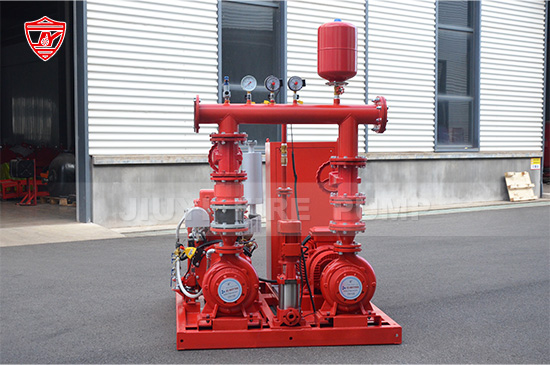
Fire pump performance testing is mandatory because lives depend on it. It verifies compliance with codes, confirms real-world performance, detects hidden issues, and protects all stakeholders from unacceptable risk.
In the fire safety field, assumptions are never enough. Only measured, documented performance provides true assurance. That is why performance testing is not optional, not negotiable, and not merely a recommendation. It is an essential requirement for every fire pump system, without exception.