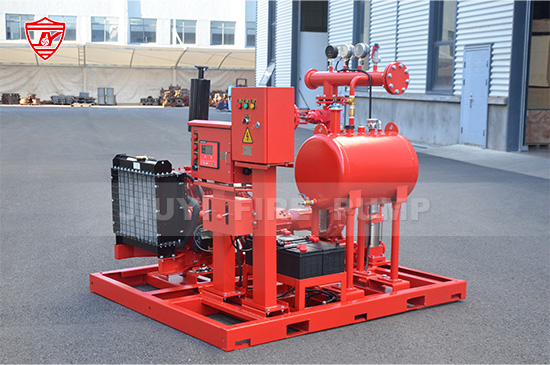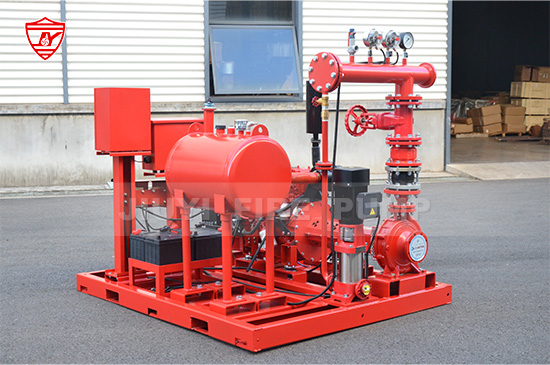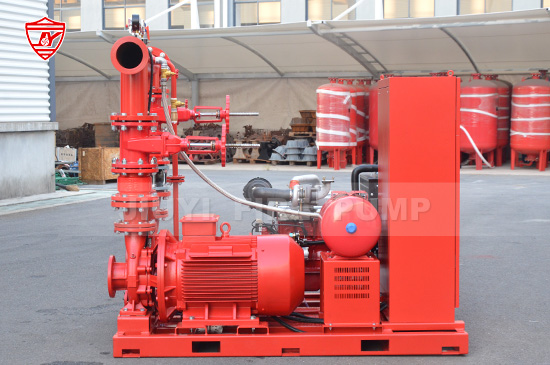
Diesel fire pumps play a critical role in fire protection systems, especially in facilities where electrical power is unreliable or unavailable during emergencies. Unlike electric fire pumps, diesel engine fire pumps are fully self-powered, which makes them highly dependable in theory. However, this independence also places extreme importance on one key factor: the ability of the diesel engine to start instantly and reliably when a fire occurs.
This is why redundant starting systems are not just recommended, but mandatory in modern fire protection standards. A diesel fire pump that cannot start on demand is functionally useless, regardless of its flow rate, pressure rating, or certification. In this article, we will explain in depth why redundant starting systems are essential, how they work, what standards require, and what risks are avoided by proper redundancy.
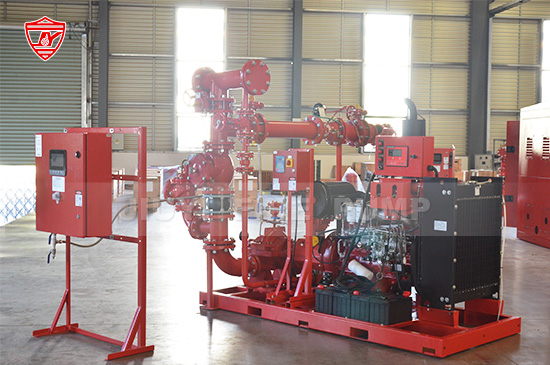
Diesel fire pumps are typically installed in high-risk or mission-critical applications such as industrial plants, data centers, oil and gas facilities, airports, warehouses, and high-rise buildings. These environments often cannot rely solely on utility power or may be required by code to have an independent fire pump driver.
Unlike electric motors, diesel engines introduce mechanical, electrical, and chemical dependencies such as fuel quality, battery condition, wiring integrity, and ambient temperature. Each of these variables increases the chance of a starting failure if not properly addressed.
Because a fire pump is a life-safety system, it must operate under worst-case conditions, including power outages, extreme temperatures, and long periods of inactivity. Redundant starting systems exist precisely to eliminate single points of failure.
A redundant starting system means that the diesel engine has two completely independent means of starting, so that failure of one system does not prevent the fire pump from operating.
In practice, this usually includes:
Two independent battery banks
Two separate battery chargers
Dual starting motors or dual circuits
Independent control wiring paths
Automatic and manual start capability
These systems are designed so that no single failure, whether electrical, mechanical, or human, can disable the fire pump at the moment it is needed.
A single starting system introduces unacceptable risk for a fire protection application. Common failure scenarios include:
Battery degradation due to aging or temperature
Charger failure caused by power surges or component wear
Loose wiring or corroded terminals
Control panel component failure
Human error during maintenance
Diesel fire pumps often sit idle for months or years, only running briefly during weekly or monthly test cycles. This inactivity makes batteries particularly vulnerable. A single battery system may appear healthy during inspections but fail under actual load when starting torque is required.
Redundancy ensures that even if one starting path fails silently, the second system remains available.
Internationally, NFPA 20 is the most widely adopted standard governing the installation of fire pumps. For diesel engine fire pumps, NFPA 20 clearly requires redundant starting capability.
Key principles behind the requirement include:
Two independent sources of starting energy
Automatic operation without human intervention
Continuous readiness during power loss
Physical and electrical separation of components
The standard recognizes that starting reliability is more critical than engine efficiency or fuel consumption. A fire pump that starts one second late may already be considered a failure in certain fire scenarios.
The most common form of redundancy is the dual battery system. Each battery bank is capable of independently starting the diesel engine.
Important characteristics of a compliant dual battery system include:
Each battery sized for multiple start attempts
Independent charging circuits
Isolation between battery banks
Automatic switching if one battery fails
Clear monitoring and fault indication
In a properly designed system, the failure of one battery, charger, or cable does not reduce the ability of the engine to crank and start.
Redundancy does not stop at batteries. Battery chargers are equally critical. If both batteries rely on a single charger, the system still has a single point of failure.
For this reason, compliant diesel fire pump controllers include:
Two independent chargers
Automatic charger failure alarms
Continuous float charging
Protection against overcharging and undercharging
This ensures batteries remain fully charged even during extended standby periods or unstable power conditions.
In addition to batteries, modern diesel fire pump systems incorporate redundancy in control logic and starting circuits. This may include:
Dual starting solenoids
Redundant relays
Separate wiring paths
Independent automatic start signals
The goal is simple: no single electrical component failure should prevent engine cranking.
Fire pumps are often installed in harsh environments such as unheated pump rooms, outdoor enclosures, or industrial sites. Cold temperatures significantly reduce battery capacity, while heat accelerates battery aging.
Redundant starting systems provide a margin of safety against:
Cold start conditions
Long idle periods
Vibration damage
Corrosion and moisture exposure
Without redundancy, environmental stress alone can be enough to render a diesel fire pump inoperable.
When a diesel fire pump fails to start during a fire, the consequences are severe:
Loss of sprinkler system pressure
Inability to supply hydrants or monitors
Rapid fire spread
Increased property damage
Threats to human life
Legal and financial liability for owners and contractors
In post-incident investigations, starting system failures are often identified as preventable causes. Redundant starting systems significantly reduce this risk and demonstrate due diligence in fire protection design.
Redundant systems also improve maintenance reliability. During servicing:
One battery can be tested while the other remains active
Chargers can be serviced without disabling the pump
Faults are detected earlier through alarms and indicators
This allows maintenance work without compromising system readiness, which is essential for facilities that cannot afford downtime.
From a manufacturer’s perspective, integrating redundant starting systems reflects a commitment to safety, compliance, and long-term reliability. High-quality diesel fire pump packages are designed with redundancy as a core principle, not an optional feature.
A well-engineered system considers:
Component compatibility
Clear wiring layouts
Accessible maintenance points
Robust control panel design
Long-term operational stability
For consultants and end users, redundancy is often a deciding factor when selecting a fire pump supplier.
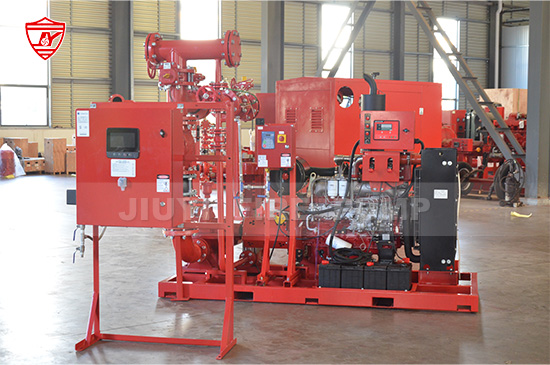
Diesel fire pumps exist for one purpose: to operate without fail during emergencies. Redundant starting systems are the foundation of that reliability. They eliminate single points of failure, comply with international fire standards, and ensure the pump will start when lives and property depend on it.
In fire protection engineering, reliability is never assumed. It is designed, tested, and verified. Redundant starting systems are a clear example of how proper engineering transforms a diesel engine into a true life-safety device.
For any diesel fire pump installation, redundancy in starting systems is not an added feature. It is an absolute necessity.