
A professional fire pump manufacturer should consider suction conditions during pump selection and system configuration.
.jpg)
Important information typically includes:
For packaged fire pump systems, these factors can influence the selection of the fire pump, driver, controller, valves, and other system components.
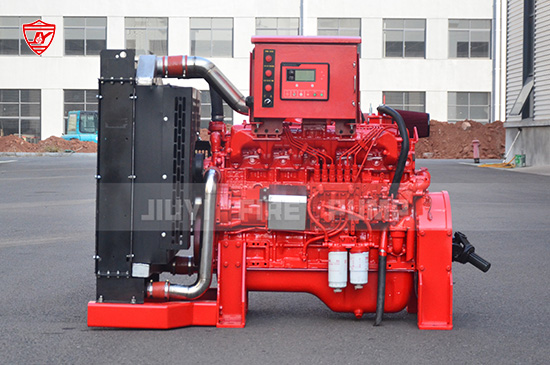
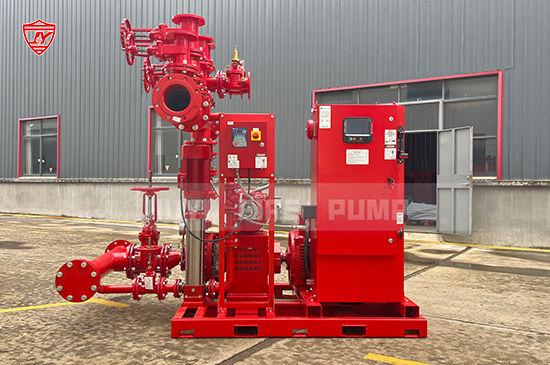
At BETTER Technology Group, fire pump products are developed and tested with attention to hydraulic performance and application requirements. The company provides fire pump solutions including electric fire pumps, diesel engine fire pumps, jockey pumps, and complete fire pump sets for different fire protection applications.
Several mistakes can affect fire pump selection and system reliability.
The highest water level may provide the most favorable suction condition, but it may not represent the worst operating case.
Static elevation does not include friction losses created by flowing water.
Static suction head is an elevation relationship, while operating suction pressure depends on actual hydraulic conditions.
A lower water level can significantly reduce available suction head.
Pump selection should also consider suction conditions and the complete hydraulic system.
Even a correctly selected fire pump can experience poor performance if the actual installation differs significantly from the design.
Several design practices can help create a more reliable suction arrangement.
First, locate the pump at a suitable elevation relative to the water source whenever possible.
Second, provide appropriately sized suction piping to limit unnecessary friction losses.
Third, minimize unnecessary bends, restrictions, and fittings in the suction line.
Fourth, evaluate the minimum water level rather than relying only on the normal tank level.
Fifth, verify the complete hydraulic system under the required operating flow.
Finally, ensure that the selected fire pump matches the actual water supply and system requirements.
.jpg)
Fire pump static suction head is the vertical elevation difference between the water surface of the suction supply and the pump suction reference elevation under static conditions. Although the concept is simple, it plays an important role in fire pump selection, hydraulic design, and system reliability.
A positive static suction head can provide favorable inlet conditions, while suction lift arrangements require additional attention to available pressure, friction losses, atmospheric conditions, and pump capability.
For engineers, contractors, consultants, and fire safety professionals, understanding static suction head is an important step toward designing dependable fire protection systems.
When selecting a fire pump, do not evaluate the pump only by its rated flow and discharge pressure. Consider the water source, minimum water level, pump elevation, suction piping, operating conditions, and applicable fire protection requirements as part of the complete system.
A properly evaluated suction condition helps the fire pump receive the water it needs when the fire protection system is called upon to perform.
.jpg)