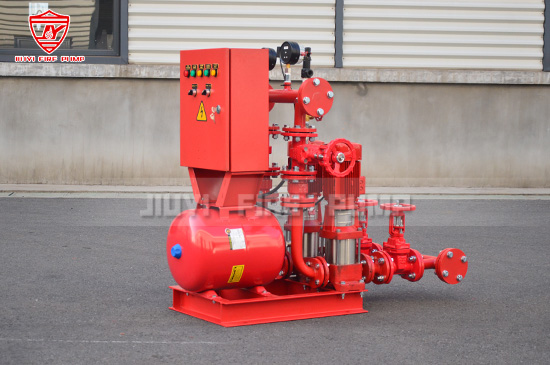
A fire pump operating range is the range of flow and pressure conditions in which a fire pump can operate safely and effectively while meeting the requirements of a fire protection system. Understanding this range is essential when selecting, designing, installing, and testing a fire pump.
Unlike many general-purpose water pumps, fire pumps are designed to perform under specific hydraulic conditions that are determined by the fire protection system. The pump must provide adequate water flow and pressure when sprinklers, hydrants, hose stations, or other firefighting equipment require water.
The operating range is therefore not simply a single flow or pressure value. It represents the relationship between pump flow, discharge pressure, suction conditions, driver capacity, and the requirements of the connected fire protection system.
For fire safety professionals, EPC contractors, system designers, and facility owners, understanding the fire pump operating range can help prevent pump selection errors and ensure reliable performance when the system is needed.
.jpg)
A fire pump may have a rated flow and rated pressure, but its actual operating point can change depending on system demand.
For example, a fire pump may be selected with a rated capacity of 1,000 GPM at a specified pressure. During operation, the actual system demand may be lower or higher than the rated flow. The pump must still operate within an appropriate portion of its performance curve and provide the pressure required by the fire protection system.
If a pump is incorrectly selected, several problems may occur:
For this reason, fire pump operating range should be considered during the earliest stages of system design rather than only during installation.
The most important tool for understanding operating range is the fire pump performance curve.
A typical fire pump curve shows the relationship between flow and pressure. As flow increases, the pressure produced by the pump generally decreases.
The horizontal axis normally represents flow, such as gallons per minute or cubic meters per hour. The vertical axis represents pressure or head.
The curve allows engineers to determine how the pump will perform at different flow conditions.
Several important points are commonly considered when evaluating a fire pump:
Rated flow is the flow capacity for which the fire pump is selected and identified.
Common fire pump ratings may include 250 GPM, 500 GPM, 750 GPM, 1,000 GPM, 1,500 GPM, 2,000 GPM, and larger capacities.
The rated flow should be based on the hydraulic requirements of the fire protection system rather than simply choosing the largest available pump.
Rated pressure is the pressure associated with the pump's rated flow under the specified test and operating conditions.
For example, a pump may be rated at 1,000 GPM at 100 PSI. This does not mean that the pump will always discharge exactly 100 PSI. Its pressure changes as the flow changes.
Churn refers to the condition where the pump is running with little or no discharge flow.
At or near churn, the pump develops its highest discharge pressure under the relevant operating conditions. This pressure is important because excessive churn pressure can affect piping, valves, sprinklers, and other system components.
Churn pressure is therefore an important part of evaluating the pump's operating characteristics.
A fire pump may also need to operate at flows above its rated capacity depending on the applicable standard, certification requirements, and pump design.
For many listed fire pumps, the performance at 150% of rated flow is an important point used when evaluating pump performance. Under commonly referenced NFPA 20 requirements, a centrifugal fire pump is expected to meet specified performance criteria at rated flow and at 150% of rated flow.
However, the exact requirements can vary according to pump type, listing, applicable edition of the standard, and project specifications. Engineers should always verify the requirements applicable to the specific project.
The actual operating range of a fire pump is influenced by several factors.
The required flow and pressure of the system are the starting point for pump selection.
A sprinkler system, hydrant system, industrial fire protection system, and combined sprinkler-hydrant system can have very different hydraulic requirements.
The fire pump should be selected based on the required system demand, including the required flow and pressure at the hydraulically most demanding location.
The pump's impeller, casing, hydraulic passages, and overall design determine how the pump converts mechanical energy into water pressure and flow.
Different pump designs can have different performance characteristics even when their rated flow is similar.
End suction, horizontal split case, vertical turbine, and other fire pump configurations are selected according to project requirements and installation conditions.
Pump performance also depends on the water available at the suction side.
Insufficient suction pressure, excessive suction losses, poor pipe configuration, or inadequate water supply can negatively affect pump performance.
For this reason, suction conditions should be evaluated together with the pump performance curve.
The driver must have sufficient power to operate the pump throughout the required operating range.
Electric motors and diesel engines are commonly used as fire pump drivers. The selected driver must be capable of handling the power requirements of the pump under the applicable operating conditions.
A pump that hydraulically meets the required flow and pressure is not suitable if its driver cannot reliably provide the necessary power.
The fire protection system itself creates resistance to water flow.
As flow increases, friction losses in pipes, fittings, valves, and other components generally increase. This changes the system pressure requirement.
The point where the pump curve intersects the system demand curve represents an operating point. As system demand changes, this operating point can move.
One of the most common misunderstandings is assuming that a fire pump should operate only at its rated flow.
The rated point is an important reference point, but a fire protection system does not always operate at exactly that flow.
During different fire scenarios, the number of operating sprinklers, hose streams, hydrants, and other water outlets can change. Consequently, system demand can vary significantly.
A properly selected fire pump should provide the required hydraulic performance across the conditions anticipated by the applicable design and testing requirements.
This is why engineers should evaluate the complete fire pump performance curve instead of looking only at the nameplate rating.
The 150% flow point is an important reference when evaluating many centrifugal fire pumps.
If a fire pump has a rated capacity of 1,000 GPM, 150% of rated flow would be 1,500 GPM.
The pressure at this higher flow is normally lower than the pressure at rated flow. The pump performance curve should show whether the pump can provide the required performance at this condition.
The 150% point is particularly useful because it helps demonstrate that the pump is not designed to perform only at one narrow operating condition.
However, the 150% point should not be interpreted as an automatic statement that every fire protection system must continuously operate at 150% of rated flow. It is a performance evaluation point associated with applicable fire pump requirements.
Selecting a suitable fire pump requires more than matching one flow number.
A practical selection process should include the following considerations.
First, determine the required fire flow from the hydraulic design of the fire protection system.
Second, determine the required pressure at the critical point in the system. This may include elevation differences, friction losses, required sprinkler pressure, hose requirements, and other system losses.
Third, identify the available water supply and suction conditions.
Fourth, compare the required system demand with the manufacturer's fire pump performance curves.
Fifth, verify the pump's performance at rated flow, churn, and other applicable performance points.
Finally, verify that the driver, controller, piping, valves, and associated equipment are compatible with the selected pump.
The objective is not simply to find a pump with a matching rated flow. The objective is to select a complete fire pump package that can reliably satisfy the hydraulic requirements of the fire protection system.
Fire pump testing is an important way to verify that the installed equipment performs as expected.
During performance testing, measurements such as flow, suction pressure, discharge pressure, and driver conditions can be evaluated at different operating points.
The measured results can then be compared with the manufacturer's certified performance data and applicable requirements.
Testing helps identify issues such as:
For manufacturers, a properly equipped pump test facility is essential for validating hydraulic performance before products are delivered to customers.
Several mistakes can reduce the effectiveness of a fire pump system.
Selecting a 1,000 GPM pump simply because the system requires approximately 1,000 GPM is not enough. The required pressure and complete performance curve must also be evaluated.
A pump may provide sufficient pressure at rated flow but develop excessive pressure at churn. System components must be suitable for the pressures they may experience.
A pump cannot compensate for an inadequate water supply or poorly designed suction arrangement. Available suction conditions must be evaluated during system design.
Maximum flow is only one part of pump performance. Reliable fire protection requires appropriate performance across the relevant operating conditions.
An unnecessarily oversized pump may produce excessive pressure and create additional system design challenges. Pump selection should be based on actual hydraulic requirements and applicable standards.
A reliable fire pump manufacturer should provide more than a pump nameplate.
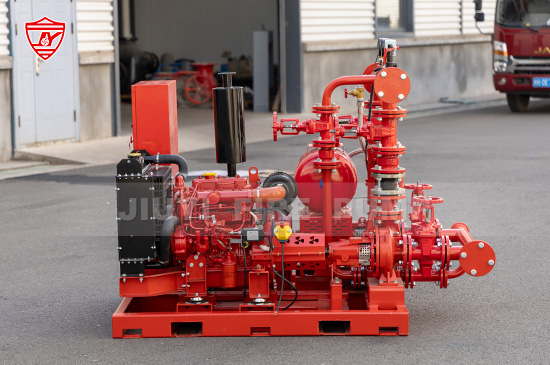
Important technical information can include certified performance curves, rated flow and pressure, churn characteristics, driver information, dimensional data, material specifications, testing documentation, and applicable certification information.
Manufacturing quality and performance testing are also critical because the actual pump must perform consistently with its specified hydraulic characteristics.
At BETTER Technology Group, fire pump development and manufacturing are supported by dedicated testing capabilities designed to verify pump performance and product quality. The company's intelligent pump testing equipment supports a wide range of power and electrical conditions and provides a foundation for systematic performance verification.
For projects requiring listed fire pump equipment, engineers should also verify that the specific pump model and complete pump package have the required certification or approval for the intended application.
.jpg)
Fire pump operating range describes much more than the rated flow printed on a pump nameplate. It represents the range of hydraulic conditions under which the pump is expected to deliver reliable and appropriate performance for a fire protection system.
Understanding rated flow, rated pressure, churn performance, higher-flow performance, suction conditions, system resistance, and driver capacity allows engineers and fire safety professionals to make better pump selection decisions.
The most reliable approach is to evaluate the complete fire pump performance curve and compare it with the hydraulic requirements of the project. Proper selection, installation, testing, and maintenance then work together to ensure that the fire pump is ready to provide the required water flow and pressure when a fire emergency occurs.
.jpg)