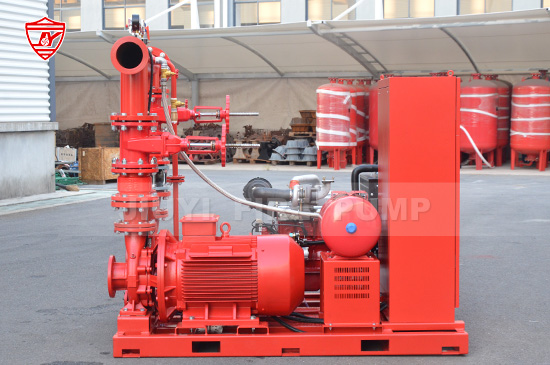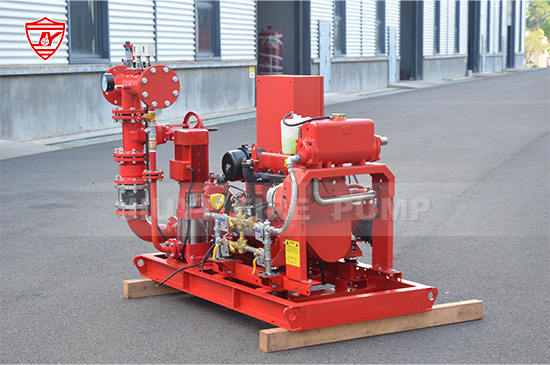
Fire pump systems play a critical role in fire protection by ensuring that adequate water flow and pressure are available when a fire emergency occurs. Among the many technical parameters that define whether a fire pump performs as intended, rated speed deviation is one of the most important yet often misunderstood factors. For engineers, contractors, inspectors, and facility owners, understanding fire pump rated speed deviation is essential for system reliability, regulatory compliance, and long-term operational safety.
This article explains what fire pump rated speed deviation means, why it matters, how it is measured, what causes deviation, and how manufacturers and end users can control it throughout the life cycle of a fire pump system.
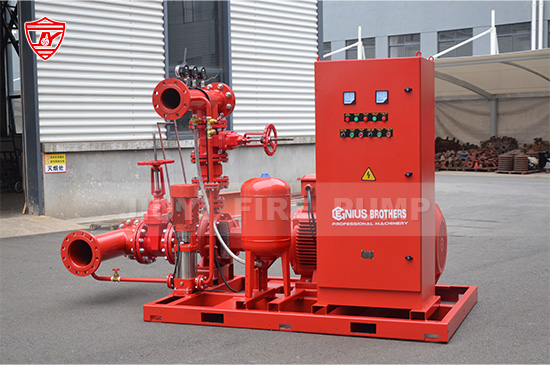
Rated speed refers to the rotational speed at which a fire pump is designed to operate to deliver its rated flow and pressure. For electric motor-driven fire pumps, rated speed is typically determined by the motor design and power supply frequency. For diesel engine-driven fire pumps, rated speed is set by the engine governor and mechanical configuration.
The rated speed is not an arbitrary value. It is the speed at which the pump’s performance curve, efficiency, and pressure-flow relationship are validated during factory testing. Fire pump standards and approvals are based on the assumption that the pump operates at or near this rated speed during real emergency conditions.
Any deviation from this rated speed changes the pump’s hydraulic output. Since pump flow and pressure are directly related to speed, even small speed variations can lead to significant performance changes.
Fire pump rated speed deviation refers to the difference between the actual operating speed of the fire pump during testing or operation and the manufacturer’s rated speed for that pump. This deviation is usually expressed as a percentage above or below the rated speed.
For example, if a fire pump has a rated speed of 1760 rpm and during operation the measured speed is 1810 rpm, the pump is operating above its rated speed. If the measured speed is 1700 rpm, the pump is operating below its rated speed.
Rated speed deviation is closely monitored because it directly affects:
Pump flow output
Discharge pressure
Mechanical stress on pump and driver components
System reliability during fire events
Compliance with fire protection standards
In fire protection systems, performance must be predictable and repeatable. Speed deviation introduces uncertainty into system behavior, which can compromise safety and regulatory compliance.
Fire protection systems are designed based on calculated hydraulic demands. These calculations assume that the fire pump will deliver specific pressure and flow values under emergency conditions. If the actual pump speed deviates from the rated speed, the delivered performance may not match the design assumptions.
Overspeed conditions may result in:
Higher-than-expected pressure that can damage piping, valves, sprinklers, and hose connections
Increased mechanical wear on pump bearings and seals
Higher vibration levels
Reduced equipment lifespan
Underspeed conditions may result in:
Insufficient flow to meet sprinkler system demand
Inadequate pressure at remote or elevated discharge points
Failure to meet required fire protection coverage
Non-compliance with acceptance test requirements
In critical fire scenarios, even minor shortfalls in flow or pressure can delay fire suppression and increase property damage and life safety risks.
Fire pump rated speed deviation is governed by widely recognized fire protection standards. These standards specify acceptable limits for speed variation to ensure consistent performance across different installations and manufacturers.
For most fire pump systems, the rated speed deviation tolerance is limited to a narrow range. During acceptance testing and commissioning, the measured speed must fall within the permitted deviation range from the rated speed. If the deviation exceeds allowable limits, the pump may be considered non-compliant.
These tolerance requirements exist to ensure:
Consistency between factory test results and field performance
Predictable hydraulic behavior
Safety margins for system components
Interchangeability of pump components and system designs
Manufacturers design pumps to meet these tolerance limits under normal operating conditions. However, site conditions, installation quality, and power supply stability can influence real-world speed performance.
Fire pump performance is governed by pump affinity laws, which describe the relationship between speed, flow, pressure, and power. These relationships are fundamental to understanding why rated speed deviation has such a strong impact on system behavior.
When pump speed increases:
Flow increases approximately in proportion to speed
Pressure increases approximately with the square of speed
Power consumption increases approximately with the cube of speed
When pump speed decreases:
Flow decreases proportionally
Pressure decreases more rapidly
Available fire protection coverage may be compromised
This nonlinear relationship means that even a small percentage change in speed can result in a much larger percentage change in pressure or power demand. This is especially critical for diesel-driven fire pumps, where engine speed stability directly influences pump output.
Several factors can cause fire pump rated speed deviation during operation or testing. Understanding these causes helps system designers and operators take preventive measures.
For electric motor-driven fire pumps, fluctuations in voltage and frequency can affect motor speed. In regions with unstable power grids or during generator operation, frequency deviations can directly change motor speed and therefore pump speed.
Diesel fire pumps rely on mechanical or electronic governors to control engine speed. Improper governor calibration, wear over time, or mechanical faults can lead to overspeed or underspeed conditions.
Changes in system backpressure, mechanical friction, bearing condition, and coupling alignment can affect the actual load on the pump and driver, which may alter operating speed.
Fire pump controllers play a critical role in regulating startup behavior and speed stability. Incorrect controller settings or malfunctioning sensors can cause transient speed deviations during startup and steady-state operation.
Temperature, altitude, and humidity can influence engine performance and motor efficiency. In extreme environments, these factors can contribute to measurable speed deviations, especially for diesel engines.
Accurate measurement of fire pump rated speed deviation is part of acceptance testing and periodic inspection. Speed can be measured using:
Mechanical tachometers
Digital non-contact tachometers
Engine control system readouts
Motor speed sensors integrated into controllers
Measurements should be taken under stable operating conditions, typically at rated flow and pressure points. Multiple readings may be required to account for transient fluctuations during startup and load changes.
During commissioning, speed measurements are compared against the manufacturer’s rated speed and documented in acceptance test reports. Any deviation beyond allowable limits requires corrective action before system approval.
Failure to control rated speed deviation can lead to serious operational and regulatory consequences.
From a safety perspective, underspeed conditions may prevent the system from delivering sufficient water to critical fire protection zones. This directly undermines the purpose of the fire pump system.
From a compliance perspective, excessive speed deviation can result in failed acceptance tests, project delays, and costly rework. In regulated environments, non-compliant systems may not receive occupancy approval or insurance acceptance.
From an equipment reliability perspective, sustained overspeed operation accelerates wear on mechanical components, increases vibration, and raises the risk of premature failures during emergency operation.
Manufacturers, installers, and end users all share responsibility for controlling fire pump rated speed deviation. Several best practices can help ensure stable and compliant performance.
Selecting pumps, motors, and diesel engines that are correctly matched for the required duty point is the foundation of speed stability. Oversized or undersized drivers can lead to unstable operating behavior.
Factory performance testing under controlled conditions establishes baseline speed and performance values. For diesel engines, governor calibration should be verified before shipment.
Mechanical misalignment, improper coupling installation, and excessive pipe strain can affect load conditions and speed stability. Professional installation practices reduce these risks.
Fire pump controllers should be configured according to manufacturer specifications and verified during commissioning. Speed monitoring and alarm functions should be tested to ensure early detection of abnormal conditions.
Over time, wear and environmental factors can change operating characteristics. Regular inspection, lubrication, governor checks, and controller testing help maintain rated speed compliance throughout the system’s service life.
As a fire pump manufacturer, controlling rated speed deviation begins at the design stage. Pump hydraulic design, driver selection, and performance testing must all align to ensure predictable speed-performance relationships.
Manufacturers are responsible for:
Defining rated speed clearly in technical documentation
Ensuring pump performance curves are validated at rated speed
Providing clear commissioning and testing guidelines
Supporting proper governor and controller configuration
Offering technical support for troubleshooting speed-related issues
By delivering well-matched pump packages and comprehensive documentation, manufacturers help reduce the risk of speed deviation issues in the field.
During commissioning, rated speed deviation is verified as part of the overall acceptance test procedure. This step confirms that the installed fire pump system performs as designed under real-world conditions.
If deviation is detected, corrective measures may include:
Adjusting diesel engine governor settings
Verifying power supply frequency stability
Inspecting mechanical alignment
Reconfiguring controller parameters
Addressing speed deviation at the commissioning stage prevents long-term performance problems and ensures that the system is ready to operate reliably in emergency conditions.
Fire pump systems are expected to remain operational for many years, often with long periods of standby operation followed by critical emergency use. Maintaining rated speed within acceptable deviation limits over the long term is essential for ensuring that the pump will perform as expected when called upon.
Consistent speed control contributes to:
Predictable hydraulic performance
Reduced mechanical stress
Longer equipment service life
Lower maintenance costs
Higher confidence in fire protection readiness
For facility owners and operators, this translates into improved safety outcomes and better return on investment in fire protection infrastructure.
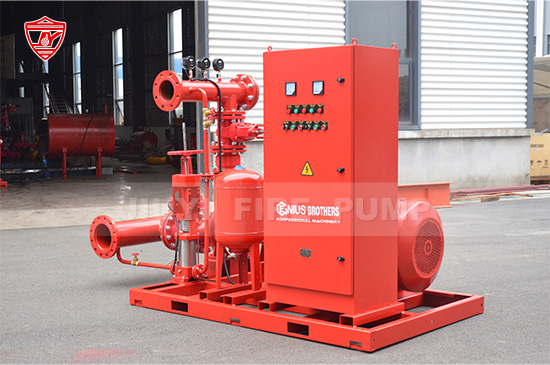
Fire pump rated speed deviation is a fundamental parameter that directly influences the performance, reliability, and compliance of fire protection systems. While it may appear to be a minor technical detail, its impact on flow, pressure, and equipment durability makes it a critical consideration for manufacturers, designers, contractors, and end users alike.
By understanding what rated speed deviation is, what causes it, how it is measured, and how it can be controlled, stakeholders in the fire safety field can ensure that fire pump systems deliver consistent, compliant, and reliable performance when it matters most.