In every fire protection system, maintaining stable water pressure is critical for effective firefighting performance. Whether in commercial buildings, industrial facilities, warehouses, or high-rise structures, fire pumps play a key role in delivering the required water flow and pressure during emergencies. However, many systems experience a common issue known as fire pump pressure loss.
Fire pump pressure loss refers to the reduction of water pressure as water moves through the fire protection system. This pressure drop can occur at different points in the system due to friction, pipe design, elevation changes, equipment resistance, or mechanical problems. If pressure loss becomes excessive, the system may fail to deliver sufficient water to sprinklers, hydrants, or hose reels during a fire emergency.
Understanding the causes, effects, and prevention methods of fire pump pressure loss is essential for engineers, contractors, facility managers, and fire protection professionals.
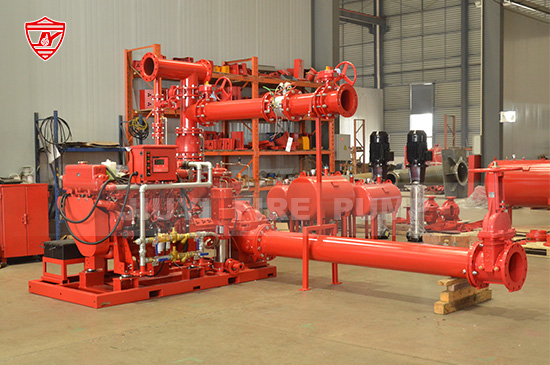
A fire pump is designed to increase water pressure in a fire protection system when the incoming water supply is insufficient. The pump ensures that water reaches the required flow rate and pressure specified by fire protection standards.
However, once water begins traveling through pipes, valves, fittings, and other components, resistance develops. This resistance causes pressure loss, also known as pressure drop or friction loss.
Pressure loss is a normal hydraulic phenomenon, but excessive pressure loss can significantly reduce system performance.
For example, if a fire pump generates 150 PSI at discharge, but the system loses 40 PSI due to pipe friction and elevation, only 110 PSI may reach the sprinkler system. In large facilities, this difference can impact firefighting effectiveness.
One of the most common causes of pressure loss is friction between water and the internal surface of pipes.
As water flows through piping systems, resistance develops along the pipe walls. The longer the pipe length, the greater the friction loss. Smaller pipe diameters also increase resistance because water velocity becomes higher.
Several factors influence friction loss, including:
Older pipes with corrosion or mineral buildup usually create higher friction loss than newer smooth pipes.
Every elbow, tee, valve, check valve, reducer, and coupling in the piping system creates additional resistance.
Complex pipe layouts with numerous fittings increase turbulence and reduce pressure efficiency. Poor system design can therefore lead to significant pressure drops even when the fire pump itself is operating correctly.
Common components contributing to pressure loss include:
Reducing unnecessary fittings can help minimize pressure loss.
Vertical elevation has a major impact on fire pump pressure requirements.
In high-rise buildings or facilities with elevated piping systems, the pump must overcome gravitational pressure losses to move water upward. The higher the elevation, the greater the required pressure.
As a general rule, every 2.31 feet of vertical rise requires approximately 1 PSI of pressure.
For example, a 100-foot-high building may require more than 43 PSI simply to overcome elevation.
This is why high-rise fire protection systems often use high-pressure fire pumps or zoned pumping systems.
Pipe sizing is critical in fire protection system design.
If the pipe diameter is too small for the required flow rate, water velocity increases excessively, leading to greater friction loss.
Undersized suction pipes are especially dangerous because they may create cavitation inside the fire pump. Cavitation occurs when vapor bubbles form due to low pressure and then collapse violently inside the pump, causing damage to impellers and internal components.
Proper hydraulic calculations help determine the correct pipe sizes for fire protection systems.
Over time, pipes may accumulate rust, scale, debris, or sediment. These obstructions reduce the effective internal diameter of the pipe and increase resistance.
Corroded pipes can create severe pressure loss and uneven water distribution throughout the system.
Common signs include:
Regular inspection and maintenance are essential to prevent blockage-related pressure loss.
Sometimes the pressure loss originates from the fire pump itself rather than the piping system.
Worn impellers, damaged bearings, seal leakage, improper alignment, or motor issues can reduce pump efficiency and discharge pressure.
Common mechanical causes include:
Routine fire pump testing helps identify these problems before system performance is affected.
Excessive pressure loss can have serious consequences during a fire emergency.
If pressure reaching sprinklers or hydrants is too low, water flow may become insufficient to control or suppress a fire effectively.
Sprinklers may fail to achieve proper spray patterns, reducing coverage and cooling performance.
Fire protection systems must comply with hydraulic design standards and testing requirements.
Excessive pressure loss may cause the system to fail performance tests or fail to meet required design densities.
Proper system calculations are necessary to ensure compliance.
When pressure loss becomes excessive, the fire pump must work harder to maintain the required discharge pressure.
This increases energy usage and may shorten equipment lifespan.
Diesel-driven pumps may consume more fuel, while electric pumps experience higher power demand.
Pressure-related problems such as cavitation and water hammer can damage fire pumps, valves, and piping components.
Long-term operation under improper hydraulic conditions can lead to expensive repairs and downtime.
Pressure loss calculations are a critical part of fire protection system design.
Engineers typically calculate total pressure loss using hydraulic formulas that consider:
One commonly used method is the Hazen-Williams formula for water flow in pipes.
The total pressure loss usually includes:
Accurate hydraulic calculations ensure that the fire pump can deliver sufficient pressure under emergency conditions.
Identifying pressure loss early can help prevent system failure.
Typical warning signs include:
Routine monitoring and testing help detect these issues before they become critical.
Good pipe design is one of the most effective ways to reduce pressure loss.
Best practices include:
Efficient piping layouts improve hydraulic performance significantly.
Preventive maintenance helps keep the fire pump system operating efficiently.
Maintenance tasks include:
Routine maintenance reduces the risk of unexpected pressure problems.
Regular fire pump performance testing is essential for identifying pressure loss issues.
Testing helps verify:
Annual testing and periodic inspections help maintain compliance and operational readiness.
Older fire protection systems may experience increasing pressure loss due to corrosion, outdated pipe sizing, or inefficient equipment.
System upgrades may include:
Modernization can significantly improve system performance and reliability.
Selecting the correct fire pump is critical for minimizing pressure loss.
The pump must match the required system flow and pressure demands while accounting for hydraulic losses throughout the network.
Factors to consider include:
Proper fire pump selection improves overall system efficiency and reliability.
Fire protection systems should always be designed by qualified professionals familiar with hydraulic calculations and fire safety standards.
Poorly designed systems often experience excessive pressure loss, resulting in operational inefficiencies and safety risks.
Professional design ensures:
Investing in quality design reduces long-term maintenance costs and improves fire protection effectiveness.
Fire pump pressure loss is a critical factor that directly affects the performance and reliability of fire protection systems. While some pressure loss is unavoidable in any hydraulic system, excessive pressure loss can reduce firefighting effectiveness, increase operating costs, and damage system components.
Understanding the causes of pressure loss — including friction, elevation, pipe sizing, fittings, corrosion, and mechanical issues — helps facility owners and fire protection professionals maintain efficient system performance.