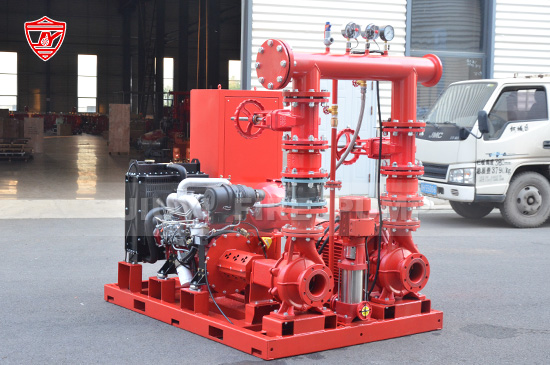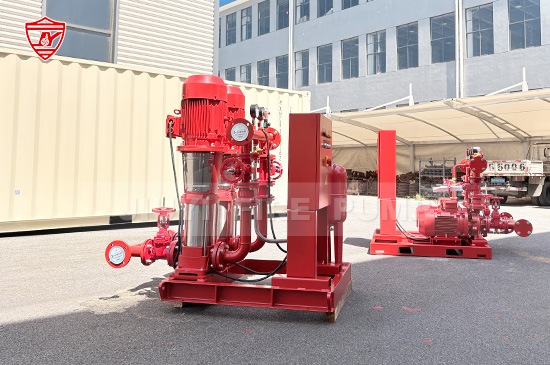
A fire pump performance test is a systematic test used to verify whether a fire pump can deliver the required flow and pressure under specified operating conditions. It is one of the most important procedures for confirming the reliability and performance of a fire protection system.
For building owners, fire protection contractors, engineers, consultants, and facility managers, understanding fire pump performance testing is essential. A fire pump may look correctly installed and start normally, but only a properly conducted performance test can demonstrate whether it actually meets its required hydraulic performance.
For a fire pump manufacturer, performance testing is also an important part of quality control. Pumps should be tested under controlled conditions before delivery, while installed systems should be tested again after installation and during regular maintenance.
.jpg)
A fire pump performance test primarily evaluates the relationship between the pump's flow rate and discharge pressure.
During the test, the pump is operated at different flow conditions. Measurements are then compared with the pump's rated performance and applicable requirements.
The main parameters normally evaluated include:
The resulting measurements can be used to develop or verify a fire pump performance curve.
A performance curve shows how much pressure a pump can produce at different flow rates. This provides a practical way to determine whether the pump is performing as expected.
A fire pump is a critical component of many fire protection systems. During a fire emergency, sprinklers, hydrants, hose stations, or other water-based fire protection equipment may require a reliable supply of water at sufficient pressure.
A pump that does not produce the required flow or pressure may compromise the performance of the overall fire protection system.
Performance testing helps identify potential problems before an emergency occurs.
For example, a test may reveal:
Regular testing therefore provides more than a record of pump operation. It provides evidence that the fire pump can perform its intended function.
Fire pump performance testing can be required at several stages of a pump's service life.
Before a fire pump leaves the manufacturing facility, the manufacturer may conduct controlled performance testing.
Factory testing allows engineers to verify pump performance under known conditions. A manufacturer can measure flow, pressure, speed, power, and other parameters and compare the results with the specified requirements.
For fire pump manufacturers, a properly equipped test facility is an important part of quality control.
A factory test can also help identify manufacturing or assembly issues before the pump is shipped to the project site.
After a fire pump is installed, an acceptance test is conducted to verify that the complete installed system performs as required.
This is particularly important because a pump can perform correctly at the factory but encounter different conditions after installation.
For example, the installed system may have different suction conditions, piping arrangements, valves, fittings, power supplies, or driver configurations.
Acceptance testing evaluates the pump as part of the installed fire protection system.
Fire pumps also require ongoing inspection and testing after commissioning.
Periodic testing helps determine whether pump performance remains consistent over time. Changes in performance may indicate wear, corrosion, blockage, valve problems, driver issues, or other conditions requiring investigation.
The exact testing frequency and procedure depend on the applicable standards, local regulations, system design, and authority having jurisdiction.
The exact procedure depends on the type of fire pump, installation, testing equipment, and applicable requirements. However, a typical performance test follows several basic steps.
Before starting the test, the pump, driver, piping, valves, controller, gauges, and related equipment should be inspected.
The testing team should confirm that the equipment is properly installed and that the system is ready for testing.
The condition of suction and discharge piping is particularly important because restrictions or incorrect valve positions can affect test results.
The pump is started using its normal starting method.
For an electric fire pump, the test may involve the electric motor and fire pump controller.
For a diesel fire pump, the diesel engine, batteries, fuel supply, cooling system, exhaust system, and related equipment must also operate correctly.
The pump should reach its required operating speed before measurements are taken.
The first measurement is commonly taken at a condition where the pump is operating with little or no discharge flow.
This provides information about the pressure the pump can develop under shutoff or churn conditions.
The measured value can be compared with the expected pump performance.
The pump is then tested at one or more intermediate flow conditions.
At each point, technicians record the flow rate and corresponding suction and discharge pressures.
These measurements provide additional information about the pump's operating characteristics.
The pump is tested at its rated flow condition.
For example, if a fire pump is rated at 1,000 GPM, the test should include a condition where the pump operates at approximately its rated flow, subject to the applicable testing procedure.
The corresponding pressure is recorded and compared with the required performance.
Depending on the applicable requirements, the test may include operation at a higher flow rate.
Testing at multiple flow points provides a more complete understanding of pump performance and allows the actual performance curve to be evaluated.
A fire pump test curve is a graphical representation of pump performance.
The horizontal axis generally represents flow, while the vertical axis represents pressure or head.
As flow increases, pump discharge pressure normally decreases. The curve therefore provides engineers with a visual representation of how the pump behaves across its operating range.
A typical fire pump performance evaluation may compare the actual test results with the manufacturer's certified or expected performance.
If the measured curve differs significantly from the expected curve, further investigation may be necessary.
This is why performance testing is more meaningful than simply confirming that the pump starts and runs.
A standard industrial pump test and a fire pump performance test may both measure flow and pressure, but their purposes can be different.
A general water pump test may focus primarily on hydraulic efficiency, operating point, power consumption, or equipment selection.
A fire pump performance test focuses on whether the pump can reliably provide the hydraulic performance required by a fire protection system.
The testing process must therefore consider not only the pump itself but also the driver, controller, piping, water supply, instrumentation, and installation conditions.
For fire protection applications, reliability is particularly important because the equipment may remain inactive for long periods and then be required to operate immediately during an emergency.
A professional fire pump test facility typically uses specialized equipment to measure pump performance accurately.
Common equipment includes:
The accuracy and calibration of testing equipment are important because incorrect measurements can result in an incorrect assessment of pump performance.
A well-designed manufacturer's test facility should also be capable of safely handling the flow and pressure generated by large fire pumps.
If a fire pump does not achieve the expected performance, several factors should be considered.
One possible cause is a problem with the water supply. Insufficient suction pressure or restricted suction piping can limit pump performance.
Valve position is another important factor. A partially closed valve can restrict water flow and produce abnormal test results.
Mechanical conditions may also affect performance. Impeller damage, wear, incorrect assembly, bearing problems, or other mechanical issues can reduce pump output.
For electric fire pumps, electrical supply problems may affect motor performance. Voltage, phase conditions, connections, and controller operation should be checked when abnormal results occur.
For diesel fire pumps, engine speed, fuel supply, cooling, exhaust, batteries, and other engine-related factors should be evaluated.
Incorrect instrumentation can also create misleading results. Before concluding that the pump itself has a problem, the testing equipment and measurement conditions should be verified.
Factory performance testing gives buyers valuable information before equipment reaches the project site.
A controlled factory environment allows the manufacturer to evaluate the pump under repeatable conditions. This can provide greater confidence in the hydraulic performance of the supplied equipment.
For large or customized fire pump systems, factory testing can be particularly useful because the equipment may include multiple components, such as electric pumps, diesel pumps, jockey pumps, controllers, motors, and other accessories.
Testing the equipment before shipment can help reduce the risk of discovering performance problems during project commissioning.
It also gives manufacturers an opportunity to verify that the pump meets the specified duty point before delivery.
A fire pump test report should contain sufficient information to understand the conditions under which the test was conducted.
Important information may include:
Customers should compare the test results with the approved pump specifications and applicable project requirements.
It is also important to understand that a test result is meaningful only when the measurement conditions and equipment are properly controlled.
Performance testing should be considered part of a broader fire pump maintenance program.
A pump that performs correctly today may experience changes over time due to mechanical wear, corrosion, changes in water supply, valve conditions, or other factors.
Comparing current test results with previous records can help identify performance trends.
For example, a gradual reduction in pressure at a particular flow condition may indicate that the system should be inspected.
Maintaining accurate historical test records therefore provides useful information for facility owners and maintenance teams.
.jpg)
Fire pump performance testing is an essential part of ensuring that fire protection equipment can provide the required hydraulic performance.
For customers selecting a fire pump manufacturer, testing capability should be considered alongside pump design, manufacturing experience, quality control, certifications, and technical support.
A professional fire pump manufacturer should have appropriate testing equipment and procedures for evaluating different types of fire pumps and drivers.
Factory testing, installation acceptance testing, and periodic performance testing each provide different types of information. Together, they help verify that a fire pump remains capable of delivering the required flow and pressure when the fire protection system needs it.
For project engineers, contractors, consultants, and building owners, understanding the fire pump performance test process makes it easier to evaluate equipment, interpret test results, identify potential problems, and maintain reliable fire protection systems.
.jpg)