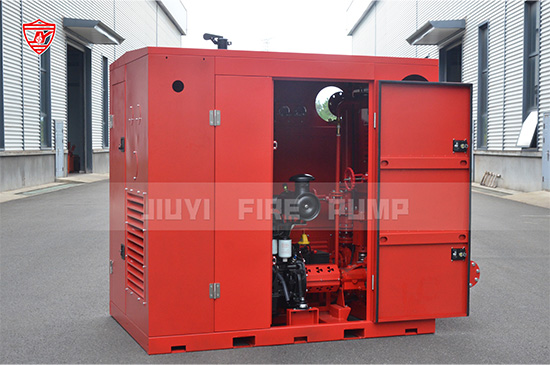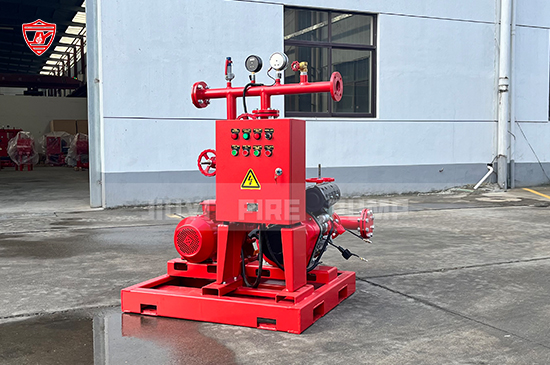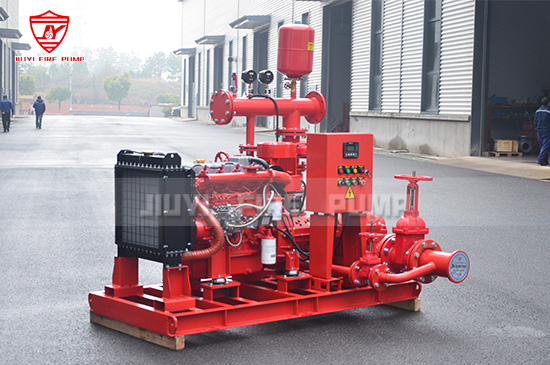
Fire pumps are the heart of any fire protection system. When a fire emergency occurs, the pump must deliver the required flow and pressure reliably, without hesitation or failure. Because of this critical role, fire pump testing standards are far more stringent than those applied to ordinary water pumps.
One of the most common questions asked by engineers, contractors, and building owners is: Why are fire pump flow tests conducted at 100% and 150% of rated capacity? The answer lies in safety, system reliability, and compliance with internationally recognized standards such as NFPA 20.
This article explains the technical reasoning behind 100% and 150% fire pump flow tests, what each test verifies, and why both are essential for ensuring dependable fire protection.
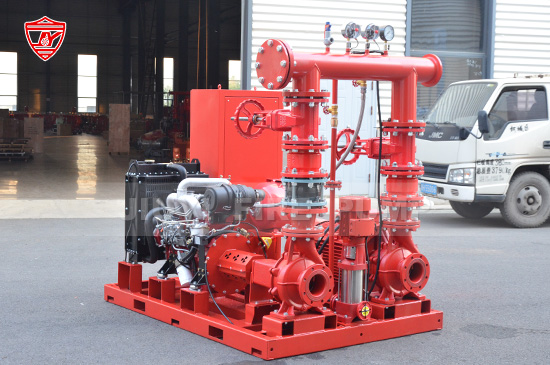
Fire pump flow testing, often referred to as a performance test or acceptance test, is conducted to verify that a fire pump operates according to its design and rated performance. Unlike standard industrial pumps, fire pumps are designed for emergency use, where failure is not an option.
Flow testing is typically conducted during:
Factory acceptance testing
Site acceptance testing after installation
Periodic performance verification
During these tests, the pump’s flow rate, pressure, speed, and overall behavior are measured under controlled conditions.
100% flow represents the rated capacity of the fire pump, as specified on its nameplate. For example:
A 1000 GPM fire pump tested at 100% flow must deliver 1000 GPM at its rated pressure
A 750 GPM pump must achieve exactly 750 GPM under the same conditions
This point on the pump curve is the baseline performance requirement.
The 100% flow test confirms that:
The pump delivers the required flow for system demand
The pump produces the rated pressure at design speed
The pump matches the certified performance curve
The fire protection system will function as designed during a real fire
In practical terms, this test verifies that the pump can meet the hydraulic demand of sprinklers, hydrants, and other fire protection equipment.
Fire protection systems are hydraulically calculated based on the assumption that the fire pump will perform at its rated capacity. If the pump cannot achieve 100% flow:
Sprinkler discharge densities may be reduced
Hose stream allowances may not be met
Fire suppression effectiveness can be compromised
Testing at 100% flow ensures that the system’s design assumptions match real-world performance.
150% flow means the fire pump is tested at one and a half times its rated capacity. For example:
A 1000 GPM pump is tested at 1500 GPM
A 500 GPM pump is tested at 750 GPM
At this flow rate, the pressure is allowed to drop, but it must remain within acceptable limits defined by standards.
The 150% flow test is not about normal operation. Instead, it evaluates the pump’s ability to perform under extreme and unexpected conditions.
This test verifies:
Hydraulic stability across the pump curve
Mechanical integrity at high flow conditions
Adequate motor or engine power reserve
Absence of cavitation, vibration, or abnormal noise
In fire scenarios, multiple zones may activate simultaneously, or hose streams may exceed calculated demand. The 150% test ensures the pump can handle these overload conditions safely.
While pressure naturally decreases as flow increases, standards specify limits to ensure safety.
At 150% flow:
The pump must not drop below a minimum percentage of rated pressure
Excessive pressure loss may indicate improper impeller sizing or design issues
Stable operation is more important than maintaining rated pressure
This requirement prevents the use of pumps that only perform well at a single point but fail under variable demand.
Together, the 100% and 150% flow tests provide a complete picture of fire pump performance.
100% flow confirms design compliance
150% flow confirms overload capability and reliability
Testing only at rated flow would leave unknown risks during peak demand. Testing only at overload would not confirm normal system performance. Both points are required to ensure a safe operating range.
Fire pumps are evaluated against a performance curve that plots flow versus pressure. The 100% and 150% test points are essential reference markers on this curve.
A properly designed fire pump should:
Have a smooth, continuous curve
Maintain stable pressure from churn to 150% flow
Avoid sharp drops or unstable regions
Flow testing verifies that the actual pump curve matches the certified curve provided by the manufacturer.
NFPA 20 establishes performance criteria to ensure fire pumps are suitable for life safety applications.
Key principles behind NFPA flow testing requirements include:
Fire pumps must be capable of supplying more than calculated demand
Performance must be predictable across a range of operating conditions
Pumps must tolerate real-world variations without failure
The 100% and 150% flow tests are practical implementations of these principles.
Standard industrial or commercial pumps are typically tested at:
Best efficiency point
Limited operating range
Fire pumps, however:
Prioritize reliability over efficiency
Are tested well beyond normal operating points
Must perform under worst-case scenarios
This is why fire pump flow testing includes extreme conditions that would not be acceptable for ordinary pumps.
Flow testing at 100% and 150% often reveals issues that would otherwise remain hidden, such as:
Insufficient motor horsepower
Incorrect impeller trimming
Suction supply limitations
Excessive vibration or noise
Cavitation at high flow
Identifying these issues early prevents costly failures after system commissioning.
The principles of 100% and 150% flow testing apply to all fire pump types, including:
Electric motor-driven fire pumps
Diesel engine fire pumps
Vertical turbine fire pumps
While the drive method and installation may differ, the performance expectations remain the same. Each pump must demonstrate reliability across its full operating range.
Proper flow testing provides confidence to:
Building owners, who rely on system reliability
Fire protection engineers, who design based on verified data
Authorities having jurisdiction, who approve system compliance
A fire pump that passes both 100% and 150% flow tests demonstrates readiness for real emergency conditions.
From a manufacturer’s standpoint, flow testing is not just a regulatory requirement. It is a quality assurance process that validates:
Hydraulic design accuracy
Manufacturing consistency
Component reliability under stress
Manufacturers that emphasize full-range flow testing deliver products that perform predictably in the field.
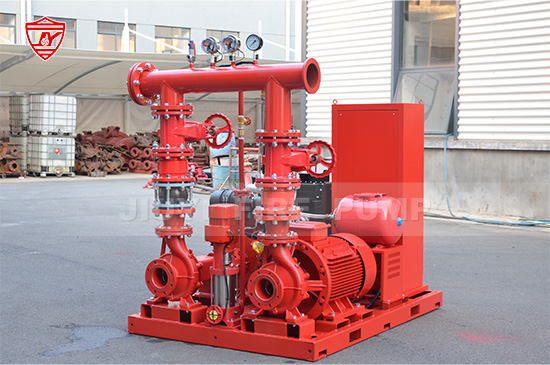
Fire pump flow tests conducted at 100% and 150% are fundamental to fire protection system reliability. The 100% flow test confirms that the pump meets its rated performance and supports system design requirements. The 150% flow test proves that the pump can handle unexpected demand, overload conditions, and real-world fire scenarios without failure.
Together, these tests ensure that fire pumps are not just compliant on paper, but dependable when lives and property are at risk. For any fire safety system, this level of performance verification is not optional—it is essential.