A containerized fire pump is a complete fire protection pumping solution designed to provide reliable water supply for fire protection systems, particularly where a conventional pump room is impractical or additional protection is required. Because the system integrates fire pumps, drivers, controllers, piping, valves, fuel systems, ventilation, and other components within a container, regular maintenance is essential for ensuring that the entire system remains ready for operation when an emergency occurs.
Proper maintenance does more than extend equipment life. It helps identify developing problems before they affect fire pump performance, supports reliable starting and operation, reduces unexpected downtime, and helps the system remain aligned with applicable project requirements and manufacturer recommendations.
For facility owners, fire protection contractors, system integrators, and maintenance teams, understanding how to maintain a containerized fire pump is an important part of managing the overall reliability of a fire protection system.
.jpg)
Before beginning maintenance, it is important to understand what equipment is installed inside the container and how each component works together.
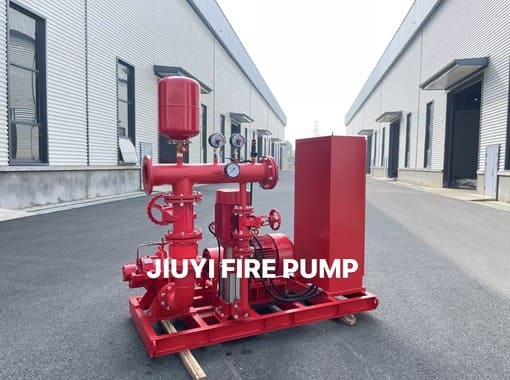
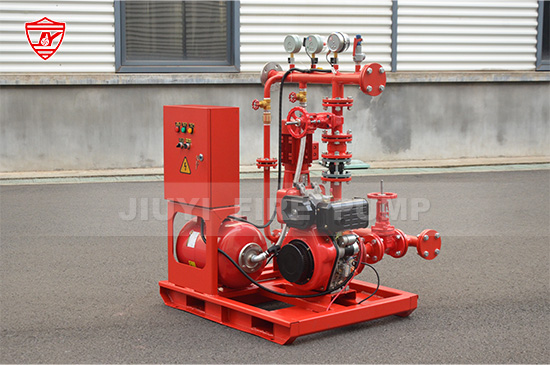
A typical containerized fire pump system may include an electric fire pump, diesel engine fire pump, jockey pump, controllers, suction and discharge piping, valves, pressure gauges, fuel tank, batteries, ventilation equipment, exhaust system, lighting, heating or cooling equipment, and monitoring devices.
Some systems may also include multiple fire pumps, depending on the required flow and pressure. A common arrangement can include an electric main fire pump, diesel backup fire pump, and jockey pump for maintaining system pressure.
Maintenance should therefore cover both the fire pump equipment and the container environment. A pump may be mechanically sound but still fail to operate correctly if the controller, battery, ventilation system, fuel supply, or surrounding equipment has a problem.
Visual inspection is one of the simplest and most important maintenance activities.
Start by checking the overall condition of the container. Look for water leakage, corrosion, damaged panels, loose components, unusual odors, oil or fuel stains, and signs of overheating. The container doors should open and close properly, and access to critical equipment should remain unobstructed.
Check the pump, motor or diesel engine, valves, piping, fittings, gauges, and electrical connections for visible abnormalities.
Pay particular attention to:
Water leaks around pumps, valves, and pipe connections
Oil or fuel leakage from diesel equipment
Corrosion on pipes, valves, and structural components
Damaged insulation or electrical cables
Loose bolts, fittings, or supports
Abnormal gauge readings
Damaged warning labels or identification plates
Obstructions around ventilation openings
Signs of condensation or excessive moisture
Any abnormal condition should be investigated rather than ignored. Small leaks or corrosion spots can become significant problems if they remain untreated for long periods.
The container itself is an important part of the fire pump installation.
A fire pump container should provide an appropriate environment for the equipment inside. Temperature, humidity, ventilation, drainage, lighting, and cleanliness should be regularly checked.
For diesel engine fire pumps, adequate ventilation is particularly important. Diesel engines require sufficient air for combustion and appropriate removal of heat and exhaust gases. Ventilation equipment should be inspected to ensure that air inlets, exhaust systems, louvers, fans, and related components are functioning correctly.
In cold environments, heating and freeze protection are especially important. Water-filled piping and components must be protected against freezing because frozen water can damage equipment and prevent the fire protection system from operating.
In hot or humid environments, excessive temperature and condensation can affect electrical equipment, batteries, controllers, and other components.
The container should also be kept clean and free from unnecessary storage materials. A fire pump container should never become a general storage area.
The main fire pump requires regular inspection and testing according to the manufacturer's recommendations and the requirements applicable to the installation.
For an electric fire pump, inspect the motor, coupling, pump casing, shaft, bearings, seals, and associated electrical equipment. Check for unusual noise, vibration, overheating, or leakage during operation.
For a diesel engine fire pump, additional attention is required for the engine itself. Inspect engine oil, coolant, fuel supply, batteries, belts, hoses, filters, and exhaust components according to the engine manufacturer's maintenance schedule.
The pump and driver should operate smoothly without abnormal vibration or noise. If operating conditions change noticeably compared with previous inspections, the cause should be investigated.
Routine maintenance should always follow the specific equipment manufacturer's instructions rather than relying only on general maintenance practices.
The jockey pump plays a different role from the main fire pumps. Its primary purpose is generally to maintain pressure in the fire protection system and compensate for small pressure losses.
A malfunctioning jockey pump can result in unnecessary starting of the main fire pump or unstable system pressure.
During maintenance, check the jockey pump for:
Proper starting and stopping
Pressure switch operation
Leakage
Abnormal noise or vibration
Motor condition
Valve position
Pressure gauge readings
Electrical connections
The pressure settings of the jockey pump should be coordinated correctly with the main fire pump starting sequence. Any adjustment should be performed by qualified personnel in accordance with the approved system design.
Correct valve position is critical to fire pump performance.
During inspection, verify that required suction, discharge, bypass, and test-line valves are in their designated positions. Valves should be accessible and clearly identified.
Check piping for corrosion, leakage, mechanical damage, and inadequate support. Flexible connections, expansion components, and pipe supports should also be inspected where applicable.
A closed or incorrectly positioned suction or discharge valve can prevent the fire pump from delivering the required water flow. Therefore, valve inspection should be treated as a critical part of routine fire pump maintenance rather than a simple housekeeping task.
For containerized fire pump systems equipped with diesel engines, fuel and starting systems require particular attention.
The fuel tank should contain an appropriate amount of clean fuel and should be inspected for leakage, corrosion, water contamination, and sediment. Fuel quality can deteriorate during extended storage, so maintenance personnel should follow the engine manufacturer's recommendations for fuel management.
The diesel engine starting system should also be inspected regularly. Batteries, battery terminals, chargers, cables, and connections should be kept clean and in good condition.
A diesel fire pump may be required to start automatically during an emergency. A weak battery, defective charger, contaminated fuel supply, or damaged connection can compromise starting reliability.
For this reason, the starting system should be tested as part of the scheduled fire pump inspection program.
Fire pump controllers are essential to the operation of an automated fire pump system.
During maintenance, inspect controller indicators, alarms, switches, wiring, terminals, and electrical connections. Check for signs of overheating, moisture, corrosion, or physical damage.
For electric fire pump systems, the power supply should be checked according to the applicable system requirements. Electrical connections should be secure, and the controller should correctly indicate the operational status of the pump.
For diesel fire pump systems, the controller should be checked together with the engine starting and monitoring functions.
Maintenance personnel should not make unauthorized changes to controller settings. Configuration changes should be performed by qualified personnel and documented appropriately.
Inspection alone cannot demonstrate that a containerized fire pump will perform correctly under operating conditions. Regular testing is therefore an essential part of maintenance.
Testing may include automatic starting, manual starting, pump operation, pressure verification, flow testing, alarm functions, and other checks required by the applicable standard, authority, or project specification.
During a pump test, record important operating information such as suction pressure, discharge pressure, flow rate, engine or motor condition, and abnormal vibration or noise.
Comparing current test results with previous records can help identify performance changes. A gradual reduction in flow or pressure may indicate problems such as wear, blockage, valve issues, suction conditions, or other system abnormalities.
The exact testing frequency and procedure should follow the applicable fire protection standard, local authority requirements, approved project documentation, and manufacturer's instructions.
Pressure gauges provide valuable information about the condition of the fire pump system.
Check gauges for physical damage, abnormal readings, leakage, and readability. Where required, gauges and other measuring devices should be inspected or calibrated according to the applicable maintenance program.
Monitoring devices should also be checked to confirm that alarms and status signals are functioning correctly.
Reliable monitoring is particularly important for containerized systems that may be installed separately from the main building or in remote locations. Early notification of abnormal pressure, temperature, pump status, or equipment faults can help maintenance teams respond before a larger problem develops.
Diesel-powered containerized fire pumps require special attention to exhaust systems.
Exhaust piping, insulation, flexible connections, silencers, and outlets should be inspected for leakage or damage. Exhaust gases must be safely discharged from the container and away from areas where they could create a hazard.
Ventilation equipment should also be inspected for proper operation. Fans, louvers, dampers, and air inlets should remain free from obstruction.
A well-maintained ventilation and exhaust system helps control heat, supports engine operation, and contributes to a safer equipment environment.
Containerized fire pump systems can be exposed to challenging environmental conditions, particularly when installed outdoors.
Regularly inspect painted surfaces, metal components, doors, seals, pipework, brackets, and equipment enclosures for corrosion.
Any damaged protective coating should be repaired using an appropriate method. Water should not be allowed to accumulate inside the container. Drainage systems should remain clear, and door seals should be maintained to reduce unwanted water ingress.
For installations near coastal areas or in high-humidity environments, corrosion protection may require additional attention.
A good maintenance program should include accurate records.
Record inspections, tests, repairs, replacement parts, abnormal conditions, and corrective actions. Test results should be retained so that future performance can be compared with historical data.
Useful records may include:
Inspection date
Pump operating hours
Flow and pressure test results
Diesel engine condition
Battery condition
Fuel condition
Controller status
Valve status
Gauge readings
Repairs and replacement parts
Identified problems and corrective actions
Good documentation helps maintenance teams understand equipment history and identify recurring problems.
Containerized fire pump maintenance should be organized into routine inspection, periodic testing, and scheduled servicing.
Daily or routine checks may focus on visible equipment condition, pressure, leakage, fuel level, controller status, and container environment.
Weekly or other periodic checks may include pump operation, diesel engine starting, battery condition, ventilation, and other functions required by the applicable maintenance program.
Longer-term maintenance may include engine servicing, filter replacement, battery replacement, lubrication, detailed electrical inspection, calibration, and other manufacturer-specified work.
The exact schedule depends on the pump configuration, operating environment, applicable standards, and manufacturer's recommendations.
Maintenance should not wait until a fire pump shows a major fault.
Immediate investigation is recommended when operators observe abnormal vibration, unusual noise, excessive temperature, oil or fuel leakage, unstable pressure, difficulty starting, repeated alarms, abnormal flow performance, or unexpected pump cycling.
Changes in performance can provide early warning of developing problems.
For example, repeated main pump starting may indicate pressure loss, jockey pump problems, leaking valves, or other system conditions. A diesel engine that becomes difficult to start may indicate problems with the battery, charger, fuel system, or engine components.
Early intervention can help prevent a minor maintenance issue from becoming a system failure.
A containerized fire pump is a complete engineered system rather than simply a pump installed inside a shipping container. Reliable performance depends on the correct integration of pumps, drivers, controllers, piping, fuel systems, ventilation, exhaust, monitoring, and environmental protection.
For this reason, maintenance should be based on the original equipment manufacturer's documentation and the approved system design.
A qualified fire pump manufacturer can provide recommended maintenance procedures, operating parameters, spare parts information, testing guidance, and technical support for the specific configuration.
For fire protection professionals, facility owners, contractors, and system integrators, choosing a manufacturer with appropriate engineering and testing capabilities can also make long-term maintenance easier.
.jpg)
Maintaining a containerized fire pump requires attention to both the fire pump equipment and the container environment. Regular inspection, operational testing, diesel engine servicing, electrical checks, valve inspection, ventilation maintenance, corrosion prevention, and accurate recordkeeping all contribute to system reliability.
The most important principle is simple: a fire pump should always be maintained with the expectation that it may be needed at any time. Preventive maintenance identifies potential problems before an emergency, while regular testing provides valuable evidence that the system remains ready to perform.
For containerized fire pump systems, maintenance requirements should always be coordinated with the manufacturer's recommendations, approved system design, applicable fire protection standards, and local authority requirements. A systematic maintenance program helps protect the equipment, extend its service life, and support dependable fire protection when it matters most.