Selecting the right containerized fire pump is an important decision for any fire protection project where reliable water supply is required but a conventional indoor pump room is difficult, expensive, or impractical to construct.
A containerized fire pump system integrates the fire pump, driver, controller, piping, valves, fuel system, ventilation, and other essential components into a purpose-designed enclosure. Depending on project requirements, the system can be configured with an electric fire pump, diesel engine fire pump, jockey pump, or a combination of these components.
For contractors, EPC companies, fire protection engineers, and project owners, choosing a suitable system requires more than simply selecting a pump with the required flow rate. Hydraulic requirements, applicable standards, environmental conditions, container dimensions, power availability, fuel storage, ventilation, accessibility, and future maintenance all need to be considered.
This guide explains the key factors to evaluate when selecting a containerized fire pump for your project.
.jpg)
The first step is to determine the required fire water flow and pressure.
A fire pump should be selected according to the hydraulic requirements of the complete fire protection system rather than based only on the size of the building or site. The required duty point is normally determined through hydraulic calculations considering the sprinkler system, hydrants, hose reels, standpipes, water storage tank, elevation difference, pipe friction losses, and other connected systems.
Important parameters include:
Required flow rate
Required discharge pressure
Suction pressure
Static head
Friction losses
Elevation
Required pump curve
System demand conditions
For example, a project may require a fire pump rated at 500 GPM, while another industrial facility may require 1,500 GPM or more. The required pressure can also vary significantly depending on the building height, pipe network, and application.
The selected fire pump should provide the required performance while operating within an appropriate portion of its certified or approved performance curve.
The choice of driver is another major consideration.
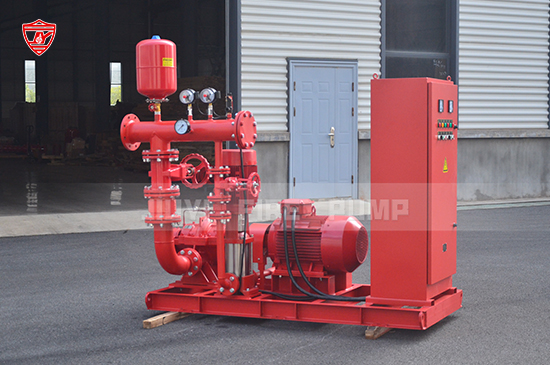
Electric fire pumps can be an effective solution when a reliable electrical power supply is available. They generally have a straightforward operating system and can be suitable for projects with stable electrical infrastructure.
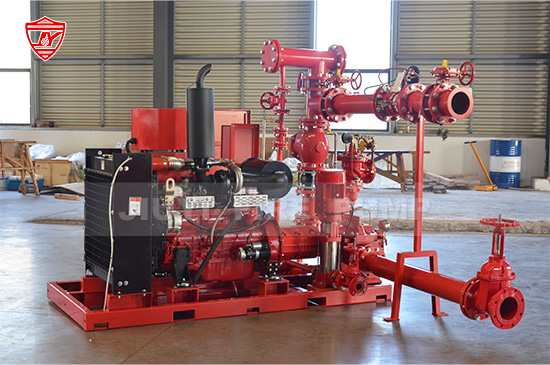
Diesel engine fire pumps provide an independent source of power and can be particularly useful where electrical reliability is limited or where project specifications require a diesel-driven standby pump.
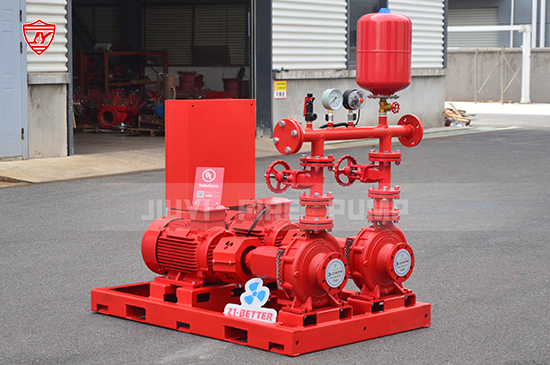
For many larger fire protection systems, an electric main fire pump and a diesel standby fire pump are installed together. A jockey pump can also be included to maintain system pressure and reduce unnecessary starting of the main fire pumps.
A typical containerized arrangement may therefore include:
Electric fire pump
Diesel engine fire pump
Jockey pump
Electric pump controller
Diesel engine controller
Jockey pump controller
Common suction and discharge piping
Isolation and check valves
Fuel tank
Ventilation system
Exhaust system
Monitoring and alarm equipment
The correct configuration depends on the project's fire protection design, local regulations, available utilities, and customer specifications.
Standards and approval requirements should be identified before the equipment is designed or manufactured.
Depending on the project location and application, the fire pump system may need to comply with requirements associated with NFPA standards, UL Listed equipment, FM Approved equipment, local fire codes, insurance requirements, or other national and regional regulations.
It is important to clarify whether the requirement applies to:
The fire pump
The diesel engine
The electric motor
The controller
The complete fire pump set
The containerized enclosure
Individual valves and accessories
Certification requirements can influence equipment selection, dimensions, materials, testing procedures, and system configuration. Discussing these requirements with the manufacturer at the beginning of the project can help avoid costly changes later.
One of the biggest advantages of a containerized fire pump is installation flexibility. However, the environment in which the container will operate still needs careful consideration.
The manufacturer should understand whether the system will be installed outdoors, in a remote industrial area, at an oil and gas facility, at a warehouse, on a construction site, or in another specialized environment.
Environmental factors may include:
Ambient temperature
Humidity
Rain and snow
Dust
Salt or coastal air
Corrosive gases
Altitude
Wind conditions
Hazardous-area requirements
For cold climates, the container may require insulation and heating systems to protect equipment and maintain suitable operating conditions.
For hot climates, ventilation and heat dissipation become particularly important, especially when a diesel engine is installed inside the enclosure.
When a diesel fire pump is installed inside a container, ventilation and exhaust design are critical.
A diesel engine generates heat and produces exhaust gases during operation. The container therefore needs an appropriately designed ventilation system that supplies sufficient combustion air and removes heat from the enclosure.
The exhaust system should also safely direct engine exhaust away from the equipment and surrounding personnel.
A properly designed containerized diesel fire pump system may include:
Air intake louvers
Ventilation fans
Temperature monitoring
Exhaust piping
Exhaust insulation
Silencers
Engine cooling arrangements
Safety monitoring systems
The ventilation design should be based on the actual diesel engine requirements and environmental conditions rather than using a standard container configuration for every project.
A containerized fire pump must fit not only the project site but also the transportation and installation process.
Before finalizing the design, check:
Container length and width
Overall height
Equipment weight
Door dimensions
Crane requirements
Truck transportation restrictions
Foundation dimensions
Maintenance clearance
Pipe connection locations
The container should have sufficient internal space for operators and maintenance personnel to safely access the pumps, engines, controllers, valves, and other components.
A compact design is valuable, but excessive space reduction can make inspection and maintenance difficult. Good containerized fire pump design balances transportation efficiency with operational accessibility.
A fire pump can only perform properly when the water supply system provides suitable suction conditions.
The relationship between the fire pump and water storage tank should therefore be evaluated during the project design stage.
Important considerations include:
Water tank capacity
Tank elevation
Suction pipe diameter
Suction pipe length
Number of fittings
Available suction pressure
Net positive suction conditions
Pump elevation relative to the water source
Poorly designed suction piping can negatively affect pump performance even when the selected fire pump has the correct rated flow and pressure.
For projects using vertical turbine fire pumps or other specialized arrangements, the relationship between the water source and pump installation depth must also be carefully evaluated.
For diesel fire pump systems, fuel capacity is another important factor.
The fuel tank must provide sufficient operating duration according to the project requirements and applicable standards. Its capacity, location, material, connections, and monitoring system should be considered together with the diesel engine.
A containerized system can integrate the fuel tank within or alongside the enclosure, depending on project requirements and available space.
The design should also consider fuel filling, fuel level monitoring, drainage, inspection, and future maintenance.
Testing is one of the most important parts of fire pump manufacturing.
A reliable manufacturer should have suitable test facilities to verify the performance of the pump and associated equipment before shipment.
Testing may include:
Flow testing
Pressure testing
Performance curve verification
Electric motor testing
Diesel engine testing
Controller testing
Automatic start testing
Alarm and monitoring testing
System integration testing
For containerized systems, factory testing can be particularly valuable because multiple components are integrated into a single package. Identifying and correcting problems before delivery can reduce commissioning time at the project site.
When evaluating manufacturers, ask what testing capabilities they have and what test documentation will be provided with the equipment.
Fire pumps are emergency equipment, which means they may remain unused for long periods but must operate reliably when required.
Maintenance accessibility should therefore be considered during the design stage.
Operators should be able to access:
Pump components
Diesel engine
Batteries
Fuel system
Controllers
Valves
Gauges
Filters
Cooling components
Electrical connections
The container should provide sufficient working space for routine inspection and maintenance.
A well-designed system can help simplify preventive maintenance and reduce unnecessary downtime.
A containerized fire pump is more than a pump installed inside a shipping container. It is an integrated fire protection system.
When selecting a manufacturer, consider its ability to design and manufacture the complete package, including pumps, motors or engines, controllers, piping, valves, ventilation, exhaust, fuel systems, electrical systems, and enclosure.
Manufacturing experience is particularly important for projects requiring customized dimensions, special environmental protection, specific voltage and frequency requirements, or certification-related configurations.
A manufacturer with in-house engineering, assembly, testing, and quality control capabilities can also make project coordination easier.
Before placing an order, make sure the supplier can provide the technical documentation required by the project.
Depending on the project, documentation may include:
General arrangement drawings
Foundation drawings
Hydraulic performance curves
Electrical drawings
Wiring diagrams
Pump specifications
Engine specifications
Controller specifications
Fuel system information
Ventilation calculations
Exhaust information
Factory test reports
Operation and maintenance manuals
Certification documents
Complete documentation helps engineers review the system and helps contractors prepare for installation and commissioning.
Price is an important part of any project, but the lowest initial equipment price does not necessarily represent the lowest overall project cost.
A containerized fire pump should be evaluated based on its complete lifecycle value, including transportation, installation, commissioning, energy use, maintenance, spare parts, testing, and expected service life.
A properly engineered package can also reduce the amount of site construction required because major components are assembled and tested before delivery.
For projects with limited construction space or strict installation schedules, this can provide significant practical benefits.
.jpg)
Choosing the right containerized fire pump requires a complete understanding of the project's hydraulic, electrical, environmental, regulatory, installation, and maintenance requirements.
The most important factors include required flow and pressure, electric or diesel drive selection, applicable fire protection standards, container dimensions, environmental conditions, ventilation, exhaust, fuel storage, suction conditions, factory testing, maintenance accessibility, and technical documentation.
For fire protection contractors, EPC companies, engineers, and project owners, working with an experienced fire pump manufacturer at the early design stage can help ensure that the final containerized fire pump system is properly matched to the application.