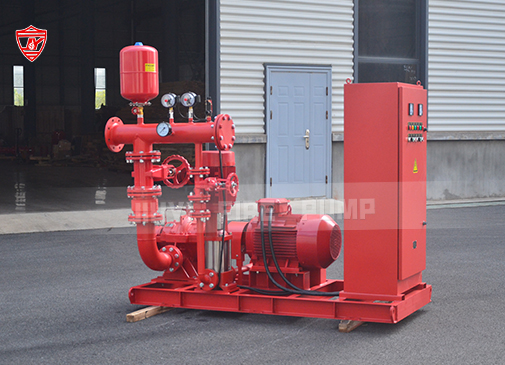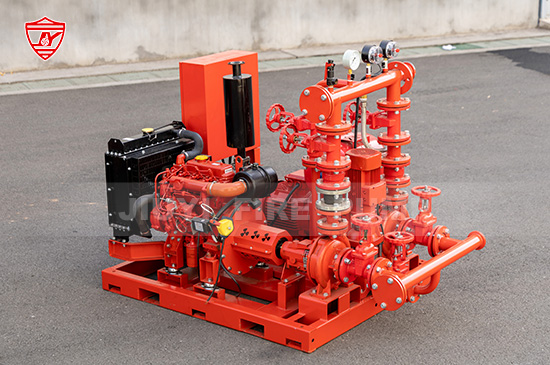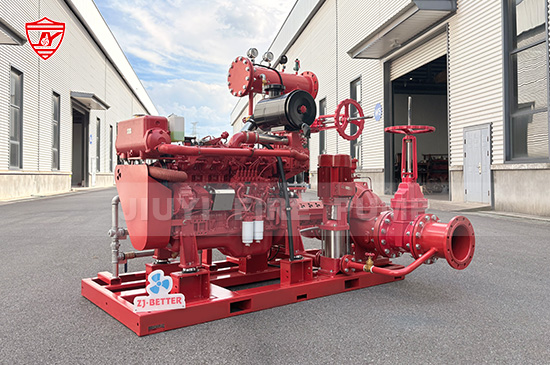
Fire pumps are essential components of building fire protection systems, ensuring reliable water pressure during emergencies. However, when installed indoors—especially in hospitals, office towers, hotels, and residential complexes—fire pump noise can become a significant operational concern. Excessive noise not only affects occupant comfort but can also cause structural vibration, contribute to equipment wear, and even violate local building acoustic standards.
As a professional fire pump manufacturer, we understand the importance of designing, selecting, and maintaining fire pump systems that run efficiently and quietly. This article provides a comprehensive guide to controlling fire pump noise in indoor installations, covering the causes of noise, engineering solutions, best practices from major standards like NFPA 20, and long-term maintenance methods.
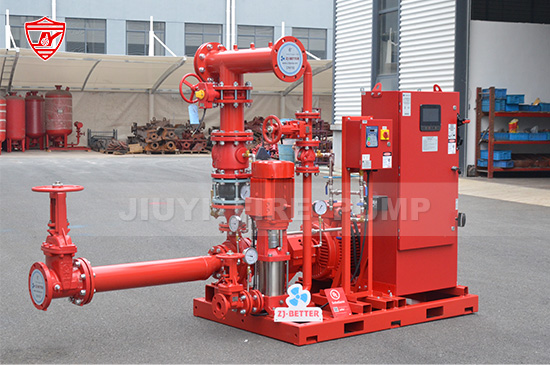
Fire pump noise is typically the result of mechanical, hydraulic, and structural factors. Understanding these sources is the first step toward effective noise control.
Indoor fire pump rooms may include electric fire pumps, diesel engine pumps, or both.
Electric fire pumps generate noise from the motor, bearings, coupling alignment, and cooling fans.
Diesel fire pumps inherently produce higher noise due to engine combustion, exhaust vibration, and air intake systems.
High-pressure water movement inside pipes produces turbulence, especially at elbows, valves, and fittings. Water hammer, cavitation, and improper pump sizing can also amplify noise levels.
The pump assembly transfers vibration to the floor, walls, and piping. In indoor environments, these surfaces act like amplifiers, increasing perceived noise.
Improper alignment, poor anchoring, insufficient clearance, or inadequate isolation components can significantly magnify noise.
Noise control is more than a comfort issue—it is critical for system safety, reliability, and regulatory compliance.
Many commercial and residential buildings have noise limits to protect occupant well-being. Fire pump rooms located near occupied spaces must meet these standards.
Excessive vibration accelerates wear on bearings, couplings, valves, and pipe joints. Reducing noise commonly reduces vibration, extending equipment lifespan.
A quiet, stable system is more reliable. Uncontrolled vibration can lead to misalignment, loose bolts, and premature failure.
In hotels, hospitals, and apartments, noise complaints can become serious operational issues. Proper noise control eliminates disturbances during pump testing.
The most effective noise reduction results from combining multiple engineering methods. Below are proven ways to reduce mechanical, hydraulic, and structural noise.
Vibration isolation is the foundation of noise control, preventing vibration from transferring into the building structure.
Spring isolators for electric and diesel fire pumps
Neoprene pads for moderate noise control
Flexible pipe connectors to prevent vibration transmission through piping
Isolated inertia bases for heavy-duty indoor installations
Spring isolators provide the highest level of noise reduction, especially for diesel fire pumps.
Acoustic solutions help contain noise within the fire pump room.
Acoustically insulated walls or panels
Sound-absorbing ceilings
Engineered pump room doors with acoustic seals
Diesel pump acoustic enclosures around engines
For diesel-driven systems, a partial or full acoustic enclosure dramatically reduces airborne noise.
Proper spatial design is vital for minimizing noise and vibration transmission.
Maintain adequate clearance around pumps
Avoid positioning the pump room directly beside bedrooms, offices, or conference rooms
Use heavy concrete foundations to absorb vibration
Place pumps away from thin walls or hollow spaces that amplify sound
A well-designed fire pump room layout often reduces noise by 20–30% without needing expensive upgrades.
Misalignment between pump and motor shafts is a major cause of noise and vibration.
Use laser alignment tools
Ensure the pump is level and anchored correctly
Recheck alignment after installation and periodically during maintenance
Avoid rigid coupling installation errors
Proper alignment reduces mechanical friction and significantly lowers noise output.
Hydraulic noise often becomes louder than mechanical noise if the piping layout is not optimized.
Use larger-radius elbows to reduce turbulence
Maintain smooth transitions between pipe sizes
Ensure proper suction and discharge piping lengths per NFPA 20
Install air release valves where necessary
Avoid excessive throttling in valves
Correct piping design reduces turbulence, water hammer, cavitation, and the vibration caused by rapid flow changes.
Manufacturers play an important role in noise control. High-quality fire pumps are designed with precision engineering to minimize vibration and hydraulic noise.
Precision-machined impellers
High-grade bearings
Balanced rotating components
Low-noise electric motors
Stable base plates
Choosing a UL-listed or NFPA 20-compliant fire pump ensures better performance and lower noise levels.
Diesel exhaust noise is one of the loudest contributors in indoor installations. Installing the correct silencer and routing the exhaust properly are essential.
Use hospital-grade or industrial-grade silencers
Ensure proper backpressure levels
Isolate exhaust pipes from building structure to prevent vibration
Route exhaust outdoors safely and away from occupied spaces
A high-quality silencer can reduce diesel engine noise by over 25 dB.
NFPA 20 provides guidelines for designing fire pump rooms, and many of its recommendations directly influence noise control.
Proper pump room size and ventilation
Adequate clearance around equipment
Correct piping configuration
Separation between fire pump and main building activities
Although NFPA 20 does not specify noise limits, compliance with its installation guidelines naturally reduces noise.
Additionally, many countries specify maximum noise levels in mechanical rooms. Checking local standards early in the design stage prevents costly retrofits later.
Even the best-designed fire pump room requires consistent maintenance to keep noise under control.
Pump and motor alignment can shift over time because of vibration or thermal expansion.
Dry or worn bearings produce loud whining or grinding sounds.
Loose fasteners are common sources of rattling and vibration.
Cavitation, abnormal pressure fluctuations, and water hammer often indicate pump sizing or valve issues.
Diesel engines run louder when airflow is restricted.
Vibration isolators, flexible connectors, and pads wear out over time and require replacement.
Active maintenance is one of the simplest ways to keep fire pump noise within safe limits.
Sometimes, noise issues cannot be solved through maintenance alone. You may need to upgrade equipment or design components.
Noise remains high even after alignment and maintenance
Occupants complain during weekly or monthly pump tests
Building renovations change pump room location or use of adjacent spaces
Diesel engine noise exceeds acceptable levels
Vibrations appear in upper floors or walls
In these cases, installing advanced acoustic insulation, spring isolators, or a new base frame may be necessary.
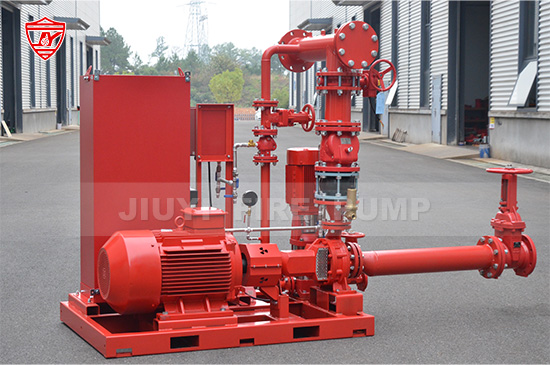
Controlling fire pump noise in indoor installations requires a combination of proper equipment selection, smart engineering design, accurate installation, and ongoing maintenance. Whether your system uses electric fire pumps, diesel engine pumps, or a complete fire pump package, investing in noise control results in a more reliable, longer-lasting, and compliant fire protection system.
A quiet fire pump room is not simply a luxury—it is a critical part of a building’s fire safety infrastructure. By following the methods outlined in this article, building owners, contractors, and engineers can significantly reduce noise, improve occupant comfort, and ensure the fire pump operates at peak performance when it is needed most.