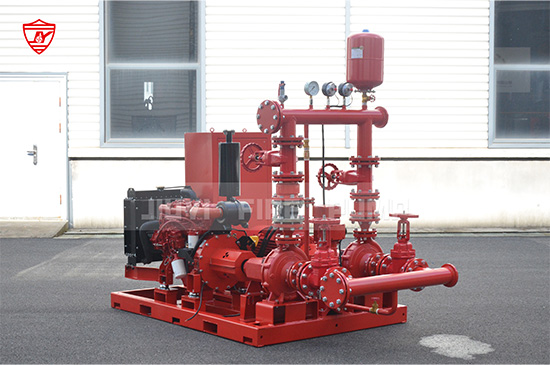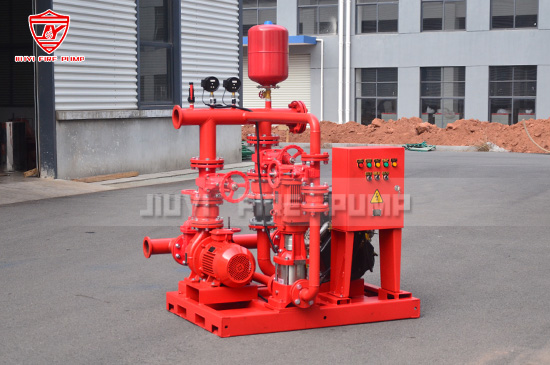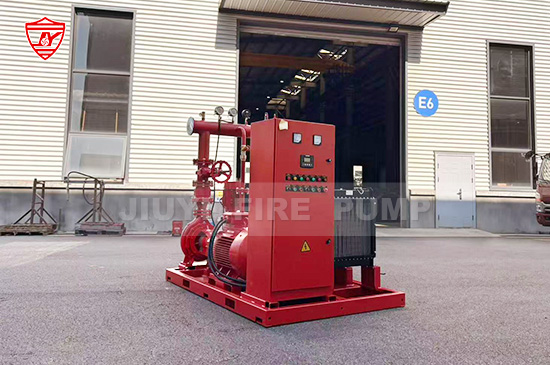
A fire pump is one of the most important components of a building's fire protection system. Whether installed in a commercial building, industrial facility, warehouse, port, oil refinery, or residential complex, a fire pump must be ready to deliver the required water flow and pressure whenever a fire emergency occurs.
However, installing a high-quality fire pump does not guarantee long-term reliability. Regular inspection, testing, and maintenance are essential to ensure that the pump, driver, controller, and supporting equipment remain in proper operating condition.
One of the most common questions among building owners, facility managers, fire protection contractors, and system operators is: How often should a fire pump be tested?
In general, fire pumps require regular no-flow (churn) testing, typically weekly or monthly depending on the pump type and installation, as well as an annual flow test. Additional inspections and maintenance activities must be performed according to applicable standards and manufacturer recommendations.
This article explains fire pump testing frequency, the differences between weekly, monthly, and annual tests, the requirements for electric and diesel fire pumps, and practical recommendations for maintaining reliable fire protection systems.
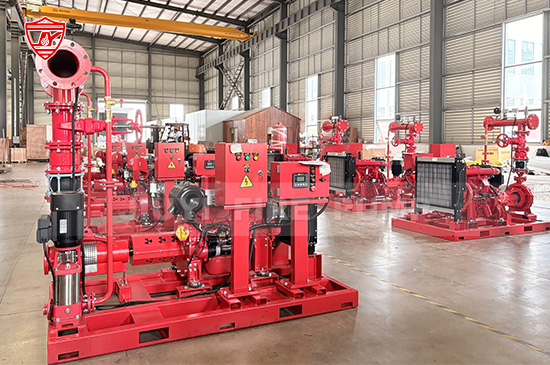
Fire pumps are designed to provide adequate water pressure and flow to fire protection systems, including sprinkler systems, hydrants, standpipes, and other firefighting equipment.
Unlike ordinary water pumps, fire pumps are emergency safety equipment. They may remain inactive for extended periods, but they must operate immediately when required.
Without regular testing, problems can remain undetected until an emergency occurs. These problems may include:
Motor or diesel engine starting failures.
Electrical faults or controller malfunctions.
Low discharge pressure or insufficient water flow.
Excessive vibration, noise, or overheating.
Fuel system contamination or battery problems.
Mechanical seal, packing, or bearing deterioration.
Blocked suction pipes or inadequate water supply.
Regular testing helps identify these issues before they affect the performance of the fire protection system.
It also provides documented evidence that the equipment is being inspected and maintained. For building owners and facility managers, an effective testing program supports operational reliability, safety management, and compliance with applicable fire protection regulations.
The testing frequency of a fire pump depends on its driving method, installation conditions, applicable regulations, and approved risk assessment.
In the United States, NFPA 25, Standard for the Inspection, Testing, and Maintenance of Water-Based Fire Protection Systems, provides the primary framework for routine fire pump inspection and testing.
The general testing schedule includes weekly or monthly no-flow testing and annual flow testing.
The following table summarizes the commonly applicable frequencies under NFPA 25.
|
Testing Activity |
General Frequency |
Main Purpose |
|---|---|---|
|
Fire pump inspection |
Weekly |
Check general operating condition |
|
Diesel fire pump no-flow test |
Weekly |
Verify automatic starting and operation |
|
Electric fire pump no-flow test |
Weekly or monthly |
Verify starting and operation |
|
Annual flow test |
Annually |
Evaluate pump performance under flow conditions |
|
Preventive maintenance |
According to NFPA 25 and manufacturer instructions |
Maintain equipment reliability |
The actual schedule must be verified against the edition of NFPA 25 adopted by the local authority having jurisdiction (AHJ), the installation requirements, and the manufacturer's instructions.
An important point is that a weekly or monthly churn test does not replace the annual flow test. Both serve different purposes and are necessary parts of a comprehensive fire pump testing program.
NFPA+1Weekly testing is an important part of fire pump maintenance, particularly for diesel engine-driven fire pumps and certain electric fire pump installations.
A weekly no-flow test, also known as a churn test, verifies that the pump can start automatically and operate under no-flow conditions.
During this test, the pump operates without supplying water to the fire protection system at its rated flow.
What should be checked during weekly testing?
The following items should be inspected or monitored:
Automatic starting operation.
Suction and discharge pressure readings.
Pump operating speed.
Unusual noise or vibration.
Bearing and pump casing temperature.
Packing gland condition and leakage, where applicable.
Cooling water circulation.
Controller operation and alarm indications.
Diesel engine oil pressure and temperature, where applicable.
For diesel fire pumps, additional checks should include engine starting performance, battery condition, fuel supply, lubrication, and cooling systems.
The purpose is not simply to confirm that the pump runs. Operators should also observe whether the entire pump assembly operates normally.
How long should a fire pump run during a churn test?
Under the commonly applicable NFPA 25 requirements:
Electric motor-driven fire pumps: At least 10 minutes.
Diesel engine-driven fire pumps: At least 30 minutes.
The test should be performed by qualified personnel, following the approved testing procedure and applicable safety requirements.
NFPAMonthly no-flow testing is permitted for certain electric motor-driven fire pumps under NFPA 25.
This frequency is generally applicable to electric fire pumps that do not fall into the categories requiring weekly testing.
For example, an electric fire pump with a suitable installation and controller may qualify for monthly testing.
However, certain electric fire pumps generally require weekly no-flow testing, including:
Pumps serving buildings beyond the pumping capacity of the fire department.
Pumps equipped with limited-service controllers.
Vertical turbine fire pumps.
Pumps taking suction from ground-level tanks or water sources that do not provide sufficient pressure to be of material value without the pump.
A monthly frequency may also be permitted for qualifying electric fire pump systems with a redundant fire pump. Approved risk analysis may provide additional alternatives where permitted by the standard.
Therefore, facility managers should not automatically assume that all electric fire pumps can be tested monthly. The actual classification of the installation must be checked.
During monthly testing, operators should follow the same basic inspection and monitoring procedures used during weekly churn testing.
For electric fire pump systems, particular attention should be given to motor starting, electrical connections, controller indications, operating pressure, and unusual vibration or noise.
NFPA+1Although weekly or monthly churn testing confirms that a fire pump can start and operate, it does not demonstrate that the pump can deliver its required water flow and pressure.
This is why annual flow testing is essential.
An annual fire pump flow test evaluates the actual hydraulic performance of the pump under different operating conditions.
During the test, water is discharged through an approved flow-testing arrangement, and the pump's performance is measured at different flow rates.
What does an annual flow test include?
A typical annual performance test evaluates three operating points:
1. Churn condition (0% rated flow)
The pump operates without delivering its rated flow. Operators record suction pressure, discharge pressure, and operating speed.
This provides information about the pump's shutoff pressure and helps identify changes in performance.
2. Rated flow (100% rated capacity)
The pump operates at its rated flow capacity.
For example, a fire pump rated at 750 GPM should be evaluated at 750 GPM. The measured discharge pressure is compared with the pump's rated performance and the original acceptance-test data.
3. Overload flow (150% rated capacity)
The pump is tested at 150% of its rated flow capacity, where the installation and test arrangement permit this condition.
This helps determine whether the pump can provide additional water capacity while maintaining the required pressure characteristics.
The recorded results are compared with the manufacturer's certified pump curve and previous test records.
Why is annual flow testing important?
An annual flow test can help identify:
Reduced pump capacity.
Changes in discharge pressure.
Hydraulic performance deterioration.
Suction supply limitations.
Impeller wear or internal damage.
Mechanical problems affecting pump efficiency.
For example, if a pump previously delivered its rated flow and pressure but now shows a significant reduction, further investigation may be necessary.
Annual flow testing is therefore an important method of evaluating the actual performance of a fire pump rather than relying only on its ability to start.
NFPA 25 requires annual flow testing as part of the routine fire pump testing program.
nfpanorm.com+1Electric and diesel fire pumps have different operating characteristics and maintenance requirements. Their testing procedures should reflect the type of driver installed.
Electric fire pumps are commonly used in commercial buildings, industrial facilities, factories, and large residential developments.
Their operation depends on a reliable electrical power supply, motor performance, and fire pump controller operation.
Important testing considerations include:
Verifying automatic starting through a simulated pressure drop.
Checking the motor's acceleration and operating speed.
Monitoring voltage and electrical system conditions.
Checking controller alarms and indications.
Inspecting motor temperature and vibration.
Confirming that the pump maintains the expected discharge pressure.
Most qualifying electric fire pumps require monthly no-flow testing, while specific installations require weekly testing.
Annual flow testing is also required.
Diesel fire pumps are particularly valuable in facilities where an independent mechanical power source is required or where electrical power reliability is a concern.
Because diesel engines have additional mechanical and fuel-related components, their routine inspection and testing require special attention.
Important testing considerations include:
Engine starting performance.
Battery voltage and condition.
Fuel level and fuel quality.
Lubricating oil pressure.
Engine coolant temperature.
Cooling system operation.
Exhaust system condition.
Engine operating speed.
Abnormal vibration or noise.
Diesel engine-driven fire pumps generally require weekly no-flow testing for at least 30 minutes, unless an alternative frequency is established through an approved risk analysis where permitted.
Annual flow testing is also required.
The key difference is that diesel fire pumps require more frequent routine no-flow testing than most electric fire pumps because of their engine-related operating requirements.
NFPA+1Churn testing and flow testing are both important, but they evaluate different aspects of fire pump performance.
|
Comparison |
Churn Test |
Flow Test |
|---|---|---|
|
Operating condition |
No-flow condition |
Water is discharged |
|
General frequency |
Weekly or monthly |
Annually |
|
Main purpose |
Verify starting and basic operation |
Verify hydraulic performance |
|
Water discharge |
No significant system flow |
Measured water discharge |
|
Key measurements |
Suction and discharge pressure |
Flow rate, suction pressure, discharge pressure |
|
Typical concerns |
Starting failure, overheating, abnormal noise |
Reduced capacity, pressure loss, hydraulic deterioration |
A churn test confirms that the pump can start and run under no-flow conditions.
A flow test provides a more complete understanding of the pump's ability to deliver the required water capacity.
Neither test should be considered a substitute for the other. A pump may pass a churn test but still fail to deliver its required rated flow and pressure.
For this reason, both tests should be included in the fire pump maintenance schedule.
If a fire pump does not perform as expected during testing, the problem should be investigated and corrected as soon as possible.
Ignoring abnormal readings can create serious risks for the entire fire protection system.
Common problems and possible causes include:
|
Problem |
Possible Cause |
|---|---|
|
Pump fails to start |
Controller fault, power supply issue, battery failure |
|
Low discharge pressure |
Insufficient suction pressure, impeller wear, blockage |
|
Insufficient flow |
Restricted suction pipe, hydraulic problems |
|
Excessive vibration |
Misalignment, bearing damage, mechanical imbalance |
|
Overheating |
Cooling problems, inadequate circulation, excessive friction |
|
Diesel engine starting failure |
Fuel system problems, weak batteries, starter malfunction |
When a failure occurs, qualified personnel should identify the root cause, perform the necessary repairs, and repeat the relevant tests to verify that the problem has been resolved.
The building owner or responsible facility manager should also assess whether temporary fire protection measures or other impairment procedures are necessary while the fire pump is unavailable.
All failures, corrective actions, and retest results should be documented.
Keeping accurate testing records is just as important as performing the tests themselves.
A well-organized documentation system allows facility managers, maintenance teams, inspectors, and fire protection contractors to monitor equipment performance over time.
It also helps identify gradual changes that may not be obvious during a single inspection.
A complete fire pump testing record should include:
Date and time of each inspection or test.
Fire pump model, serial number, and rated capacity.
Pump type and driving method.
Suction and discharge pressure readings.
Measured flow rate during annual testing.
Pump operating speed.
Motor or diesel engine operating conditions.
Controller status and alarm information.
Abnormal observations and identified problems.
Maintenance activities and replacement parts.
Corrective actions and follow-up test results.
Comparing current test results with previous records and the original factory or acceptance-test performance data helps determine whether the pump is maintaining its expected operating characteristics.
For facilities with multiple fire pump installations, maintaining an individual testing history for each pump is particularly important.
Testing records should be retained in accordance with applicable regulations and the requirements of the authority having jurisdiction.
In addition to following the required testing schedule, facility managers should establish a comprehensive preventive maintenance program.
The following practices can help extend equipment service life and maintain dependable operation.
1. Follow the Manufacturer's Recommendations
Every fire pump has specific operating conditions and maintenance requirements. Always refer to the manufacturer's operation and maintenance manual for recommended inspection intervals, lubrication requirements, operating limits, and replacement procedures.
2. Keep the Pump Room Clean and Suitable
The pump room should remain clean, dry, adequately ventilated, and accessible. Temperature, ventilation, and drainage conditions should be monitored to prevent environmental problems from affecting the equipment.
3. Monitor Operating Parameters
Record pressure readings, operating speed, temperature, and vibration during testing. Comparing these measurements over time can help identify developing mechanical or hydraulic problems.
4. Maintain Electrical and Diesel Systems
For electric fire pumps, inspect the power supply, motor, electrical connections, and controller.
For diesel fire pumps, pay particular attention to fuel quality, batteries, lubrication, cooling systems, and exhaust components.
5. Use Qualified Testing Personnel
Fire pump testing involves mechanical, electrical, hydraulic, and safety considerations. Testing and maintenance should be performed by qualified personnel familiar with the applicable standards and the specific pump installation.
6. Investigate Abnormal Results Immediately
Unusual pressure readings, excessive vibration, overheating, or starting problems should never be ignored. Identify the cause and complete the necessary corrective work before returning the equipment to normal service.
7. Maintain a Regular Testing Schedule
A documented testing calendar helps prevent missed inspections and ensures that weekly, monthly, and annual activities are completed on time.
A preventive maintenance program should be based on NFPA 25, applicable local regulations, and manufacturer recommendations.
docinfofiles.nfpa.org+1Regular testing is essential, but the reliability of a fire pump also depends on its original design, manufacturing quality, material selection, and factory testing.
A properly manufactured fire pump should be designed to deliver stable hydraulic performance under its specified operating conditions.
Several manufacturing factors can directly influence long-term reliability.
Hydraulic Design and Performance
The pump casing, impeller, shaft, and other hydraulic components must be designed to achieve the required flow rate and pressure. Proper hydraulic matching helps ensure that the pump performs according to its specified performance curve.
Motor and Diesel Engine Matching
The driving equipment must provide sufficient power for the pump's operating requirements. Incorrect driver selection or poor system matching can affect starting performance, operating stability, and overall reliability.
Precision Manufacturing and Assembly
Machining accuracy, component tolerances, shaft alignment, bearing installation, and assembly quality all contribute to reliable pump operation.
Factory Performance Testing
Before delivery, fire pumps should undergo appropriate factory testing to verify their hydraulic and mechanical performance.
For complete fire pump packages, testing should also consider the coordination between the pump, driver, controller, and supporting components.
For manufacturers supplying fire pump systems to international projects, consistent quality control and traceable testing procedures are important for supporting customers throughout the equipment's service life.
A reliable fire pump begins with good manufacturing quality and continues with proper installation, commissioning, inspection, and maintenance.
Q1: How often should a diesel fire pump be tested?
Under the general NFPA 25 requirements, diesel engine-driven fire pumps should undergo a weekly no-flow (churn) test for at least 30 minutes. An alternative frequency may be established through an approved risk analysis where permitted. Annual flow testing is also required.
Q2: Can an electric fire pump be tested monthly instead of weekly?
Yes. Monthly no-flow testing is permitted for qualifying electric motor-driven fire pumps. However, certain installations, including vertical turbine pumps and pumps serving buildings beyond the fire department's pumping capacity, generally require weekly testing unless an applicable exception is met.
Q3: What is a fire pump churn test?
A churn test is a no-flow operational test that verifies the fire pump can start and operate without delivering its rated water flow. It helps identify starting problems, abnormal pressure readings, overheating, and mechanical issues.
Q4: Is an annual fire pump flow test mandatory?
NFPA 25 generally requires an annual flow test for fire pumps. The test evaluates pump performance under different flow conditions and helps determine whether the equipment can deliver its required water capacity and pressure.
Q5: Who is responsible for fire pump testing?
The building owner or designated responsible party is generally responsible for ensuring that the fire pump is properly inspected, tested, and maintained. Testing should be carried out by qualified personnel in accordance with applicable regulations and manufacturer instructions.
Q6: Does a successful churn test mean the fire pump is working properly?
Not necessarily. A churn test verifies basic starting and operating conditions but does not confirm that the pump can deliver its rated flow. Annual flow testing is necessary to evaluate hydraulic performance.
Q7: Should a newly installed fire pump be tested?
Yes. A newly installed fire pump should undergo the required acceptance testing and commissioning procedures before being placed into service. Routine inspection, testing, and maintenance must continue after installation.
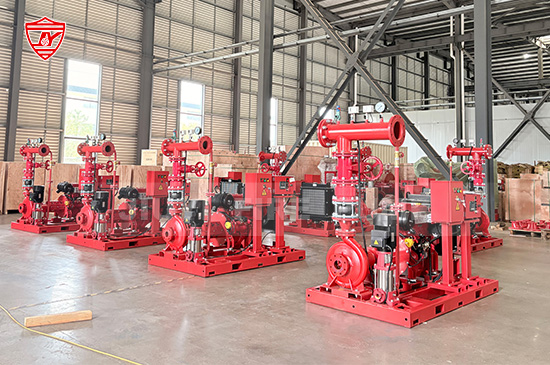
So, how often should a fire pump be tested?
The answer depends on the type of fire pump and its installation conditions. However, a typical NFPA 25 testing program includes weekly or monthly no-flow testing, depending on the pump type, and annual flow testing.
Diesel engine-driven fire pumps generally require weekly churn testing, while qualifying electric motor-driven fire pumps may be tested monthly. Certain electric installations also require weekly testing.
Beyond meeting the required testing frequency, maintaining detailed records, following manufacturer recommendations, and performing preventive maintenance are essential for long-term reliability.
For building owners, fire protection contractors, and facility managers, regular fire pump testing is not simply a maintenance task. It is an important part of ensuring that the entire fire protection system is ready when an emergency occurs.