Fire pumps are essential components of fire protection systems, providing the water flow and pressure required to control and extinguish fires in commercial buildings, industrial facilities, warehouses, residential complexes, and other critical infrastructure. However, installing a fire pump with a specified flow rate and pressure does not automatically guarantee that the system will perform as expected during an emergency.
Actual fire pump performance depends on several interconnected factors, including equipment selection, water supply conditions, piping design, installation quality, and ongoing maintenance. Even a high-quality fire pump may experience reduced performance if the surrounding system is improperly designed or operated.
Understanding these factors is essential for fire protection engineers, contractors, facility managers, and system integrators who need to ensure that fire protection systems operate reliably when required.
In this article, we explore five major factors that influence fire pump performance and explain how they affect the efficiency, reliability, and operational capability of fire protection systems.
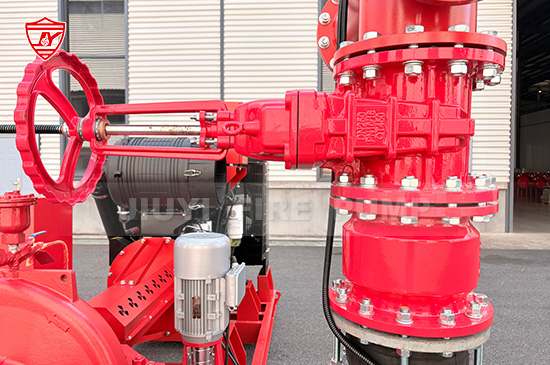
The selection of a fire pump is one of the most important factors affecting overall system performance. Every fire protection project has specific hydraulic requirements, and the selected pump must be capable of meeting those requirements under actual operating conditions.
Fire pump performance is primarily evaluated based on flow rate and pressure. Flow rate refers to the volume of water delivered over a specific period, typically measured in gallons per minute (GPM) or cubic meters per hour (m³/h). Pressure represents the force available to move water through the fire protection system and overcome elevation differences, friction losses, and equipment resistance.
A fire pump must provide sufficient flow and pressure to meet the requirements of the sprinkler system, hydrants, standpipes, hose reels, or other connected firefighting equipment.
Selecting a pump with insufficient capacity may result in inadequate water delivery during a fire emergency. Conversely, selecting an oversized pump may create excessive pressure, increase energy consumption, and introduce unnecessary stress on piping and system components.
Engineers should evaluate the required duty point carefully, considering the system's hydraulic calculations and expected operating conditions rather than selecting a pump based solely on its maximum rated capacity.
Different fire pump types are designed for different applications.
End suction fire pumps are commonly used in building fire protection systems where installation space and system requirements allow for a compact configuration.
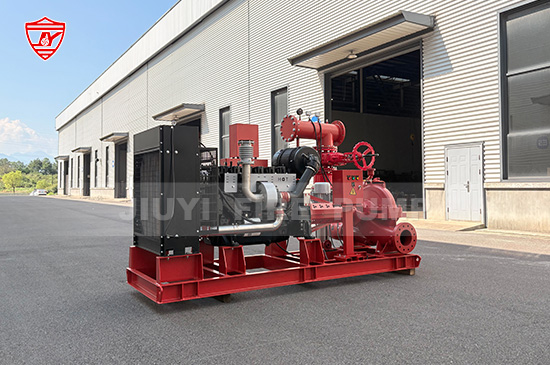
Split case fire pumps are suitable for larger flow requirements and are widely used in industrial facilities, commercial buildings, and large-scale fire protection projects.
Vertical turbine fire pumps are particularly useful when the water source is located below the pump installation level, such as underground tanks, reservoirs, wells, or other water sources requiring vertical lifting.
The pump configuration, impeller design, casing structure, and operating speed all influence hydraulic performance and suitability for a particular application.
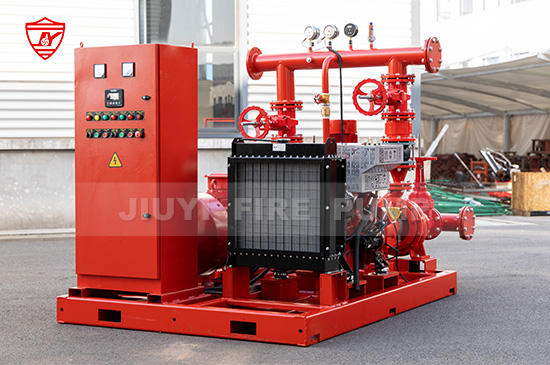
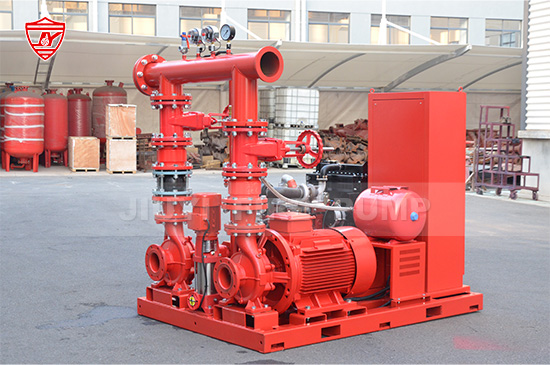
The driver also plays a critical role in fire pump performance. Electric motor-driven fire pumps provide reliable operation when a suitable electrical supply is available. Diesel engine-driven fire pumps offer an independent power source and can provide backup capability when electrical power is unavailable.
Jockey pumps are used to maintain system pressure and compensate for minor leakage, helping prevent unnecessary starts of the main fire pump.
Selecting the appropriate combination of electric, diesel, and jockey pumps can improve the reliability and operational flexibility of the entire fire protection system.
A fire pump cannot deliver its expected performance without an adequate water supply. The characteristics of the water source directly affect pump operation, hydraulic capacity, and reliability.
The water source must provide sufficient volume to meet the required fire protection demand for the specified duration.
Common water sources include dedicated fire water tanks, municipal water networks, reservoirs, lakes, rivers, and underground storage systems.
If the available water volume is insufficient, the fire pump may operate correctly from a mechanical perspective but still fail to deliver the required fire protection performance over the necessary operating period.
Water storage capacity should therefore be determined according to project requirements, applicable fire protection standards, and the expected demand of the connected systems.
The pressure and water level at the pump suction influence the amount of energy required to move water into the pump.
For pumps operating with positive suction pressure, adequate inlet pressure helps maintain stable operation. For pumps drawing water from tanks or reservoirs below the pump, suction lift and elevation differences must be carefully evaluated.
Insufficient suction pressure can cause unstable operation, reduced flow, excessive vibration, and cavitation.
Vertical turbine pumps are often selected for applications where the water source is below ground level or where the required suction conditions make conventional horizontal pumps unsuitable.
Cavitation occurs when the pressure within the pump falls below the vapor pressure of the liquid, causing vapor bubbles to form and subsequently collapse as they move into higher-pressure regions.
This phenomenon can damage impellers, create excessive noise and vibration, reduce hydraulic performance, and shorten equipment service life.
To minimize cavitation risk, engineers should consider suction piping diameter, water level, inlet pressure, flow velocity, pipe configuration, and the pump's required net positive suction head.
An adequately designed water supply and suction system is fundamental to maintaining stable fire pump performance.
The piping system connecting the fire pump to the water source and fire protection equipment has a significant influence on the pump's actual operating performance.
Even when a fire pump is capable of delivering the specified flow and pressure, excessive resistance within the piping system can reduce the pressure available at the firefighting equipment.
Pipe diameter directly affects water flow velocity and friction losses. Undersized piping increases flow velocity and friction resistance, requiring the pump to generate additional pressure to deliver the required water volume.
If the piping system is not properly sized, the actual flow rate may be lower than expected, particularly when multiple firefighting outlets operate simultaneously.
Engineers should select pipe diameters based on hydraulic calculations, system demand, flow velocity considerations, and applicable fire protection requirements.
Friction losses occur as water moves through pipes, fittings, valves, and other components. Longer pipe runs generally create greater resistance, while elbows, tees, reducers, check valves, and other fittings introduce additional pressure losses.
The cumulative effect of these losses can significantly influence the operating point of the fire pump.
For large industrial projects, complex piping layouts, long-distance water delivery systems, and high-rise buildings, these losses should be carefully calculated during the design stage.
Elevation differences between the pump and the firefighting equipment also affect required pressure.
Water delivered to higher floors or elevated equipment requires additional pressure to overcome the static elevation head. In high-rise buildings, pressure zoning, booster systems, pressure-reducing valves, and other hydraulic arrangements may be necessary to maintain appropriate operating conditions.
A well-designed piping system helps the fire pump operate closer to its intended performance curve and ensures that sufficient pressure and flow reach the most hydraulically demanding areas of the fire protection system.
Proper installation is essential for achieving the designed performance of a fire pump. Incorrect installation can introduce mechanical problems, hydraulic restrictions, and operational instability even when the pump itself meets all manufacturing specifications.
Fire pumps and their drivers must be installed on stable foundations capable of supporting the equipment and minimizing vibration.
For horizontally mounted pumps, accurate alignment between the pump shaft and motor shaft is particularly important. Misalignment can increase bearing loads, damage couplings, create excessive vibration, and lead to premature mechanical failure.
Diesel engine-driven fire pump sets require additional attention to alignment, engine mounting, exhaust arrangements, cooling systems, fuel supply, and ventilation.
Proper installation procedures should include alignment verification, secure anchoring, inspection of coupling guards, and confirmation that all mechanical connections are correctly installed.
Piping should be installed in a manner that avoids unnecessary stress on pump connections.
Excessive pipe loads, improper supports, incorrect gasket installation, or poorly designed suction arrangements may affect pump operation and cause leakage or vibration.
Suction piping should be designed to minimize air pockets and turbulence. Where required, reducers, pipe supports, and other components should be installed in accordance with the pump manufacturer's recommendations and applicable standards.
For electric fire pumps, voltage stability, electrical connections, motor protection arrangements, controller configuration, and power supply capacity can influence reliable operation.
For diesel fire pumps, engine temperature, fuel quality, battery condition, lubrication, cooling arrangements, exhaust ventilation, and engine speed are critical operating factors.
A diesel engine that cannot maintain its specified speed under load may cause the pump to operate outside its expected performance range.
Installation inspections and commissioning tests should verify that the pump, driver, controller, and supporting systems function together as an integrated fire protection unit.
Fire pumps are emergency equipment, and their reliability depends on maintaining them in an operational condition throughout their service life.
Unlike equipment that operates continuously, fire pumps may remain inactive for extended periods. This makes routine inspections and testing particularly important for identifying problems before an emergency occurs.
Regular inspections help identify visible issues such as water leakage, corrosion, abnormal vibration, loose connections, damaged components, unusual noises, and changes in operating conditions.
Inspection procedures should also include checking valves, pressure gauges, controller indicators, power supplies, diesel fuel systems, cooling systems, and other essential components.
Early identification of abnormal conditions helps prevent minor issues from developing into serious operational failures.
Periodic fire pump testing helps verify that the equipment can deliver the expected flow and pressure.
Testing may involve evaluating pump operation at different flow conditions, checking pressure readings, monitoring driver performance, and reviewing the condition of associated equipment.
Comparing test results with the original acceptance test data or established performance benchmarks can help identify changes in pump performance over time.
A reduction in flow or pressure may indicate problems such as impeller wear, internal clearances, suction restrictions, air leakage, mechanical deterioration, or changes in water supply conditions.
Testing should be conducted according to applicable fire protection standards, project specifications, and manufacturer recommendations.
Preventive maintenance helps maintain the mechanical and hydraulic condition of the pump and its driver.
Depending on equipment type and operating conditions, maintenance activities may include lubrication, inspection of bearings and seals, checking coupling alignment, cleaning strainers, inspecting electrical connections, maintaining diesel engines, testing batteries, and verifying controller operation.
For diesel fire pumps, maintaining fuel quality and ensuring the engine can start reliably are especially important.
For electric fire pumps, periodic inspection of motors, electrical connections, controllers, and power supply arrangements helps maintain dependable operation.
A structured maintenance program, combined with regular performance testing, supports long-term fire pump reliability and reduces the risk of unexpected failure.
Fire pump performance is not determined by the pump alone. It is the result of the interaction between the pump, driver, water supply, piping network, installation conditions, and maintenance practices.
For example, a fire pump rated at 1,000 GPM may not deliver the required flow at the system's most demanding point if the suction supply is inadequate, the piping creates excessive friction losses, or the pump is operating at an incorrect speed.
Similarly, a properly designed hydraulic system may still experience performance problems if the pump is incorrectly installed or poorly maintained.
Therefore, fire protection professionals should evaluate the complete system rather than focusing on individual equipment specifications.
A comprehensive approach to fire pump selection, system design, installation, commissioning, and maintenance helps ensure that the pump can deliver the required performance when a fire emergency occurs.
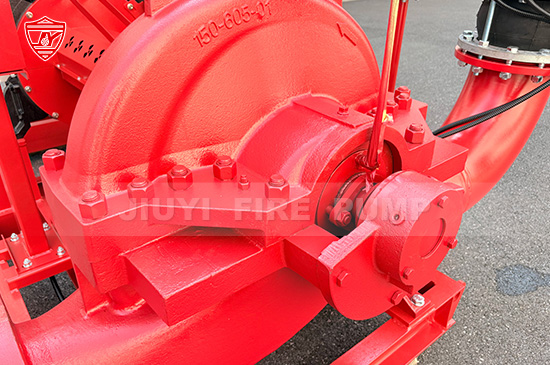
The five major factors influencing fire pump performance are equipment selection, water supply conditions, piping system design, installation quality, and maintenance.
Each factor contributes to the pump's ability to deliver the required flow and pressure consistently and reliably. Addressing these considerations during project planning and throughout the equipment's service life can help reduce operational risks, improve system reliability, and support effective fire protection.