
A jockey pump maintains fire protection system pressure, prevents unnecessary main fire pump starts, reduces wear, and keeps the system ready for emergencies.
A fire protection system must be ready to deliver water immediately when a fire occurs. In a properly designed fire pump system, the main fire pump is responsible for supplying the large volume of water required by the sprinkler system, standpipes, hydrants, or other firefighting equipment. However, the main fire pump is not designed to run every time the system experiences a small pressure drop.
This is where the jockey pump plays an important role.
A jockey pump, also called a pressure maintenance pump, is a small pump installed in a fire protection system to maintain system pressure during normal conditions. When pressure decreases slightly because of minor leakage, temperature changes, or other small losses, the jockey pump starts automatically and restores the pressure. This allows the main fire pump to remain on standby until there is a genuine demand for firefighting water.
Understanding why a fire pump needs a jockey pump is important for anyone involved in fire protection system design, installation, commissioning, operation, or maintenance. Selecting the correct jockey pump and configuring it properly can help improve system reliability, reduce unnecessary equipment operation, and ensure that the fire pump system remains ready when an emergency occurs.
A jockey pump is a relatively small pump used to maintain pressure in a fire protection piping system. Unlike the main fire pump, its primary purpose is not to provide the large flow required during a fire. Instead, it keeps the system pressurized under normal, non-fire conditions.
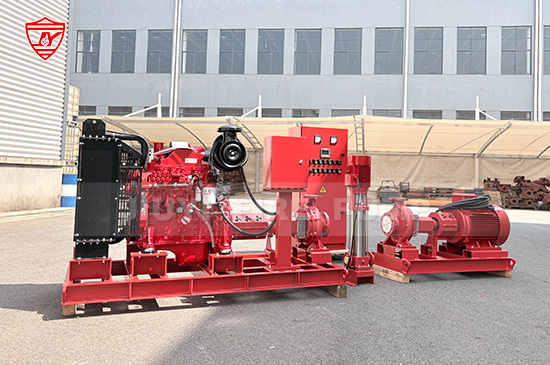
A typical fire pump system may include an electric fire pump or diesel engine fire pump as the main firefighting pump, together with a jockey pump and associated controllers. The jockey pump is normally connected to the same fire protection piping network and operates automatically based on pressure settings.
Under normal conditions, the fire protection system remains pressurized. If the pressure falls slightly below the jockey pump start setting, the jockey pump starts and supplies a small amount of water to restore pressure. Once the pressure reaches the jockey pump stop setting, the pump shuts down.
When a fire occurs and the system experiences a significant pressure drop due to water flowing through sprinklers or other firefighting equipment, the pressure falls beyond the ability of the jockey pump to maintain it. The main fire pump then starts and provides the required firefighting flow.
This simple operating principle is the main reason jockey pumps are widely used in fire pump systems.
The primary reason for installing a jockey pump is to maintain the pressure of the fire protection system without unnecessarily starting the main fire pump.
A main fire pump is a critical piece of emergency equipment. It is designed to operate when the fire protection system requires a significant volume of water. Starting the main pump for every minor pressure loss would be inefficient and could lead to unnecessary wear.
For example, a fire protection system may experience small pressure losses due to minor leakage, fluctuations in ambient temperature, maintenance activities, or small changes in system conditions. These pressure changes do not necessarily indicate that there is a fire.
Without a jockey pump, the main fire pump could respond to these relatively small pressure drops. The result could be frequent starting and stopping of the main pump, which is not the intended operating condition for a fire pump system.
The jockey pump solves this problem by taking care of small pressure demands. It maintains the system at the required pressure while leaving the main fire pump available for actual fire events.
In simple terms, the jockey pump handles small pressure losses, while the main fire pump handles major water demand.
The operation of a typical fire pump system can be understood as a sequence of pressure responses.
First, the fire protection piping system is filled with water and maintained at a predetermined pressure. The jockey pump controller monitors the pressure through a pressure sensing line or pressure switch arrangement.
If the system pressure drops slightly, the jockey pump starts automatically. It supplies water into the system and brings the pressure back to the normal operating level. Once the pressure reaches the jockey pump stop setting, the jockey pump stops.
If a fire occurs, a sprinkler activates and begins discharging water. The resulting water flow causes the system pressure to decrease more significantly.
At this point, the jockey pump may start, but its capacity is not sufficient to satisfy the fire demand. As system pressure continues to fall, the main fire pump reaches its start pressure and starts automatically.
The main fire pump then supplies the high flow required by the fire protection system.
This arrangement creates a logical hierarchy:
Normal pressure maintenance is handled by the jockey pump.
Major firefighting water demand is handled by the main fire pump.
If the main fire pump is driven by an electric motor, it starts when the pressure reaches its designated start setting. If the system uses a diesel engine fire pump, the diesel engine controller starts the engine according to the system's pressure and control requirements.
The jockey pump therefore supports the main fire pump rather than replacing it.
One of the most important benefits of a jockey pump is reducing unnecessary starts of the main fire pump.
Main fire pumps are emergency-duty machines. Although they are built for reliable operation, unnecessary cycling can increase mechanical and electrical stress and may create additional maintenance requirements.
A fire protection system is not always perfectly static. Small pressure losses can occur over time. Even a small amount of leakage may cause the system pressure to gradually decrease.
If the pressure falls below the main fire pump start setting, the main pump may start even though there is no actual fire demand.
With a correctly selected jockey pump, the jockey pump starts first when the pressure falls slightly. It restores the system pressure before the main fire pump needs to start.
This helps keep the main fire pump in standby mode and ready for a real emergency.
However, the jockey pump must be properly sized. If the jockey pump is too large, it may be capable of maintaining pressure even when there is a significant water demand. This can potentially delay the starting of the main fire pump. If the jockey pump is too small, it may start too frequently and fail to maintain system pressure effectively.
Therefore, jockey pump selection is an important part of fire pump system design.
Jockey pump sizing should be approached carefully.
A common mistake is assuming that a larger jockey pump is always better. In reality, an oversized jockey pump can create operational problems.
The purpose of the jockey pump is to maintain pressure during small losses, not to supply the fire protection system's required firefighting flow.
If the jockey pump has excessive capacity, it may continue supplying water during a fire event without allowing system pressure to fall quickly enough to initiate the main fire pump. This can interfere with the intended sequence of operation.
The jockey pump should therefore be selected according to the characteristics and requirements of the specific fire protection system.
System volume, leakage characteristics, pressure requirements, main pump performance, and controller settings should all be considered when selecting the jockey pump.
The objective is not to maximize jockey pump capacity. The objective is to maintain pressure effectively while allowing the main fire pump to start promptly when a genuine fire demand occurs.
An undersized jockey pump can also cause problems.
If the jockey pump cannot compensate for normal pressure losses, the system pressure may continue to fall even when there is no fire. This could cause the main fire pump to start unnecessarily.
Frequent jockey pump starts may also indicate that the system has a leakage problem or that the pump and pressure settings are not properly matched.
A jockey pump that starts repeatedly throughout the day should not simply be treated as normal operation. Frequent cycling may indicate:
For this reason, monitoring jockey pump operation can provide useful information about the overall condition of a fire protection system.
Although both pumps are part of the same fire protection system, their functions are fundamentally different.
The jockey pump is a small-capacity pressure maintenance pump. Its job is to maintain system pressure during normal conditions and compensate for minor losses.
The main fire pump is designed to deliver the flow and pressure required during an actual fire emergency.
The two pumps should therefore not be considered interchangeable.
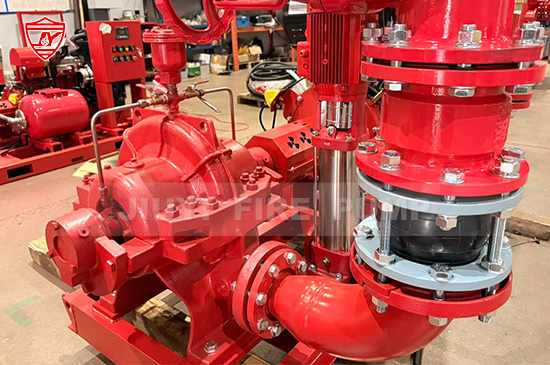
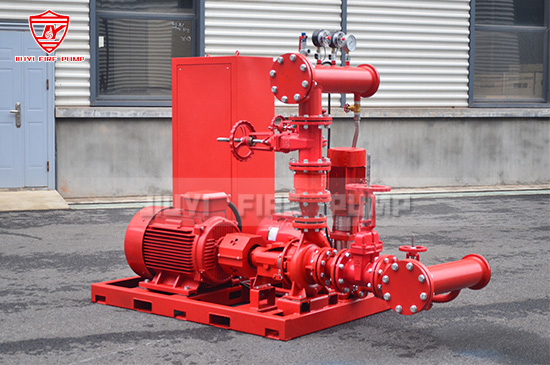
A typical fire pump package may include an electric fire pump, diesel fire pump, and jockey pump. The electric or diesel pump provides the main firefighting capacity, while the jockey pump maintains system pressure between fire events.
In an engineered fire pump system, these pumps work together as part of an integrated protection strategy.
The answer depends on the specific system design, applicable codes and standards, authority requirements, and project conditions.
Many fire protection systems use jockey pumps because they provide an effective method of maintaining pressure and preventing unnecessary main fire pump operation. However, the exact configuration should be determined by qualified fire protection engineers and designed according to the applicable requirements.
The system designer should consider factors such as the type of fire protection system, water supply arrangement, system volume, pressure requirements, expected leakage, pump characteristics, and applicable regulations.
For projects designed according to standards such as NFPA 20, jockey pump selection and control should be evaluated as part of the overall fire pump installation rather than treated as an isolated component.
Local authorities, insurers, consultants, and project specifications may also impose additional requirements.
Therefore, the correct question is not simply whether every fire pump needs a jockey pump. The more important question is whether the fire protection system requires a dedicated pressure maintenance arrangement and, if so, how the jockey pump should be correctly selected and controlled.
Selecting a jockey pump requires more than simply choosing a small pump that can generate the required pressure.
The first consideration is the required system pressure. The jockey pump must be capable of maintaining the normal pressure of the fire protection system under expected conditions.
The second consideration is flow capacity. The jockey pump should be appropriately sized for the expected minor pressure losses and system leakage. It should not be oversized to the point that it interferes with the starting of the main fire pump.
The third consideration is pressure settings. The jockey pump start and stop pressures should be coordinated with the main fire pump and other pumps in the system. The sequence should ensure that the jockey pump responds to minor pressure drops while the main fire pump starts when there is a genuine fire demand.
The fourth consideration is compatibility. The jockey pump, controller, pressure sensing arrangement, valves, and other components should work together as a complete fire pump system.
Finally, the pump should be selected based on the specific requirements of the project, including local codes, standards, environmental conditions, voltage, frequency, and installation requirements.
Working with an experienced fire pump manufacturer can help ensure that the jockey pump is correctly matched to the main fire pump and the overall system design.
Although a jockey pump is smaller than the main fire pump, it still plays an important role in maintaining fire protection system readiness.
A jockey pump should be inspected and maintained according to the applicable maintenance program and project requirements. Operators should monitor whether the pump starts and stops at the correct pressure settings and whether it is cycling more frequently than expected.
Unusual jockey pump operation may be an early warning of a problem within the fire protection system.
For example, if the jockey pump begins starting repeatedly, the system may have developed a leak. If it cannot restore pressure, there may be an issue with the pump, motor, controller, check valve, or pressure sensing equipment.
Routine inspection can help identify these problems before they affect the reliability of the complete fire protection system.
The jockey pump should also be considered during commissioning and system testing. The start and stop sequence should be verified, and the interaction between the jockey pump and main fire pump should be checked.
Several problems can affect jockey pump performance.
One common issue is incorrect pressure settings. If the jockey pump start pressure is set too close to the main fire pump start pressure, the main pump may start unnecessarily.
Another issue is incorrect pump sizing. An oversized jockey pump may interfere with the intended fire pump starting sequence, while an undersized pump may fail to maintain pressure.
Frequent cycling is another concern. Repeated jockey pump starts may indicate leakage or other system problems that should be investigated.
Pressure sensing equipment can also cause operational issues. If the sensing line or pressure switch does not accurately detect system pressure, the pump may start or stop at the wrong time.
These problems demonstrate why a jockey pump should not be viewed as a simple accessory. It is an important part of the fire pump system's control and pressure management strategy.
So, why does a fire pump need a jockey pump?
The main reason is simple: the jockey pump maintains fire protection system pressure during normal conditions, allowing the main fire pump to remain on standby until a genuine firefighting demand occurs.
By compensating for minor pressure losses, the jockey pump helps prevent unnecessary starts of the main fire pump. It supports system reliability, reduces avoidable pump cycling, and helps keep the fire protection system continuously pressurized and ready for an emergency.
However, the benefits of a jockey pump depend heavily on correct selection, sizing, pressure settings, installation, and maintenance. An oversized or improperly configured jockey pump can create operational problems, while an undersized pump may fail to maintain system pressure effectively.
For fire pump manufacturers, engineers, contractors, and facility owners, understanding the relationship between the jockey pump and the main fire pump is essential for designing and maintaining reliable fire protection systems.
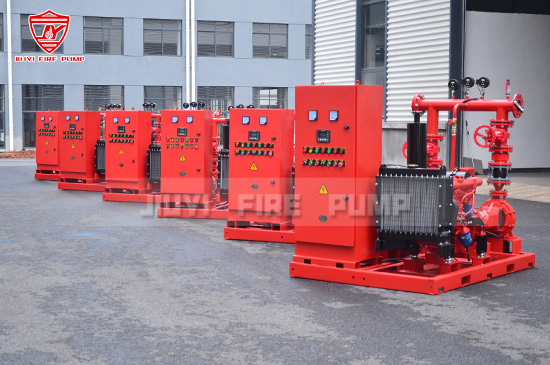
A properly designed fire pump set brings all components together as one coordinated system. The jockey pump maintains pressure. The main fire pump provides the required firefighting flow. The controllers coordinate operation. Together, these components help ensure that when a fire protection system is needed, it is ready to respond.
For projects requiring reliable fire pump solutions, choosing the right pump configuration and working with an experienced fire pump manufacturer can make an important difference in system performance, long-term reliability, and emergency readiness.
.jpg)