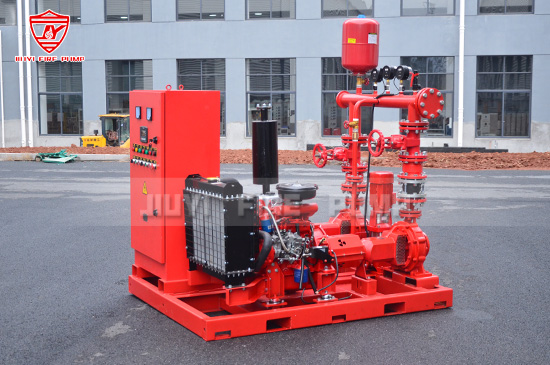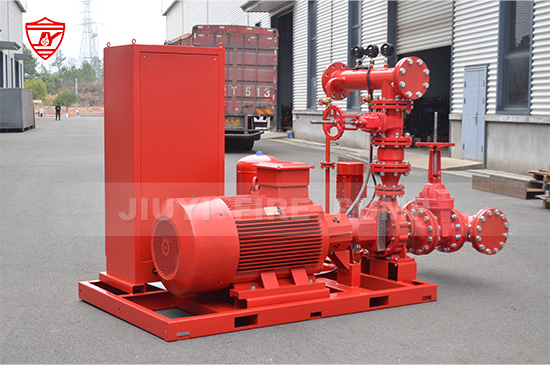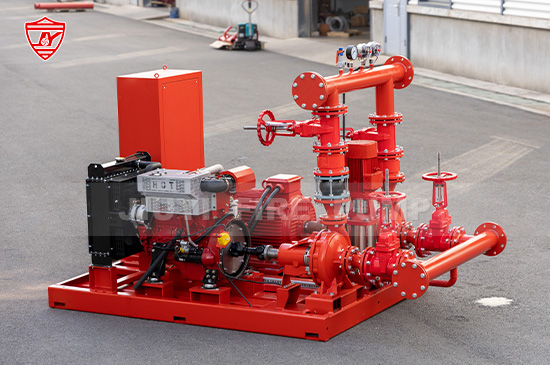
A diesel engine fire pump driver is the engine that provides mechanical power to a fire pump when reliable water pressure and flow are required during a fire emergency. Unlike an electric motor, a diesel engine can operate independently of the main electrical power supply, making it an important driver for fire protection systems where power reliability is a critical consideration.
In a diesel-driven fire pump system, the diesel engine is mechanically connected to the fire pump. When the fire pump controller detects a demand for water, the diesel engine starts and drives the pump to deliver the required flow and pressure to the fire protection system.
For engineers, contractors, and fire safety professionals, understanding the role of the diesel engine fire pump driver is essential when selecting, sizing, installing, and maintaining a reliable fire pump system.
.jpg)
The primary function of a diesel fire pump driver is simple: it converts the chemical energy of diesel fuel into mechanical power that rotates the fire pump.
A fire pump requires sufficient shaft power to achieve its specified flow and pressure. The diesel engine supplies this power through a direct mechanical connection, typically using a coupling between the engine and pump.
During normal conditions, the fire pump is usually not running continuously. The system remains ready for operation while pressure is maintained in the fire protection piping. When water demand causes system pressure to fall to a predetermined starting point, the fire pump control system initiates the starting sequence.
For a diesel-driven fire pump, the engine starts and accelerates the pump to its operating speed. The pump then draws water from the available water source and supplies it to sprinklers, hydrants, standpipes, hose systems, or other fire protection equipment.
The diesel engine therefore serves as the power source that enables the fire pump to perform its required hydraulic duty.
Fire protection systems require a dependable power source because a fire emergency can occur when normal building services are unavailable.
Electrical power is commonly used to drive fire pumps, but some installations require or benefit from an independent diesel-driven pump. A diesel engine can provide a separate source of mechanical power without depending entirely on the building's electrical supply.
This is particularly important for projects where electrical reliability is a major concern or where the fire protection design requires multiple independent power arrangements.
A diesel fire pump may also be installed together with an electric fire pump and jockey pump. In this configuration, the electric and diesel pumps can provide different levels of redundancy and operational capability, while the jockey pump maintains system pressure during small pressure losses.
The exact arrangement depends on the project design, applicable codes and standards, water supply conditions, and authority requirements.
A typical diesel fire pump system consists of several interconnected components.
The major components include the fire pump, diesel engine, diesel engine controller, batteries, fuel system, cooling system, exhaust system, instrumentation, and associated piping and valves.
The operating sequence generally begins when the fire protection system experiences a pressure drop.
The controller monitors the system and initiates the required starting sequence when the programmed starting conditions are reached. The diesel engine starts using its battery-powered starting system. Once the engine reaches the required operating speed, it drives the fire pump.
The pump then produces the required hydraulic performance.
The diesel engine continues operating as required by the fire pump control system. After the required operating period and system conditions have been satisfied, the engine can be stopped according to the applicable control sequence and project requirements.
Because fire pumps are emergency equipment, every part of this sequence needs to be considered during system design and commissioning.
The two most common types of fire pump drivers are electric motors and diesel engines.
An electric motor converts electrical energy into mechanical energy to drive the pump. A diesel engine uses fuel combustion to produce mechanical power.
The main difference is the energy source.
An electric fire pump depends on the electrical supply serving the installation. A diesel fire pump has its own fuel-powered engine and starting system. This difference can influence system redundancy, electrical infrastructure, installation requirements, maintenance, and project cost.
Neither driver should be selected based only on the engine or motor nameplate power. The complete fire pump system must be evaluated according to its required flow, pressure, speed, pump efficiency, water source, operating conditions, and applicable requirements.
For many larger fire protection projects, an electric pump and diesel pump may be combined in the same system to provide different power arrangements.
Correct engine sizing is one of the most important aspects of diesel fire pump selection.
The engine must provide enough power to drive the selected pump throughout its required operating range. The required power depends on factors such as flow, pressure, pump efficiency, rotational speed, and operating conditions.
A useful relationship for understanding pump power is:
Pump power is influenced by flow, pressure or head, efficiency, and gravity.
As the required flow or pressure increases, the power required by the pump generally increases. Pump efficiency also has a significant effect on the required shaft power.
The diesel engine should therefore be selected based on the actual power requirement of the fire pump rather than simply selecting an engine with a convenient nominal rating.
Engine selection should also consider the complete pump performance curve. The pump may operate at different points during a fire event, and the driver must be capable of supplying sufficient power across the required operating range.
Altitude and ambient temperature can also affect diesel engine performance. In demanding environments, the available engine power may decrease because of reduced air density or increased temperature.
For this reason, project-specific environmental conditions should be considered during engine selection.
When evaluating a diesel engine fire pump driver, several technical specifications should be reviewed.
The rated engine power must be sufficient for the fire pump's required operating conditions. The pump manufacturer's performance data and the engine manufacturer's technical information should be evaluated together.
The engine speed must be compatible with the pump design and transmission arrangement. Correct speed is important because pump performance is closely related to rotational speed.
Diesel fire pump engines commonly use batteries and an electric starting system. Battery capacity, charging equipment, starting reliability, and system redundancy are important considerations.
The engine must remain within its allowable operating temperature during operation. Depending on the system design, cooling can involve a heat exchanger arrangement or another approved cooling method.
The diesel fuel supply must provide sufficient capacity for the required operating conditions. Fuel tank capacity, fuel quality, piping arrangement, and accessibility for maintenance should all be considered.
Diesel engines generate exhaust gases that must be safely discharged from the pump room or enclosure. Exhaust piping must be designed to control temperature, back pressure, and safe discharge.
The diesel engine controller manages starting, monitoring, alarms, and operating functions. The controller should be compatible with the engine and the complete fire pump system.
Ambient temperature, altitude, ventilation, humidity, and installation location can affect engine performance. Outdoor installations and enclosed pump rooms may have different ventilation and cooling requirements.
A diesel engine fire pump is an emergency system, so performance should not be assumed based solely on individual component specifications.
Testing provides an opportunity to verify the relationship between the engine, pump, controller, and supporting systems.
A complete fire pump test can evaluate hydraulic performance, engine operation, starting behavior, operating speed, pressure, flow, alarms, and other system functions.
For manufacturers, dedicated testing facilities are particularly important because fire pump assemblies can be evaluated under controlled operating conditions before shipment.
A comprehensive manufacturing and testing process can also help identify issues related to pump performance, engine operation, controller configuration, cooling, fuel supply, or other components before the equipment reaches the project site.
A diesel engine fire pump driver requires regular inspection and maintenance to remain ready for emergency operation.
Important maintenance areas include the batteries, battery charger, fuel system, engine oil, cooling system, exhaust system, starting system, controller, and associated instrumentation.
Fuel should be maintained in suitable condition, and the fuel system should be inspected for leaks or contamination.
Battery condition is particularly important because a diesel engine cannot perform its function if the starting system fails. Battery terminals, connections, charging equipment, and battery condition should therefore be checked according to the applicable maintenance requirements.
The cooling system should also be inspected to ensure that the engine can operate without overheating.
Regular operational testing helps verify that the diesel engine can start and operate when required. Maintenance and testing intervals should follow the applicable fire protection standards, manufacturer instructions, and project requirements.
Diesel fire pump systems can be used in a wide variety of fire protection applications.
They are commonly considered for industrial facilities, warehouses, commercial buildings, high-rise developments, manufacturing plants, logistics facilities, data centers, infrastructure projects, and other installations where dependable fire water supply is required.
They can also be incorporated into packaged fire pump sets designed for specific project requirements.
For projects with limited electrical infrastructure or requirements for independent power sources, a diesel-driven fire pump can be an important part of the overall fire protection strategy.
The appropriate configuration should always be determined by the project's hydraulic calculations, applicable standards, local regulations, and authority requirements.
Selecting a diesel engine fire pump is not simply a matter of purchasing an engine and connecting it to a pump.
The pump, engine, controller, cooling system, fuel system, and other components must operate as an integrated system.
A qualified fire pump manufacturer should therefore have experience in hydraulic design, pump manufacturing, engine integration, control systems, testing, and quality management.
Manufacturing capability is also important. A manufacturer with dedicated fire pump testing equipment can verify pump performance before delivery and provide test data for project documentation.
For international projects, buyers should also consider the certification and compliance requirements applicable to their target market. Certification requirements can vary depending on the project, jurisdiction, specification, and applicable fire protection standard.
.jpg)
A diesel engine fire pump driver is the mechanical power source that drives a fire pump when emergency water flow and pressure are required. Its independence from the normal electrical power supply makes diesel-driven fire pumps an important solution for many fire protection applications.
Selecting the correct diesel driver requires more than matching engine horsepower to a pump. Engineers and project buyers should consider pump duty, engine power, speed, starting systems, cooling, fuel supply, exhaust, controller functions, environmental conditions, testing, and applicable requirements.
For fire pump manufacturers, integrating these components into a properly tested system is essential to delivering reliable fire protection equipment.
Understanding how a diesel engine fire pump driver works helps engineers, contractors, and fire safety professionals make better technical decisions when designing and specifying fire pump systems.