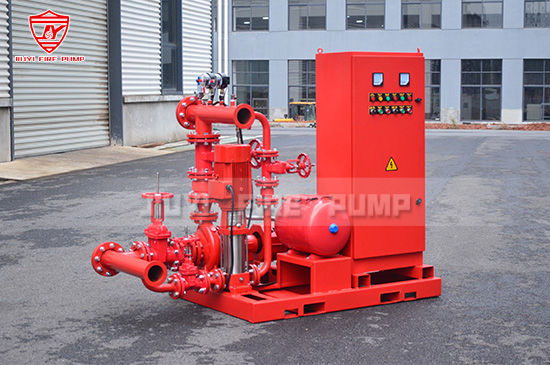
Noise inside a fire pump room is a common but often underestimated issue during fire protection system design, installation, and maintenance. Whether the pump is electric-driven or diesel-driven, excessive noise can disrupt building occupants, hinder communication during testing, cause long-term hearing risks for maintenance personnel, and even affect the pump’s performance if vibration is uncontrolled.
Understanding how noise is generated, how it travels, and how to design effective noise-control strategies is essential for anyone responsible for fire protection systems — engineers, contractors, consultants, and facility owners. As a manufacturer of fire pumps, we frequently see avoidable noise problems caused by poor room layout, missing insulation, incorrect foundation design, and lack of vibration control.
This article provides practical, engineering-based guidance on how to reduce noise in fire pump rooms while maintaining NFPA 20 compliance and ensuring reliable fire pump operation.
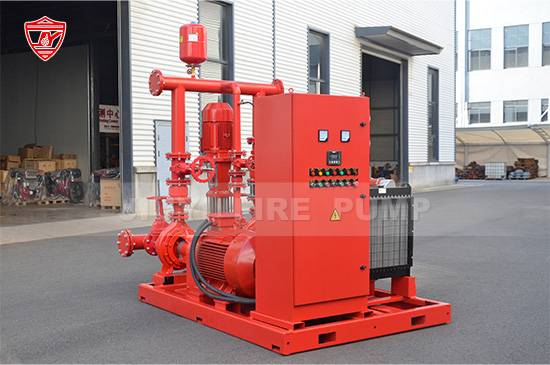
Fire pump rooms produce noise from several sources, which must be considered whenever aiming to reduce sound levels.
1. Pump and Motor Operation
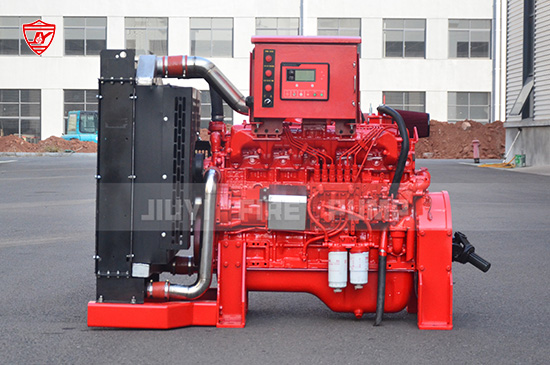
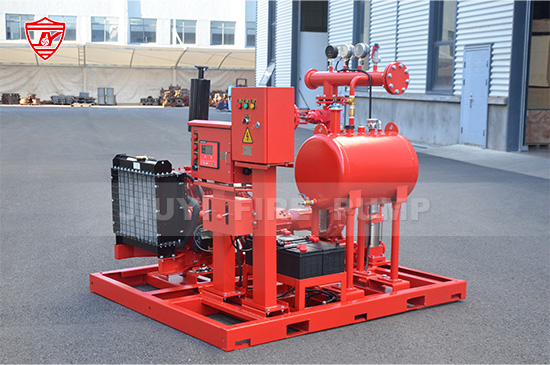
Electric fire pumps generate a consistent mechanical noise caused by the rotation of impellers, motor action, coupling alignment, and water movement. Diesel fire pumps add additional sound from engine combustion, exhaust, cooling fans, and air intake.
2. Hydraulic Noise
High water flow, cavitation, water hammer, and turbulent flow inside pipes can generate loud vibration and resonance. Poor suction design, undersized pipes, and abrupt direction changes amplify this effect.
3. Structural Vibration
A fire pump transfers energy to its base, foundation, and surrounding building structure. If the foundation is poorly isolated or undersized, vibration spreads through walls and floors, creating noise in nearby rooms.
4. Exhaust and Air Movement (Diesel Fire Pumps)
Diesel engines require air intake and exhaust exits. Both are extremely loud if not properly silenced. Even when compliant with NFPA rules, uninsulated exhaust pipes greatly increase overall noise levels.
Noise control begins in the earliest design stages. Good planning prevents expensive modifications later and ensures a quieter, safer pump room.
Ideally, a fire pump room should be placed away from:
offices
residential areas
control rooms
hospital patient zones
meeting rooms or classrooms
If the pump room must be near occupied areas, additional acoustic treatment becomes more important.
A cramped pump room traps and amplifies noise. Adequate room volume helps diffuse sound and reduces the intensity of reflected noise.
Enough space is also essential for maintenance access, which affects how smoothly the pump operates and how easily vibration and alignment can be controlled.
Proper positioning of the pump, driver, controllers, exhaust systems, and valves helps minimize acoustic hotspots.
Some basic layout principles include:
Avoid placing the pump too close to walls.
Keep diesel exhaust pipes on the shortest safe route to the outside.
Use flexible connections on suction and discharge sides to reduce vibration transfer.
One of the most effective ways to reduce noise in a fire pump room is to control vibration from the start.
NFPA 20 requires a separate inertia block or foundation for each fire pump. The foundation must be at least three times the pump’s mass. A properly designed foundation absorbs and distributes vibration instead of passing it into the building structure.
Elastomeric or spring isolators help reduce transmission of mechanical vibration into floors and walls. Proper selection depends on:
pump size
motor or engine type
rotational speed
foundation mass
Contractors should avoid cheap or undersized pads, which can increase vibration rather than reduce it.
Rubber bellows or flexible metal hoses placed at suction and discharge connections help decouple the pump from the piping network. This significantly reduces structural noise and prevents resonance.
Even with good vibration control, some noise will still radiate through the air. Acoustic treatments absorb sound waves and lower overall noise levels in the room.
Sound-absorbing panels made from mineral wool, perforated metal, or fire-rated acoustic boards help reduce echo and reverberation. They should be placed on hard reflective surfaces to break up noise reflections.
NFPA-compliant materials are essential, especially in spaces containing electrical equipment and diesel fuel lines.
High ceilings can cause noise buildup. Fire-rated acoustic baffles or suspended acoustic ceilings reduce reflections and help maintenance personnel work more comfortably.
Ordinary metal doors allow noise to escape easily. Sound-rated, insulated steel doors with proper sealing help contain noise inside the pump room. A double-door system can be used near quiet office or residential areas.
Diesel fire pumps require special attention because they generate significantly higher noise levels than electric models.
Diesel engines require silencers, but not all silencers provide equal performance. Consider:
critical-grade silencers for maximum noise reduction
NFPA-approved installation
insulated pipes to reduce radiated heat and noise
Uninsulated exhaust piping can radiate substantial noise and heat. Fire-rated insulation wraps reduce both. They also protect personnel during maintenance.
Air intake noise is often overlooked. Engine air intake attenuators reduce high-frequency noise while maintaining airflow.
Ventilation openings for diesel engines must meet cooling requirements without becoming noise leaks. Acoustic louvers or baffles maintain airflow while reducing noise transmission.
Hydraulic noise is common in fire pump systems and can be controlled with proper design.
Poor suction design causes cavitation — one of the loudest and most damaging noise sources. Prevent cavitation by:
maintaining adequate suction head
avoiding undersized suction piping
eliminating unnecessary elbows near the pump
using eccentric reducers on horizontal suction lines
Water hammer creates loud banging noises. Air chambers, slow-closing valves, and proper pipe support help eliminate this.
Loose pipes vibrate and amplify sound. Correct supports prevent resonance, reduce rattling, and maintain system reliability.
Many fire pump rooms already exist and cannot be rebuilt. Noise reduction is still possible with targeted upgrades.
Even a modest installation of acoustic wall panels or ceiling baffles can lower noise by 20–40%.
Gaps in doors allow noise to escape. Adding seals, sweeps, or a sound-rated door greatly reduces transmission.
Older pump foundations often lack proper isolation. Adding isolation pads or flexible connectors can significantly reduce transmitted vibration.
Insulating pipes reduces hydraulic noise and helps maintain water temperature within acceptable ranges.
Maintenance has a direct impact on noise levels. A well-maintained fire pump runs smoother, vibrates less, and operates more quietly.
Misaligned couplings cause vibration and mechanical noise. Alignment should be checked during installation and during scheduled maintenance.
Dry bearings create grinding noise and accelerate wear. Proper lubrication reduces friction and noise.
Air pockets cause hydraulic turbulence and irregular noise patterns. Ensuring the system is fully primed and vented keeps noise under control.
Impellers, bearings, belts, and engine components all deteriorate with time. Worn parts increase noise and compromise pump performance.
Actual reduction depends on the current room design and pump type, but typical improvements include:
10–25 dB with proper vibration isolation
20–40 dB with full acoustic treatment
15–35 dB with diesel exhaust silencers and insulation
5–15 dB through maintenance and alignment
These reductions significantly improve working conditions, occupant comfort, and overall system reliability.
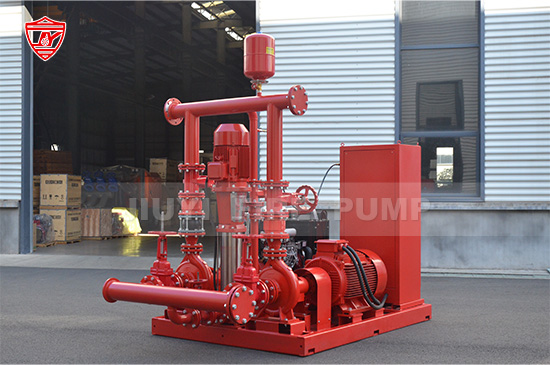
To effectively reduce noise, follow these best practices:
Start with proper room planning and pump layout.
Invest in a solid, isolated foundation and vibration control.
Apply acoustic treatment to walls, doors, and ceilings.
Pay special attention to diesel exhaust and ventilation noise.
Design piping to prevent cavitation, water hammer, and vibration.
Maintain the pump regularly to keep noise levels stable.
A quieter pump room is not just about comfort. It improves safety, enhances communication during testing, protects workers’ hearing, and ensures the fire pump operates smoothly and reliably when an emergency happens.
By combining thoughtful design, quality materials, and consistent maintenance, any fire pump room — new or existing — can achieve significantly reduced noise levels while meeting NFPA 20 standards and ensuring dependable fire protection performance.