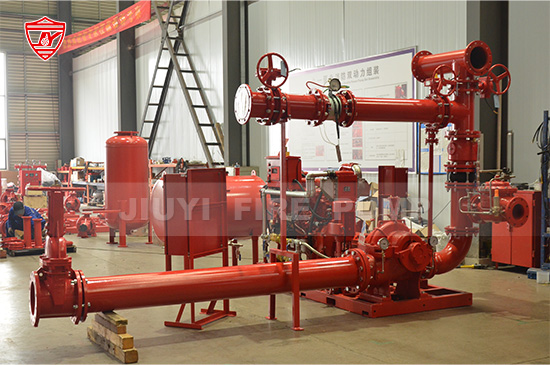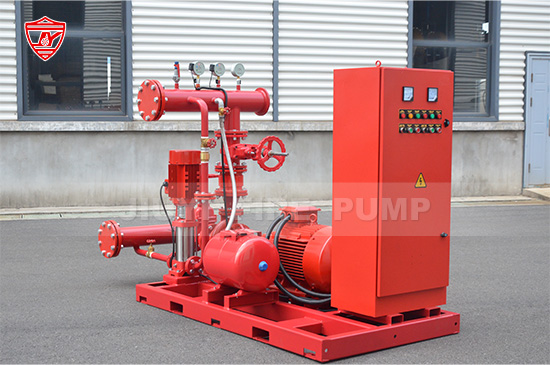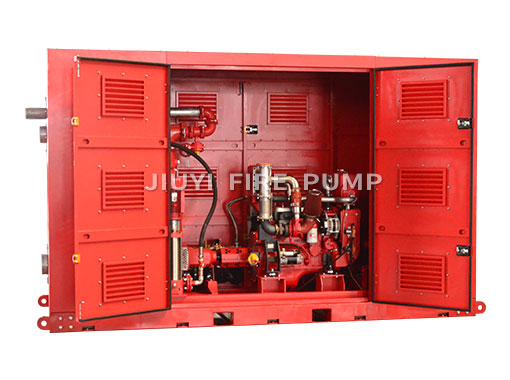
Proper fire pump alignment is one of the most critical yet often overlooked steps in ensuring a reliable and long-lasting fire protection system. Whether the pump is electric-driven, diesel-driven, or a vertical turbine model, alignment directly affects vibration levels, bearing life, seal integrity, and total pump performance. Misalignment is one of the top causes of premature fire pump failure and costly downtime during fire protection inspections or emergency events.
This article provides a comprehensive 1500-word guide on how to ensure proper fire pump alignment, what tools are required, how to identify alignment issues, and how to maintain alignment throughout the pump’s lifecycle. As a fire pump manufacturer, we aim to share practical, real-world insights valuable to engineers, installers, contractors, and facility managers.
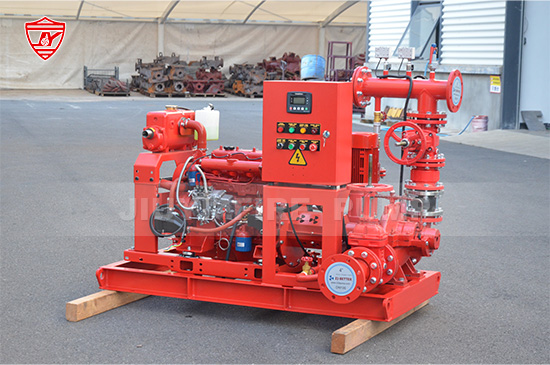
Why Proper Fire Pump Alignment Matters
Fire pumps operate at high speeds and must start instantly during an emergency. Any misalignment between the pump and driver (electric motor or diesel engine) creates stress across the shaft and coupling. This stress doesn't remain isolated—over time, it spreads into the bearings, seals, and even the casing.
Misalignment affects fire pumps in several ways:
1. Increased Vibration
Excess vibration accelerates wear and can cause pump components to loosen. Excessive vibration is one of the main reasons a fire pump fails NFPA 20 commissioning tests.
2. Reduced Pump Efficiency
Misalignment leads to higher energy consumption and reduced hydraulic performance, affecting both pump flow and pressure.
3. Shortened Equipment Life
Bearings, couplings, and mechanical seals are especially vulnerable to misalignment. Replacing these components can be expensive and may require shutting down the fire protection system.
4. Heat Build-Up
Poor alignment increases friction between rotating components, producing heat that damages lubricants, bearings, and couplings.
5. Unexpected Failure During Emergencies
Perhaps the most critical issue is the risk of fire pump failure when needed most. Alignment errors reduce reliability and compromise building safety.
Types of Fire Pump Misalignment
Understanding misalignment types helps technicians diagnose and correct alignment efficiently.
1. Angular Misalignment
This happens when the driver and pump shafts are not parallel. The gap between coupling faces varies at different points around the circumference.
2. Parallel Misalignment
The shafts are parallel but not collinear—they do not share the same centerline.
3. Axial Misalignment
The distance between the coupling faces is either too small or too large. Incorrect spacing leads to excessive thrust loads.
4. Soft Foot Conditions
Soft foot occurs when one or more feet of the driver or pump does not sit flat on the baseplate. This distorts the machine frame, making alignment impossible until corrected.
Tools Required for Accurate Alignment
While some installers still rely on simple straightedges, modern fire pump alignment requires precision. The recommended tools include:
1. Feeler Gauges
Used to measure coupling gaps during angular alignment.
2. Dial Indicators
More accurate than straightedges and suitable for most professional installations.
3. Laser Alignment Systems
The most precise and efficient method. Lasers reduce human error and speed up alignment on large or high-speed fire pumps.
4. Soft Foot Tools
These include thickness gauges and shims for correcting uneven mounting surfaces.
5. Vibration Analyzer (Optional)
Useful during troubleshooting and for verification after alignment.
Alignment Requirements Based on Fire Pump Type
Different fire pump types require slightly different alignment procedures due to variations in structure, driver type, and mounting design.
Electric Fire Pump Alignment
Electric motors are relatively stable, making alignment easier. The motor is typically adjusted to meet the pump shaft centerline. However, thermal growth (expansion when running hot) must be considered.
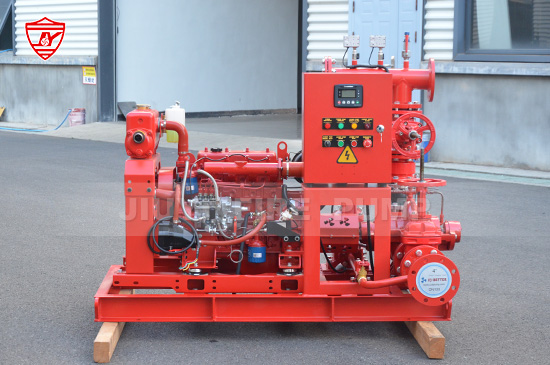
Diesel Engine Fire Pump Alignment
Diesel engines vibrate more and have higher starting torque, demanding extremely accurate alignment. Alignment must be performed with the engine at operating temperature because thermal expansion significantly shifts the shaft centerline.
Vertical Turbine Fire Pump Alignment
These pumps require alignment not only at the driver and pump coupling but also along the vertical shaft column. Even slight misalignment in the column pipe or shaft bearings can cause excessive vibration.
Step-by-Step Guide to Proper Fire Pump Alignment
This section outlines professional alignment procedures following industry best practices and NFPA 20 recommendations.
Step 1: Inspect the Baseplate and Foundation
Before aligning any equipment, the base must be structurally sound.
-
Ensure the baseplate is level.
-
Verify no cracks or loose anchor bolts exist.
-
Make sure the grout under the pump is fully cured.
-
Confirm both pump and driver feet contact the baseplate evenly.
Any issue here must be corrected before moving to the next step. Misalignment is unavoidable if the baseplate is not stable.
Step 2: Check for Soft Foot Conditions
Soft foot is one of the most common alignment issues and occurs when a machine foot lifts slightly during bolt tightening.
To check:
-
Slightly loosen each bolt individually.
-
Measure the gap under the foot using a feeler gauge.
-
Insert shims to eliminate the gap.
Repeat the process until all feet sit flat. Only after soft foot correction can accurate alignment begin.
Step 3: Rough Alignment Using Straightedge
This step is not the final alignment but helps bring components close enough for precision instruments.
-
Check horizontal and vertical alignment roughly.
-
Make sure coupling faces are nearly parallel.
-
Adjust motor position sideways or vertically as needed.
Rough alignment sets the stage for fine alignment.
Step 4: Perform Precision Alignment
Using dial indicators or a laser alignment tool:
For Angular Alignment
Measure the gap between coupling faces at 0°, 90°, 180°, and 270°.
Adjust the motor vertically using shims until the gap difference meets recommended tolerances.
For Parallel Alignment
Measure the offset between coupling rims.
Adjust the motor horizontally until the offset is within tolerance.
Typical Industry Tolerance
For most fire pumps: alignment accuracy should be within 0.05 mm to 0.10 mm depending on pump speed and coupling type. Always follow the pump manufacturer’s specific recommendations.
Step 5: Check Axial Alignment
The distance between coupling faces (axial gap) must meet the coupling manufacturer’s specifications. Incorrect axial alignment can overload bearings and reduce coupling life.
Step 6: Re-Tighten Bolts and Re-Check Alignment
After adjustments:
-
Tighten all foundation bolts in a crisscross pattern.
-
Re-measure alignment.
-
Ensure no movement occurred during tightening.
If readings changed, repeat the alignment adjustments.
Step 7: Run the Fire Pump and Conduct Final Alignment Check
Fire pump alignment must be verified after an operational run. This is critical because machines expand during operation.
For diesel fire pumps:
-
Warm the engine to operating temperature.
-
Shut down and immediately recheck alignment.
-
Adjust as needed.
For electric fire pumps:
-
Run for at least 30 minutes.
-
Check for thermal growth effects.
Only after this step is alignment considered complete.
Common Symptoms of Fire Pump Misalignment
Fire pump technicians and facility managers should know the typical warning signs:
-
Excessive vibration
-
High bearing temperature
-
Premature bearing failure
-
Noisy coupling
-
Visible shaft wobble
-
Excessive wear on mechanical seals
-
Increased motor or engine amp draw
-
Frequent coupling insert replacement
Early detection minimizes damage and prevents system downtime.
Best Practices to Maintain Fire Pump Alignment Long-Term
1. Conduct Regular Alignment Checks
NFPA 25 recommends periodic inspection of pump components. Alignment checks should be part of routine maintenance at least annually.
2. Recheck Alignment After Major Events
-
Baseplate regrouting
-
Coupling replacement
-
Foundation repair
-
Pump rebuilds
-
Mechanical seal replacement
Any mechanical disturbance can shift alignment.
3. Monitor Vibration Trends
A sudden rise in vibration usually indicates alignment issues.
4. Train Technicians
Proper alignment requires skill. Ensure installers and maintenance personnel are trained to use precision tools correctly.
5. Use Quality Shims
Avoid makeshift shims made from scrap metal. Precision stainless-steel shims provide consistent thickness.
6. Follow Manufacturer Recommendations
Different fire pump models and couplings have unique requirements.
Conclusion
Proper fire pump alignment is essential for maximizing equipment life, reducing maintenance costs, and ensuring the fire protection system operates reliably during emergencies. Misalignment leads to excessive vibration, premature component failure, and reduced pump performance. By understanding alignment principles, using accurate tools, following proper procedures, and maintaining alignment regularly, engineers and facility managers can significantly enhance fire pump reliability.
As a fire pump manufacturer, we strongly recommend incorporating alignment verification into every installation, commissioning, and annual maintenance plan. A well-aligned fire pump not only increases system efficiency but also ensures safety and performance when it matters most.
If you'd like, I can also create a version optimized for LinkedIn, short video script, Chinese translation, or image prompts for your marketing materials.