Fire pump starting pressure fluctuations are a common but often misunderstood issue in fire protection systems. Sudden pressure spikes or drops during fire pump startup can trigger false alarms, stress piping and valves, damage system components, and in severe cases, compromise the reliability of the entire fire protection system.
For fire pump manufacturers, system designers, installers, and facility owners, understanding the root causes of these fluctuations and implementing effective control strategies is critical for long-term system stability and compliance with fire safety standards.
This article provides a comprehensive, practical guide to identifying why fire pump starting pressure fluctuations occur and how to reduce them through proper system design, component selection, and operational adjustments.
Fire pump starting pressure fluctuations refer to sudden changes in system pressure that occur when a fire pump transitions from standby to full operation. These changes can include:
A rapid pressure surge immediately after startup
Pressure oscillation before stabilizing
A temporary pressure drop followed by an overshoot
While some degree of pressure variation is normal, excessive fluctuations indicate system imbalance and should not be ignored.
Uncontrolled pressure fluctuations can create several serious problems:
Mechanical stress on pipes, fittings, and joints
Premature wear of valves, pressure gauges, and seals
Nuisance alarms and false pump starts
Increased risk of water hammer
Reduced reliability during actual fire events
In systems designed under NFPA 20, pressure stability is a key performance requirement, not only for safety but also for long-term system durability.
One of the most frequent causes of pressure fluctuation is poor coordination between the jockey pump and the main fire pump.
If the jockey pump cut-in and cut-out pressures are set incorrectly, the main fire pump may start unnecessarily or too aggressively. This can result in repeated cycling and pressure instability.
Typical issues include:
Jockey pump cut-out pressure too close to main pump start pressure
Insufficient jockey pump capacity to maintain system pressure
Delayed response of the jockey pump controller
Fire pump controllers play a critical role in pressure management. Improper controller configuration can cause abrupt starts, delayed stabilization, or pressure overshoot.
Key controller-related issues include:
Start pressure set too high or too low
Inconsistent pressure sensing due to poor sensor placement
Electrical delays or response lag in controllers
A well-calibrated controller ensures smooth startup and controlled pressure rise.
When a fire pump starts under conditions of immediate high flow demand, such as open test headers or partially open system valves, pressure can fluctuate sharply before stabilizing.
This often occurs during:
Acceptance testing
Weekly or monthly pump testing
Systems with improperly sequenced valves
The faster the pump reaches full speed under load, the greater the chance of pressure fluctuation.
Oversizing is a hidden but common contributor to pressure surges. When a fire pump is significantly larger than required by system demand, it can produce excessive pressure at startup.
Oversized pumps tend to:
Reach full pressure too quickly
Overshoot rated pressure
Create unstable pressure curves during transient conditions
Correct pump selection based on hydraulic calculations is essential.
Pressure relief valves or circulation relief valves are designed to protect fire pump systems from excessive pressure buildup.
If these components are:
Undersized
Incorrectly set
Poorly maintained
The system may not dissipate excess pressure fast enough during startup, resulting in sharp pressure spikes.
Air pockets in piping can compress and expand rapidly during pump startup, causing pressure oscillations that resemble mechanical instability.
Air entrapment is commonly caused by:
Inadequate venting
Improper pipe slope
Poor system filling procedures
Even small amounts of trapped air can magnify pressure fluctuations.
Proper jockey pump operation is the foundation of a stable fire pump system.
Best practices include:
Setting the jockey pump cut-out pressure above normal system pressure
Ensuring sufficient capacity to compensate for small leaks
Maintaining a clear pressure gap between jockey pump stop pressure and fire pump start pressure
This allows the jockey pump to manage minor pressure losses without triggering the main fire pump.
Fire pump controllers should be adjusted based on actual system performance, not default factory values.
Key recommendations:
Verify pressure switch accuracy
Ensure pressure sensing points reflect true system pressure
Avoid overly aggressive start pressure settings
Smooth startup behavior reduces stress on both mechanical and electrical components.
Pressure relief valves should be sized and set according to the pump’s rated pressure and system design.
Effective pressure relief strategies include:
Installing properly rated pressure relief valves
Ensuring relief valves are tested and maintained regularly
Using circulation relief valves to prevent overheating at no-flow conditions
These measures help dissipate excess pressure during startup transitions.
Valves, fittings, and system components should be installed to minimize unnecessary restrictions that can amplify pressure changes.
Consider the following:
Fully open suction and discharge isolation valves
Avoid undersized piping near the pump
Ensure test headers and flow paths are correctly sized
Smooth flow paths contribute to stable pressure behavior.
Air management is often overlooked but highly effective in reducing pressure fluctuations.
Recommended actions:
Install air release valves at high points
Ensure proper pipe slope where possible
Follow correct system filling and commissioning procedures
Removing trapped air significantly improves pressure stability.
Pump selection should always be based on accurate hydraulic calculations, not conservative oversizing.
A correctly selected fire pump:
Matches system demand closely
Operates efficiently near its rated point
Produces predictable pressure curves
This reduces the risk of startup surges and long-term instability.
For electric fire pumps, controlled acceleration methods can reduce the mechanical shock of startup.
While fire pumps must meet specific code requirements, properly designed soft-start strategies can:
Reduce electrical inrush
Moderate pressure rise rate
Improve overall system stability
These solutions must always comply with applicable fire codes and authority requirements.
Proper testing is essential to confirm that pressure fluctuations are within acceptable limits.
Recommended practices include:
Monitoring pressure during startup tests
Recording pressure curves over time
Adjusting settings based on real data
Testing should simulate realistic operating conditions rather than ideal laboratory scenarios.
As a fire pump manufacturer, providing system-level guidance is just as important as supplying compliant equipment.
Manufacturers can help by:
Offering application-specific pump selection support
Providing clear controller configuration guidance
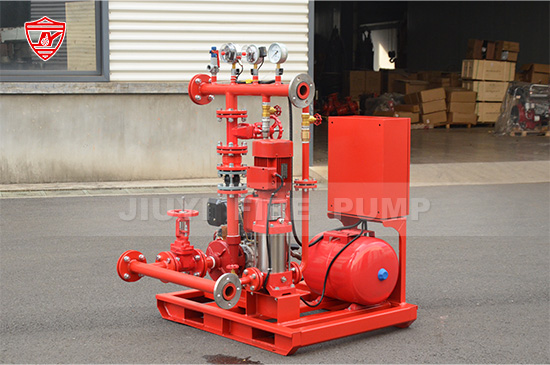
Supplying tested, matched pump packages
Supporting installers during commissioning
A well-integrated fire pump package significantly reduces the likelihood of pressure-related issues.
Fire pump starting pressure fluctuations are not random events. They are the result of identifiable system design choices, component interactions, and configuration decisions.
By optimizing jockey pump coordination, fine-tuning controller settings, ensuring proper relief protection, managing air in the system, and selecting the right pump for the application, pressure fluctuations can be significantly reduced or eliminated altogether.