Fire pump system performance is one of the most critical factors in ensuring reliable fire protection for buildings, industrial facilities, and infrastructure projects. Among the many technical terms involved in fire pump design, “fire pump head margin” is often mentioned by engineers, consultants, and inspectors, yet it is frequently misunderstood or incorrectly applied. Improper understanding of head margin can lead to underperforming systems, code compliance issues, and even system failure during a real fire event.
This article explains what fire pump head margin is, why it matters, how it is calculated, how it relates to fire pump curves and system demand, and how to apply it correctly when selecting and designing fire pump systems.
To understand head margin, it is first necessary to understand what “head” means in the context of fire pumps. Fire pump head refers to the pressure generated by the pump, expressed in terms of equivalent height of water. Head is usually measured in meters or feet, while pressure is measured in bar or psi. These values are directly related and can be converted between each other.
In a fire protection system, the fire pump must overcome the total system resistance, which includes static head (elevation differences), friction losses in pipes and fittings, losses through valves and backflow preventers, and the pressure required at the most remote or hydraulically demanding sprinkler or hydrant.
The fire pump’s rated head at its rated flow defines the pump’s nominal performance. However, in real-world systems, operating conditions are rarely ideal. This is where head margin becomes an important design consideration.
Fire pump head margin is the additional head or pressure allowance between the fire pump’s rated performance and the minimum system pressure required at the design point. In simple terms, it is the “buffer” built into the system to ensure that the fire pump can reliably meet system demands under varying real-world conditions.
Head margin accounts for uncertainties and variations such as:
Minor errors in hydraulic calculations
Aging and wear of pipes, valves, and fittings
Fouling or corrosion inside the piping
Slight changes in water supply conditions
Variations in pump performance due to manufacturing tolerances
Future system expansion or minor modifications
Without sufficient head margin, a fire pump system may technically meet design calculations on paper but fail to deliver the required pressure and flow during acceptance testing or real fire conditions.
Fire protection systems are designed with the assumption that they must perform reliably under worst-case conditions. The consequences of underperformance can be severe, including failure to control or extinguish a fire, property loss, and risk to life.
The importance of head margin can be summarized in three key aspects:
First, it provides reliability. Fire pumps are mechanical equipment, and no system operates at 100 percent theoretical efficiency forever. Head margin ensures that even with minor losses or degradation over time, the system still meets minimum pressure requirements.
Second, it supports compliance with fire protection standards. Fire pump standards and inspection authorities expect systems to meet pressure requirements not only at initial commissioning but throughout their service life. A design without adequate head margin may pass initial calculations but fail field acceptance tests.
Third, it improves long-term system stability. Over the life of a building, small changes such as added fittings, modified piping routes, or equipment upgrades can slightly increase system losses. Head margin helps accommodate these small changes without requiring immediate pump replacement or major system redesign.
In many regions, fire pump systems are designed according to NFPA 20, the Standard for the Installation of Stationary Pumps for Fire Protection. While NFPA 20 does not use the term “head margin” as a formal parameter, it indirectly addresses the concept through pump performance requirements and system design criteria.
NFPA 20 specifies that a fire pump must be selected to meet the required flow and pressure at the most demanding point of the system. It also sets limits on allowable pump performance characteristics, such as:
The pump must not exceed a certain percentage of rated head at churn (no-flow) condition.
The pump must maintain acceptable performance across a range of flows.
The system must be capable of delivering the required pressure at the most remote outlets.
In practice, designers include a reasonable head margin to ensure that the pump curve intersects the system demand curve at or above the required operating point. This margin is not arbitrary; it is based on engineering judgment, experience, and local authority expectations.
Fire pump head margin is not a single fixed number defined by codes. Instead, it is determined by comparing the required system head to the selected fire pump’s available head at the design flow.
The basic approach is:
Determine the total required system head at the design flow.
This includes static elevation head, friction losses in pipes, fittings, valves, and the minimum residual pressure required at the most remote sprinkler or hydrant.
Identify the fire pump’s available head at the same flow rate.
This value is taken from the fire pump performance curve provided by the manufacturer.
Calculate the difference between available head and required head.
This difference is the head margin.
For example, if the system requires a total head of 85 meters at the design flow and the selected fire pump provides 92 meters of head at that same flow, the head margin is 7 meters. This margin represents the safety buffer available in the system.
Although standards do not prescribe an exact head margin value, industry practice commonly includes a modest but reasonable margin to ensure reliability without oversizing the pump. Oversizing can lead to excessive pressures, system stress, and potential damage to piping and components.
In practical fire pump engineering, designers often aim for a small percentage margin above the calculated demand, rather than a large oversupply. The goal is to balance reliability with system safety and efficiency.
Too little margin may cause system failure under real conditions. Too much margin can result in excessive pressure at low-flow conditions, which may require pressure relief valves or additional pressure-reducing measures.
Fire pump performance curves show the relationship between flow rate and head produced by the pump. The system demand curve represents the pressure required by the fire protection system at different flow rates. The operating point of the fire pump system is the intersection of these two curves.
Head margin is visualized as the vertical difference between the pump curve and the system demand curve at the design flow. A properly selected fire pump should intersect the system demand curve at or slightly above the required pressure.
Understanding this relationship is critical for proper pump selection. If the pump curve barely meets the system demand curve, any small deviation in actual conditions can result in insufficient pressure. If the pump curve is far above the system demand curve, the system may experience excessive pressure at low flow or churn conditions.
One common misconception is that head margin means simply choosing a higher-pressure pump “just to be safe.” This approach can create new problems, including excessive pressures, increased energy consumption, and potential damage to system components.
Another misunderstanding is assuming that municipal water supply pressure variations can substitute for head margin. In reality, fire pump systems must be designed to meet demand even when the water supply is at its minimum expected pressure. Head margin is meant to protect against uncertainties within the system itself, not to compensate for unreliable water supply data.
Some project teams also confuse head margin with pump overspeed or operating beyond rated conditions. Head margin is not about pushing a pump beyond its design limits; it is about selecting the correct pump with appropriate performance characteristics to ensure reliable operation at the design point.
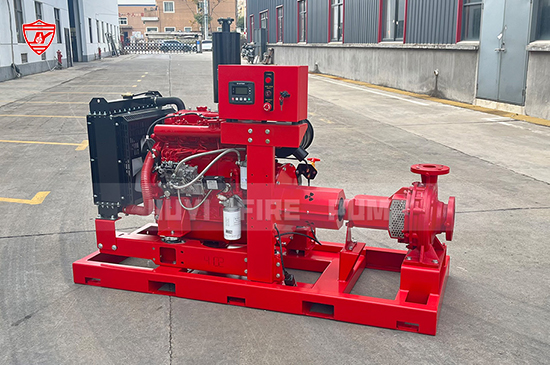
The concept of head margin applies to all types of fire pumps, including horizontal split-case pumps, end suction pumps, vertical turbine fire pumps, and diesel engine or electric motor driven pump sets.
For vertical turbine fire pumps, head margin is particularly important because these pumps are often used in applications with variable water levels and suction conditions. Changes in water level can affect the net positive suction head available, which in turn can influence pump performance. Proper head margin helps ensure that the pump can still deliver the required system pressure under less favorable suction conditions.
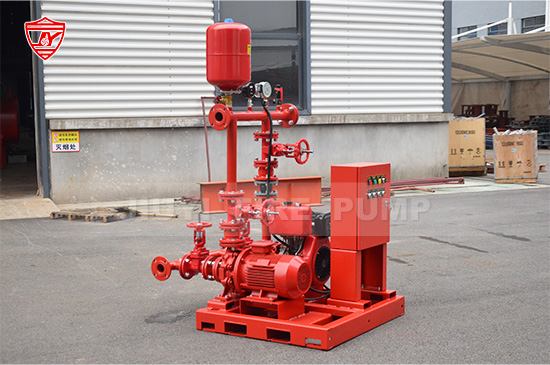
For packaged fire pump sets, including electric and diesel-driven units, head margin must be considered alongside engine power margins and driver performance characteristics to ensure the entire system performs reliably.
During acceptance testing, fire pump systems are tested to verify that they meet the specified flow and pressure requirements. If a system has been designed with insufficient head margin, it may fail acceptance tests due to small discrepancies between theoretical calculations and actual field conditions.
Field conditions often introduce additional friction losses due to installation tolerances, minor piping deviations, or equipment pressure drops that were not fully captured in design calculations. A reasonable head margin helps absorb these discrepancies and improves the likelihood of passing acceptance testing without costly modifications or pump replacements.
Fire protection systems are expected to operate reliably for decades. Over time, internal corrosion, scale buildup, and wear can increase friction losses and reduce effective system performance. While regular maintenance and testing help mitigate these effects, head margin provides an additional layer of protection against gradual performance degradation.
From a life-cycle cost perspective, designing with appropriate head margin can reduce the likelihood of expensive retrofits, pump upgrades, or system modifications later in the building’s life.
When designing and selecting fire pumps, the following best practices help ensure proper application of head margin:
Accurately calculate system losses using conservative but realistic assumptions.
Use manufacturer pump curves and verified performance data for pump selection.
Avoid excessive oversizing that can lead to overpressure issues.
Consider future system modifications or expansions that may slightly increase demand.
Coordinate with local authorities and fire protection engineers to align on acceptable design practices.
Ensure that the selected fire pump operates within acceptable ranges of efficiency and performance.
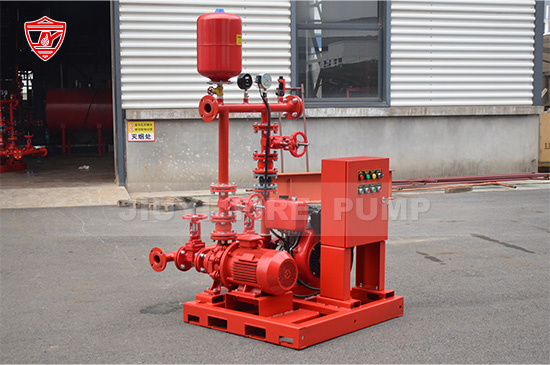
Fire pump head margin is a critical but often overlooked aspect of fire protection system design. It represents the safety buffer between calculated system demand and actual pump performance, helping ensure reliable operation under real-world conditions. Proper understanding and application of head margin improve system reliability, support compliance with fire protection standards, and reduce the risk of performance shortfalls during emergencies.
For fire pump manufacturers, designers, and system integrators, incorporating appropriate head margin into pump selection and system design is a mark of professional engineering practice. It ensures that fire protection systems perform as intended when they are needed most, providing dependable protection for people, property, and critical infrastructure.