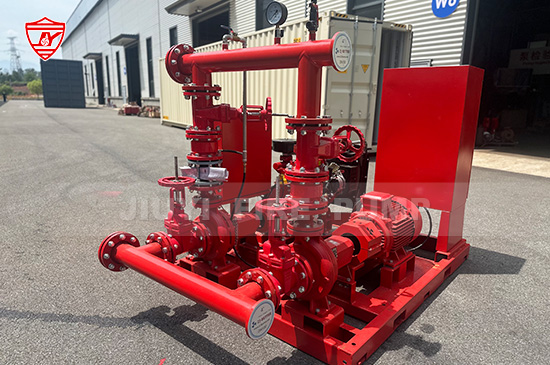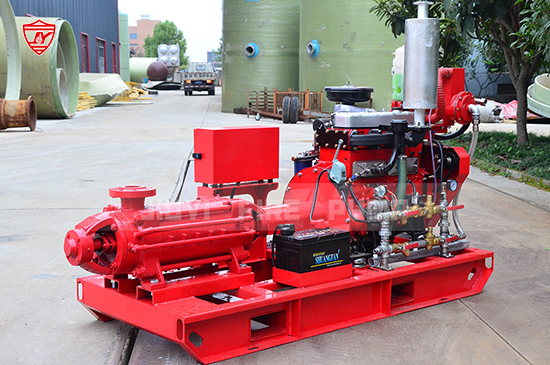
Fire pump systems are essential components of fire protection infrastructure in commercial buildings, industrial facilities, warehouses, oil and gas plants, and other critical applications. Their ability to deliver the required flow and pressure during an emergency depends on the proper design, installation, and operation of the entire pumping system.
One important hydraulic factor that is often overlooked during fire pump system design is Net Positive Suction Head (NPSH). Insufficient NPSH can cause cavitation, excessive vibration, noise, reduced hydraulic performance, and premature damage to pump components. In fire protection applications, these problems can compromise the reliability of the fire water supply when it is needed most.
Understanding NPSH and preventing suction-related problems are essential for fire protection engineers, contractors, system designers, facility managers, and pump manufacturers.
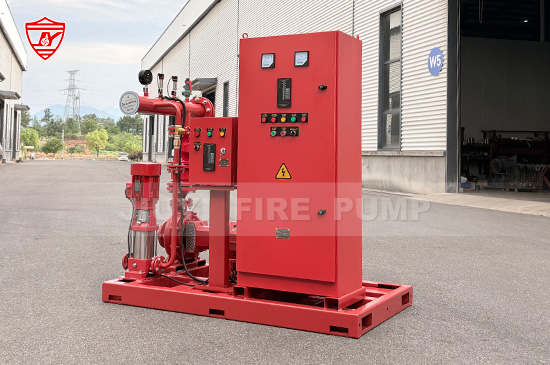
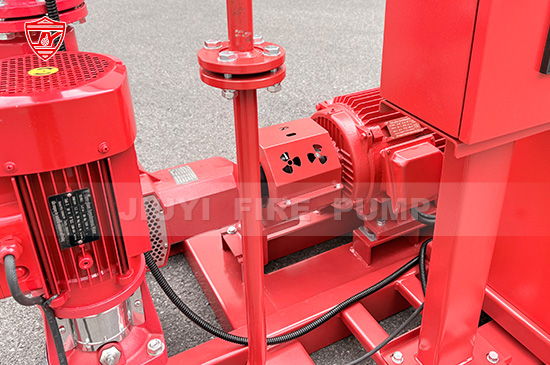
Net Positive Suction Head, commonly known as NPSH, describes the pressure available at the pump suction that prevents water from vaporizing under operating conditions.
When water enters a centrifugal fire pump, the pressure at the impeller inlet decreases as the water accelerates. If the pressure falls below the water's vapor pressure, vapor bubbles begin to form. As these bubbles move into higher-pressure areas inside the impeller, they collapse rapidly. This process is known as cavitation.
NPSH is generally divided into two important values:
NPSH Available (NPSHa): The actual amount of suction head available from the water supply and piping system under operating conditions.
NPSH Required (NPSHr): The minimum suction head required by the pump to operate under specified flow and speed conditions without unacceptable cavitation performance.
For reliable operation, NPSHa must be greater than NPSHr. However, simply meeting the minimum value may not provide sufficient protection under changing operating conditions. Engineers should evaluate the available margin in accordance with the pump manufacturer's recommendations and applicable design requirements.
NPSH is usually expressed in meters or feet of water.
NPSH problems are usually related to the water supply, suction piping configuration, pump installation, operating conditions, or incorrect equipment selection.
Common causes include:
When a fire pump draws water from a tank, reservoir, underground water source, or municipal supply, the pressure available at the pump suction can vary.
A low water level in the storage tank, inadequate supply pressure, or excessive suction lift can reduce NPSHa. During high-flow operation, suction pressure may decrease further, increasing the risk of cavitation.
Long suction pipelines, undersized pipes, excessive fittings, valves, elbows, and poorly designed pipe layouts can increase friction losses.
As water flows through the suction piping, these losses reduce the pressure available at the pump inlet. A system that appears acceptable under static conditions may experience insufficient suction pressure when the fire pump operates at its rated flow.
Incorrect pump elevation, inadequate suction piping arrangements, air pockets, and poor alignment between the water source and pump can create hydraulic problems.
For pumps installed above the water level, excessive suction lift can significantly reduce NPSHa. Even when the pump is installed below the water level, poorly designed piping or obstructions can negatively affect suction conditions.
Water temperature affects vapor pressure. As water temperature increases, its vapor pressure also increases, meaning a higher absolute pressure is required to prevent vapor formation.
Fire pump systems serving industrial facilities or applications with warm water supplies should consider the operating temperature when calculating NPSHa.
When a fire pump operates at flow rates significantly higher than its intended operating conditions, suction velocity and friction losses may increase.
This can reduce the available suction head and increase the likelihood of cavitation, particularly when the water supply or suction piping has limited capacity.
Accurate NPSHa calculations are one of the most important steps in preventing suction problems.
For a pump drawing water from an open tank or reservoir, NPSHa can generally be calculated using the following relationship:
NPSHa = Atmospheric Pressure Head + Static Suction Head − Vapor Pressure Head − Suction Losses
For a pump operating below the water level, static suction head is positive because the water level provides pressure at the pump inlet.
For a pump operating above the water level, static suction head becomes negative and represents the suction lift.
The calculation should account for:
Atmospheric pressure at the installation elevation
Minimum water level in the tank or reservoir
Pump centerline elevation
Water temperature and vapor pressure
Friction losses in suction piping
Losses through valves, strainers, fittings, and other components
Required operating flow rate
Designers should calculate NPSHa under the most unfavorable expected operating conditions rather than relying only on normal or ideal conditions.
For example, a fire pump installed at a high elevation may experience lower atmospheric pressure than one located near sea level. A storage tank operating near its minimum permitted water level may also provide significantly less suction head than a full tank.
A detailed hydraulic calculation helps identify these risks before the system is installed.
Correct fire pump selection is critical to preventing NPSH problems.
The selected pump should match the required flow rate, discharge pressure, water source, installation arrangement, and operating conditions. Pump selection should not be based solely on rated flow and pressure.
During the selection process, engineers should review the manufacturer's pump performance curves and NPSHr data across the expected operating range.
Important considerations include:
Rated flow and pressure
Pump operating speed
Suction pressure conditions
Maximum expected flow
Minimum water level
Water temperature
Installation elevation
Pump type and hydraulic design
Different pump configurations may be more suitable for different suction conditions.
For example, horizontal split case fire pumps are commonly used in applications with adequate flooded suction conditions and high flow requirements. End suction fire pumps may be suitable for certain compact installations where the water supply and suction piping are properly designed. Vertical turbine fire pumps are often considered for applications where the water source is located below the pump discharge installation level, such as underground tanks, wells, reservoirs, or other water sources requiring a vertical pumping arrangement.
The appropriate pump type depends on the project requirements, water supply characteristics, installation conditions, and applicable fire protection standards.
Suction piping has a direct impact on NPSHa and overall fire pump performance.
A properly designed suction pipeline should minimize friction losses, reduce turbulence, and provide stable water flow into the pump.
Several design practices can help prevent NPSH problems:
Suction piping should be sized based on the required flow rate and acceptable velocity and friction loss.
Undersized pipes increase water velocity and friction losses, reducing suction pressure. Increasing pipe diameter where appropriate can help improve hydraulic conditions.
Every elbow, reducer, valve, and fitting introduces additional resistance to water flow.
A simplified suction piping layout with fewer unnecessary fittings can help reduce pressure losses and improve flow conditions.
Elbows installed too close to the pump suction can create uneven flow distribution and turbulence.
Where required by the pump manufacturer's installation instructions and applicable standards, sufficient straight pipe should be provided before the suction inlet to improve flow stability.
When the suction pipe size differs from the pump suction connection, the reducer should be selected and installed correctly.
For horizontal suction piping, eccentric reducers are commonly used in arrangements designed to prevent air pockets, with the flat side positioned appropriately according to the piping configuration.
The exact installation arrangement should follow the applicable design requirements and pump manufacturer's instructions.
Air pockets in suction piping can disrupt water flow and reduce pump performance.
Piping should be arranged to avoid high points where air can accumulate, and the system should be properly filled and vented before operation.
The water source is the foundation of a reliable fire pump system.
Even a correctly selected pump cannot perform properly if the water supply cannot provide the required flow and pressure.
For fire water storage tanks, designers and facility managers should pay particular attention to minimum water levels, tank outlet configuration, suction pipe submergence, and vortex prevention.
Insufficient submergence above the suction inlet may allow air to enter the piping, especially at high flow rates. This can lead to unstable operation and reduced pump performance.
For municipal water supplies, the available pressure should be evaluated under the conditions that may occur during fire pump operation. Engineers should not assume that normal water pressure will remain constant when the fire protection system demands high flow.
For underground tanks and reservoirs, the water level and pump elevation should be carefully considered. Where the installation conditions create significant suction lift, a vertical turbine fire pump may offer a suitable solution depending on the project requirements.
A reliable water source, properly sized suction piping, and correct pump installation work together to maintain sufficient NPSHa.
Cavitation is one of the most common consequences of insufficient NPSH.
Typical warning signs include:
Unusual noise resembling gravel or popping sounds
Excessive pump vibration
Fluctuating discharge pressure
Reduced flow rate
Unstable pump operation
Damage to impeller surfaces
Premature bearing or mechanical seal problems
Cavitation can gradually damage hydraulic components and reduce the pump's ability to deliver stable performance.
To prevent cavitation, fire pumps should operate within their intended performance range and under suction conditions that meet the manufacturer's requirements.
Operators should avoid unnecessary changes to suction valves, water supply arrangements, or piping configurations. Any modifications should be evaluated to ensure that they do not increase suction losses or reduce the available water supply.
In addition, pumps should not be operated with inadequate water supply conditions or in a manner that allows suction pressure to fall below acceptable limits.
Fire pump commissioning is an important opportunity to identify NPSH-related problems before the system enters service.
During acceptance testing and routine performance testing, suction pressure should be monitored together with discharge pressure and flow rate.
Testing should evaluate the pump's performance under the required operating conditions, including rated flow and other specified test points.
If suction pressure decreases excessively as flow increases, the problem may be related to the water supply, suction piping, valves, obstructions, or system design.
Engineers and technicians should compare actual operating measurements with the design calculations and manufacturer's performance data.
Pressure gauges should be properly installed, suitable for the operating pressure range, and maintained in good working condition. Accurate readings help identify changes in system performance and provide valuable information for troubleshooting.
Testing should be conducted according to applicable fire protection standards, approved procedures, and the manufacturer's recommendations.
Routine maintenance helps identify conditions that may gradually reduce NPSHa.
Important inspection points include:
Suction valves fully open and operating correctly
Suction strainers free from debris and blockage
Suction piping free from leaks
Tank outlets free from obstructions
Water levels within the required operating range
Pressure gauges functioning correctly
Pipe supports and connections in good condition
No unauthorized changes to the suction piping
No evidence of air entering the suction system
A partially blocked strainer, damaged valve, or leaking suction pipe can increase pressure losses and negatively affect pump performance.
Maintenance records should document test results, pressure readings, flow measurements, observed vibration, noise, and any corrective actions.
Comparing historical data with current measurements can help identify developing problems before they become serious.
Existing fire pump systems may require upgrades due to changes in building occupancy, expansion of industrial facilities, increased fire protection demand, or modifications to the water supply.
When upgrading a system, engineers should reevaluate the suction conditions rather than simply replacing the existing pump with a higher-capacity model.
Increasing pump flow without improving the water supply or suction piping may increase friction losses and create NPSH problems.
A comprehensive assessment should include:
Updated hydraulic demand
Water supply capacity
Existing suction piping diameter and layout
Minimum water level
Pump elevation
Existing pump performance
Available NPSH at the new operating conditions
Compatibility with applicable fire protection requirements
System upgrades should be based on a complete hydraulic evaluation to ensure that the new equipment can operate reliably under the intended conditions.
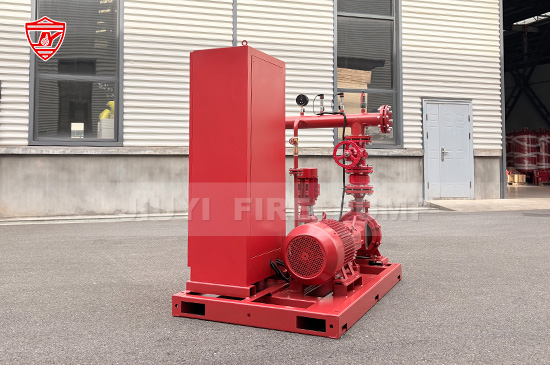
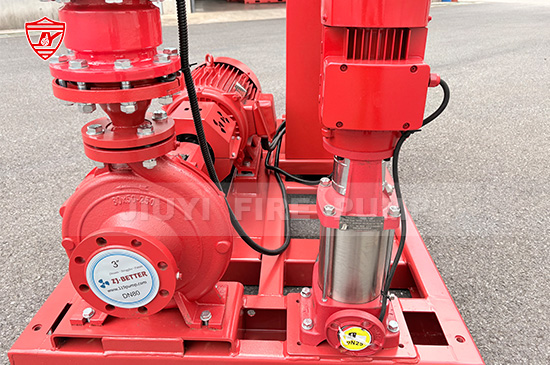
Preventing NPSH problems in fire pump systems requires careful coordination between pump selection, hydraulic calculations, water supply design, suction piping, installation, commissioning, and routine maintenance.
Insufficient NPSH can lead to cavitation, vibration, reduced flow, hydraulic damage, and unreliable fire protection performance. By calculating NPSHa under the most unfavorable conditions, selecting pumps with appropriate NPSHr characteristics, minimizing suction piping losses, maintaining adequate water supply, and monitoring operating conditions, engineers can significantly reduce the risk of suction-related problems.