
A diesel fire pump is a critical part of a fire protection system when a reliable water supply and independent power source are required. Unlike ordinary water pumps, diesel fire pumps are designed to start automatically during a fire emergency and deliver the required water flow and pressure when the fire protection system demands it.
However, even a high-quality diesel fire pump can fail to perform as expected if it is installed incorrectly. Pump selection, foundation design, suction piping, discharge piping, fuel supply, ventilation, exhaust, electrical connections, controllers, and commissioning all affect the reliability of the complete system.
For fire protection contractors, EPC companies, consultants, facility owners, and system integrators, understanding the fundamentals of diesel fire pump installation is essential. This guide explains the major considerations from site preparation through commissioning and ongoing maintenance.
.jpg)
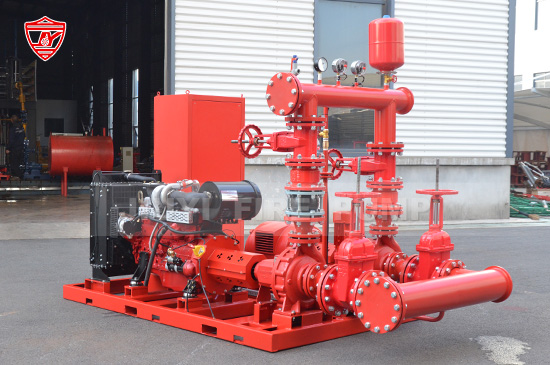
A diesel fire pump system normally consists of several interconnected components rather than the pump alone. Depending on the project design, a typical system may include a diesel engine fire pump, fire pump controller, jockey pump, suction and discharge piping, valves, pressure sensing equipment, fuel tank, batteries, exhaust system, cooling system, and associated accessories.
The main fire pump is responsible for supplying the water required by the fire protection system. The diesel engine provides the mechanical power needed to drive the pump. The controller manages automatic starting and monitoring functions, while the jockey pump helps maintain system pressure during normal conditions and prevents unnecessary starting of the main fire pump.
Before installation begins, contractors should carefully review the approved hydraulic calculations, equipment specifications, pump performance data, system drawings, and applicable fire protection standards.
The installation should always follow the approved project design and the requirements applicable to the specific jurisdiction and certification of the equipment.
The location of the diesel fire pump is one of the most important decisions in the installation process.
A dedicated fire pump room is generally preferred because it provides a controlled environment and protects critical equipment from unnecessary exposure to damage. The room should provide adequate space for the pump, diesel engine, controller, fuel tank, piping, valves, exhaust equipment, and maintenance activities.
There should also be sufficient clearance around the equipment for inspection, servicing, component replacement, and emergency access.
The installation environment should be evaluated for temperature, humidity, flooding risk, ventilation, accessibility, and potential exposure to fire or physical damage. Diesel engines require adequate combustion air and cooling air, so a poorly ventilated room can negatively affect engine performance.
The location should also allow the exhaust system to discharge safely outside the building while minimizing the impact of heat and exhaust gases on nearby equipment or occupied areas.
A diesel fire pump set generates mechanical forces and vibration during operation. Therefore, the foundation must be strong enough to support the complete pump assembly and maintain alignment.
The foundation should be designed according to the equipment dimensions, operating weight, installation arrangement, and project requirements. The finished foundation should be level and sufficiently rigid.
Before placing the pump set, verify the foundation dimensions and anchor bolt positions against the manufacturer's installation drawings. Incorrect positioning can create unnecessary stress on piping connections or make future maintenance difficult.
After installation, the pump, diesel engine, and base assembly should be checked for proper alignment. Coupling alignment is particularly important because misalignment can contribute to vibration, bearing wear, coupling damage, and reduced equipment life.
Suction piping has a major influence on fire pump performance.
The suction pipe should be properly sized according to the hydraulic design and connected to the pump in a way that promotes stable water flow. Poorly designed suction piping can create turbulence, excessive friction loss, or unfavorable flow conditions at the pump inlet.
Avoid configurations that create unnecessary air pockets or unstable flow. Piping should be adequately supported independently of the pump so that its weight and thermal or mechanical forces are not transferred to the pump casing.
The suction piping should also be thoroughly inspected and cleaned before commissioning. Welding debris, dirt, scale, or other foreign materials can enter the pump and cause serious problems.
Where required by the approved design and applicable standards, appropriate valves, fittings, strainers, eccentric reducers, gauges, and other components should be installed in the correct configuration.
The discharge side of the pump transfers water from the pump into the fire protection system.
The discharge piping should be designed to minimize unnecessary pressure losses while maintaining the required flow and pressure. Valves should be installed in accessible locations so that they can be inspected and operated when necessary.
Valve orientation and accessibility are important considerations. Fire protection valves should be clearly identified and protected against accidental closure where required.
Pressure gauges should be installed where specified by the system design to allow operators to monitor suction and discharge pressure.
All piping connections should be checked for leakage after installation. The system should also be flushed and tested according to the approved commissioning procedure before the fire pump is placed into service.
Fuel availability is essential because the diesel engine must be capable of operating when the fire protection system requires it.
The fuel tank should have adequate capacity for the required operating duration and should be installed according to the approved design and applicable regulations. Fuel lines should be correctly sized and securely connected.
Fuel contamination can cause significant engine problems. Dirt, water, or unsuitable fuel can affect filters, injectors, pumps, and engine performance.
During installation, inspect the fuel system carefully for leaks, damaged pipes, loose connections, and incorrect routing. Fuel should be stored and handled according to the engine manufacturer's requirements and applicable safety regulations.
The fuel tank should also be positioned so that it remains accessible for inspection, refilling, and maintenance.
Diesel engines generate heat and consume combustion air. For this reason, ventilation is a fundamental part of diesel fire pump room design.
The ventilation system must provide sufficient airflow for engine combustion and room cooling while preventing excessive temperature buildup.
The actual ventilation requirements depend on the engine rating, room configuration, climate, cooling arrangement, and project design.
Inadequate ventilation can result in excessive engine-room temperatures, reduced engine performance, overheating, and premature component deterioration.
Before commissioning, verify that ventilation openings, fans, louvers, and related equipment operate correctly and that airflow is not obstructed.
A diesel engine produces hot exhaust gases that must be discharged safely outside the building.
The exhaust system should be designed and installed according to the engine manufacturer's requirements and applicable regulations. Exhaust piping should be properly supported and routed to avoid exposing people or sensitive equipment to excessive heat or exhaust gases.
Insulation may be required in certain areas to reduce surface temperatures and protect nearby components.
The exhaust system should also be checked for leaks and excessive back pressure. An improperly designed exhaust system can negatively affect engine performance.
Because diesel exhaust contains hazardous gases, exhaust discharge locations should be carefully considered during the design and installation process.
The diesel fire pump controller is responsible for monitoring system conditions and initiating automatic engine starting when required.
The controller should be installed in an appropriate location that provides protection from water, excessive heat, physical damage, and unauthorized interference.
Battery systems are particularly important for diesel fire pumps because the engine must be capable of starting reliably during an emergency.
Both starting batteries and charging equipment should be installed and connected according to the manufacturer's instructions. Battery terminals and cables should be checked carefully, and the charging system should be verified during commissioning.
The pressure sensing arrangement should also be installed correctly so that the controller receives reliable pressure signals from the fire protection system.
After the pump set and piping have been installed, the complete mechanical installation should be inspected.
Check pump and engine alignment, coupling condition, base bolts, pipe supports, valve installation, pressure gauges, fuel connections, cooling arrangements, and exhaust connections.
One common installation problem is excessive piping stress. Piping should be independently supported rather than relying on the pump casing to carry pipe loads.
Before starting the pump, manually inspect rotating components where appropriate and confirm that there are no obstructions or abnormal mechanical conditions.
All protective guards should be correctly installed before operation.
Installation is not complete until the complete system has been properly commissioned.
Commissioning should verify that the pump starts automatically when required, operates correctly at different operating conditions, and delivers the expected performance.
Typical commissioning activities may include checking:
Performance testing is particularly important because it confirms whether the installed system can achieve the required flow and pressure.
Test results should be documented and compared with the approved pump performance requirements.
Several installation problems can reduce the reliability of a diesel fire pump system.
One common mistake is selecting an installation location without considering maintenance access. Another is allowing excessive pipe loads to act on the pump casing.
Insufficient ventilation and incorrect exhaust installation can create engine overheating or operational problems. Incorrect fuel piping, contaminated fuel, weak battery connections, and improper controller wiring can also affect starting reliability.
Other problems include incorrectly positioned valves, inadequate pipe supports, poor alignment, unclean piping, insufficient drainage, and incomplete commissioning.
These issues may appear minor during installation but can become serious during an actual fire emergency.
Diesel fire pump installation should never be based only on general installation practices.
The project team should consider the applicable fire protection standards, local building and fire codes, authority requirements, approved drawings, hydraulic calculations, and equipment manufacturer's instructions.
For projects involving listed or certified fire pump equipment, installation requirements associated with the relevant certification should also be considered.
NFPA 20 is an important reference for fire pump installation in many projects, but local regulations and project-specific requirements may also apply. Contractors should verify the edition and requirements applicable to their project rather than assuming that one installation approach is suitable for every country.
Reliable installation starts with reliable equipment.
A diesel fire pump manufacturer should provide accurate pump performance data, installation drawings, technical documentation, controller information, engine specifications, and clear installation requirements.
At BETTER Technology Group, fire pump systems are developed with attention to hydraulic performance, mechanical construction, diesel engine integration, control systems, and product testing.
A manufacturer's technical support can help contractors understand equipment interfaces, installation dimensions, piping requirements, engine requirements, and commissioning procedures before the equipment reaches the job site.
For large or complex projects, early communication between the manufacturer, consultant, EPC contractor, and installation team can help identify potential problems before installation begins.
.jpg)
Diesel fire pump installation is much more than positioning a pump and connecting pipes. It is a complete engineering process involving hydraulic design, mechanical installation, diesel engine operation, fuel supply, ventilation, exhaust, controls, electrical systems, testing, and commissioning.
The most important principle is to treat the diesel fire pump as part of an integrated fire protection system. Correct equipment selection, proper installation, careful inspection, and thorough performance testing all contribute to dependable emergency operation.
By following the approved design, applicable standards, and manufacturer's requirements, contractors and facility owners can significantly improve the reliability and long-term performance of their diesel fire pump systems.
.jpg)