A fire pump system is a critical component of a building's fire protection infrastructure. Its primary function is to provide the required water flow and pressure to fire sprinkler systems, hydrants, standpipes, and other firefighting equipment when the available water supply cannot meet system demands.
Designing a reliable fire pump system involves much more than selecting a pump with a specific flow rate or pressure rating. Engineers must consider the building's characteristics, fire protection requirements, water supply conditions, piping configuration, power availability, environmental conditions, and applicable standards.
A poorly designed fire pump system may experience insufficient pressure, excessive energy consumption, unstable operation, installation difficulties, or inadequate performance during an emergency.
Understanding the following seven factors can help engineers, contractors, consultants, and project owners develop more reliable and efficient fire protection systems.
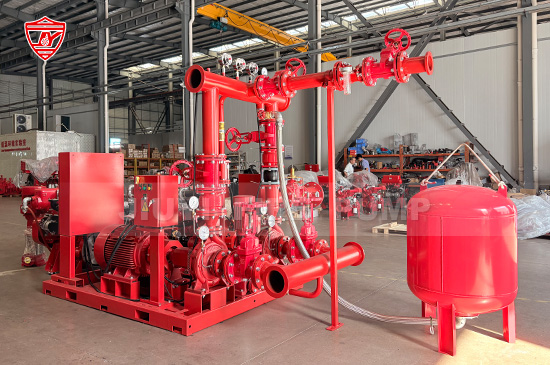
The required fire flow is one of the most important starting points in fire pump system design. It determines how much water the fire pump must deliver to support the fire protection system under the required operating conditions.
Fire flow requirements vary depending on the building's occupancy, size, fire hazards, sprinkler design, standpipe requirements, and local fire protection regulations.
For example, a residential building may have different fire protection demands from an industrial facility, warehouse, petrochemical plant, or commercial complex. Facilities storing combustible materials or handling flammable substances may require more specialized fire protection systems.
Engineers must identify the maximum expected water demand of the fire protection system, including the applicable combination of sprinkler systems, standpipes, fire hydrants, hose connections, and other firefighting equipment.
The design flow rate should be determined based on hydraulic calculations and the applicable fire protection standards, rather than simply selecting a pump based on the building's floor area.
An undersized fire pump may fail to provide sufficient water during an emergency. An oversized pump, on the other hand, may increase equipment costs, consume unnecessary energy during testing, and create pressure management challenges.
Selecting the appropriate fire pump flow rate is therefore essential to achieving both safety and system efficiency.
Flow rate determines how much water the fire pump delivers, while pressure determines whether that water can reach the required locations at the necessary performance level.
Fire pump system design must account for several pressure-related factors, including:
Elevation differences between the pump and the highest fire protection outlet
Friction losses in pipes, fittings, valves, and other components
Required residual pressure at sprinklers, hydrants, or hose connections
Pressure losses through backflow preventers, filters, and other equipment
Pressure requirements of specialized firefighting systems
For high-rise buildings, elevation is particularly important. Water must be delivered to upper floors while maintaining adequate pressure at the most hydraulically demanding points.
The pressure required to overcome elevation can be significant. As the vertical distance increases, the system requires additional pressure to overcome the effects of gravity.
Pipe friction also affects system performance. Long piping runs, smaller pipe diameters, excessive fittings, and high water velocities can increase pressure losses and reduce the available pressure at the discharge points.
Hydraulic calculations help engineers determine the total pressure required at the fire pump discharge under the design flow condition.
The selected fire pump must meet the required flow and pressure simultaneously. Engineers should evaluate the pump performance curve to confirm that the selected pump can operate within the required performance range.
A properly selected pump provides sufficient pressure at the required flow without creating excessive pressure under low-flow or no-flow conditions.
The available water supply directly affects fire pump system design. Even a correctly selected fire pump cannot perform as intended if the suction supply is insufficient.
Common fire pump water sources include:
Municipal water networks
Dedicated fire water storage tanks
Reservoirs
Lakes or rivers
Underground water storage systems
Engineers must evaluate the water source's capacity, reliability, pressure, water level variations, and availability during emergency conditions.
When a municipal water supply is used, its pressure and flow characteristics should be evaluated under relevant conditions. The supply may experience pressure fluctuations due to seasonal demand, infrastructure limitations, or simultaneous water consumption by other users.
For projects requiring dedicated fire water tanks, the tank capacity must be determined according to the required fire flow and duration of the fire protection system, considering applicable regulations and project requirements.
Suction piping design is equally important. The pump inlet should be configured to provide stable water flow while minimizing turbulence, air entrainment, and excessive suction losses.
Insufficient suction pressure may cause cavitation, vibration, noise, and damage to pump components. It may also reduce the pump's ability to deliver the required flow and pressure.
For installations involving low water levels, underground tanks, or water sources below the pump installation elevation, engineers may consider vertical turbine fire pumps or other suitable pump configurations.
A thorough assessment of water supply conditions is essential before finalizing the pump type, capacity, and installation arrangement.
The physical characteristics of a building significantly influence fire pump system design.
Building height, floor area, layout, occupancy, and fire protection zones all affect the hydraulic requirements and equipment configuration.
In low-rise buildings, a single fire pump may be sufficient to serve the entire fire protection system, depending on the calculated demand and pressure requirements.
In high-rise buildings, the pressure required to supply upper floors may create excessive pressure in lower-floor piping and equipment. Engineers must carefully evaluate pressure distribution throughout the system.
Depending on the project, the fire protection system may require:
Multiple pressure zones
Pressure-reducing valves
Intermediate fire pump systems
Separate pump sets for different building sections
Dedicated water supply arrangements for specific zones
The building layout also influences the location of the fire pump room, piping routes, equipment accessibility, and maintenance requirements.
For large industrial facilities, warehouses, ports, and petrochemical plants, the fire protection system may cover extensive areas with multiple hydrants, sprinkler systems, and specialized firefighting equipment.
Long piping distances can increase friction losses and affect the required fire pump pressure. Engineers should evaluate the most hydraulically demanding points to ensure that the system can deliver sufficient water under emergency conditions.
Fire pump system design should be coordinated with architectural, structural, mechanical, and electrical engineering teams early in the project to avoid costly modifications during installation.
Selecting the appropriate fire pump type is another major factor affecting system design.
Different pump configurations offer different advantages depending on the project's flow requirements, pressure requirements, water source, installation space, and operating conditions.
Common fire pump types include:
End Suction Fire Pumps
End suction pumps are widely used in commercial buildings, industrial facilities, and smaller fire protection systems. Their compact structure and relatively straightforward installation make them suitable for many applications.
Split Case Fire Pumps
Split case fire pumps are commonly selected for applications requiring higher flow rates and reliable operation. Their design allows convenient access to internal components during inspection and maintenance.
Vertical Turbine Fire Pumps
Vertical turbine pumps are suitable for applications where the water source is below the pump installation level, such as underground tanks, reservoirs, and other low-level water sources.
Inline Fire Pumps
Inline pumps offer a compact installation arrangement and may be suitable for projects with limited space, depending on the applicable standards and project requirements.
In addition to pump type, engineers must select the appropriate driver.
Electric motor-driven fire pumps are commonly used where a dependable electrical supply is available. They offer straightforward operation, relatively low routine maintenance requirements, and convenient integration with electrical control systems.
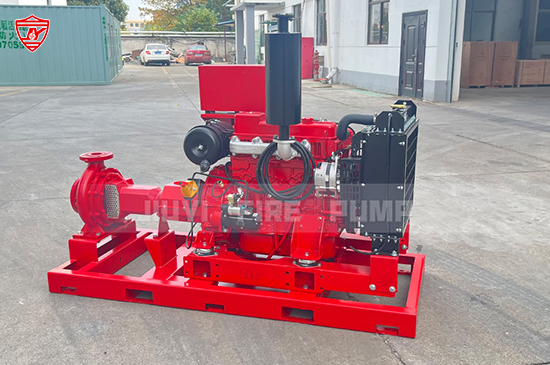
Diesel engine-driven fire pumps provide an alternative source of power when electrical availability or reliability is a concern. They are especially valuable in projects where backup power requirements, site conditions, or fire protection design considerations support diesel-driven equipment.
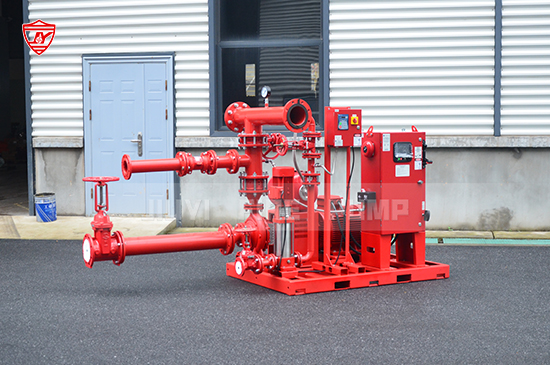
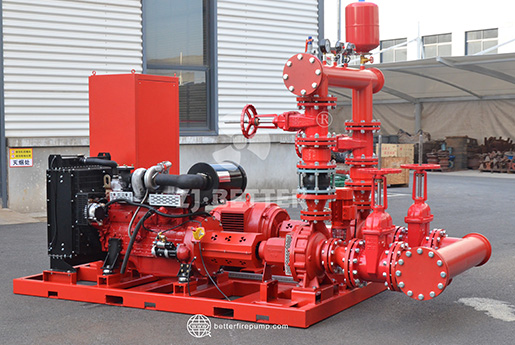
Some projects use both electric and diesel fire pumps to provide additional operational redundancy.
Jockey pumps are also commonly incorporated into fire pump systems. Their purpose is to maintain system pressure and compensate for small pressure losses without starting the main fire pump unnecessarily.
The complete pump configuration should be selected according to project requirements, applicable standards, water supply conditions, and operational considerations.
Fire pump system design must comply with the relevant fire protection standards, building codes, and local regulations.
Different countries and regions may adopt different requirements for fire pump performance, equipment installation, control systems, testing, inspection, and maintenance.
Standards such as NFPA 20 are widely referenced in fire pump installations, particularly in projects requiring specific fire pump equipment and installation practices.
However, the applicable requirements depend on the project location, authority having jurisdiction, insurance requirements, building regulations, and project specifications.
Engineers should confirm the required standards during the early design stage.
Certification requirements may also influence equipment selection. Certain projects specify UL Listed fire pumps, controllers, motors, or diesel engines, while others may accept equipment complying with different national or international standards.
Certification requirements can affect:
Pump model and configuration
Driver selection
Controller specifications
Factory testing and documentation
Equipment materials and components
Installation and commissioning procedures
For international projects, fire pump manufacturers should understand the technical requirements of the target market and provide equipment configurations that meet the relevant project specifications.
Early coordination between the designer, contractor, manufacturer, and approving authority can help prevent specification conflicts, approval delays, and unnecessary equipment changes.
The installation environment is often overlooked during the initial design stage, but it has a significant impact on fire pump system reliability.
Fire pump rooms should be designed to accommodate the equipment, piping, controllers, ventilation systems, drainage, lighting, and maintenance access.
Engineers should consider the following installation conditions:
Available equipment room dimensions
Ambient temperature and humidity
Ventilation and heat dissipation
Diesel engine exhaust requirements
Flooding and drainage risks
Equipment foundations and vibration control
Accessibility for inspection and replacement
Electrical safety and cable routing
Noise and environmental restrictions
Diesel fire pump installations require particular attention to ventilation, engine cooling, fuel storage, exhaust discharge, and battery maintenance.
In environments with extreme temperatures, high humidity, dust, corrosive atmospheres, or outdoor exposure, additional protective measures may be necessary.
For projects with limited installation space or challenging site conditions, containerized fire pump systems may offer a practical alternative. These systems integrate fire pumps, drivers, controllers, piping, ventilation, and other components into a prefabricated enclosure.
Containerized systems can simplify transportation, installation, and equipment coordination, particularly for industrial facilities, remote projects, ports, and infrastructure developments.
Maintenance accessibility should also be considered during system design. Pump and driver components must be accessible for routine inspection, testing, servicing, and eventual replacement.
A well-designed fire pump room supports reliable operation throughout the equipment's service life and helps reduce maintenance difficulties.
A successful fire pump system design requires coordination between hydraulic calculations, equipment selection, installation planning, and regulatory compliance.
Before finalizing a fire pump specification, engineers and project contractors should verify the following key requirements:
Confirm the required fire flow and pressure.
Evaluate the available water source and suction conditions.
Calculate elevation and piping friction losses.
Determine the building's fire protection zones and hydraulic demand.
Select the appropriate pump type, driver, and control system.
Verify compliance with applicable fire protection standards.
Ensure sufficient installation space, ventilation, and maintenance access.
Review the pump performance curve and operating conditions.
Confirm testing, commissioning, and documentation requirements.
These steps help ensure that the selected fire pump system meets the project's actual requirements while supporting reliable operation, easier maintenance, and long-term performance.
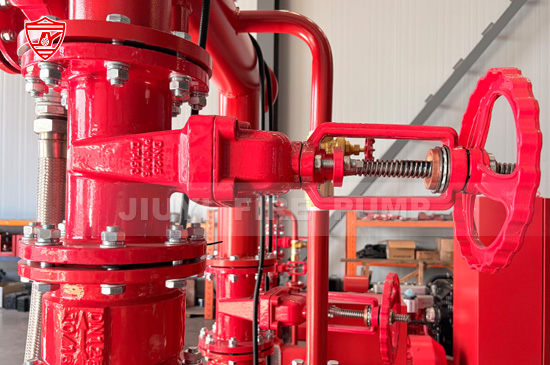
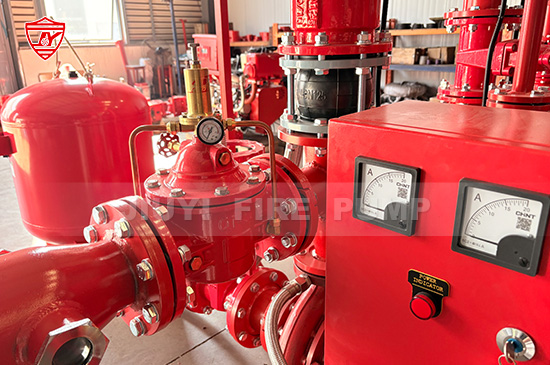
Fire pump system design is a comprehensive engineering process involving multiple interconnected factors. Flow rate, pressure, water supply, building characteristics, pump configuration, regulatory requirements, and installation conditions all influence the final system design.
By carefully evaluating these seven factors during the planning stage, engineers and contractors can avoid common design problems, improve equipment selection, and develop fire protection systems that meet project requirements.
As a fire pump manufacturer, BETTER Technology Group provides fire pump solutions for commercial buildings, industrial facilities, warehouses, ports, petrochemical projects, and other fire protection applications. With electric fire pumps, diesel fire pumps, jockey pumps, vertical turbine pumps, split case pumps, and customized fire pump packages, the right configuration can be developed to meet different project flow, pressure, installation, and technical requirements.
Proper design and equipment selection are the foundation of a reliable fire protection system.