Fire pump systems are the backbone of any active fire protection system. When a fire occurs, there is no second chance for failure. Unlike many mechanical systems that allow downtime, a fire pump must perform immediately and reliably under the most extreme conditions. This is why fire pump system redundancy is not optional in many applications—it is a fundamental requirement for safety, compliance, and risk control.
Fire pump system redundancy refers to the design practice of providing backup pumping capacity to ensure that the fire protection water supply remains available even if one component fails. In modern fire safety engineering, redundancy is a critical design philosophy that aims to eliminate single points of failure.
This article explains why fire pump system redundancy is required, how it improves system reliability, and why it is strongly emphasized by fire codes, insurers, and authorities having jurisdiction.
Fire pumps are responsible for delivering sufficient water flow and pressure to fire suppression systems such as sprinklers, standpipes, monitors, and hydrants. In many facilities, especially high-rise buildings, industrial plants, warehouses, data centers, and power facilities, municipal water pressure alone is insufficient.
A fire pump must:
Start automatically
Deliver rated flow and pressure
Operate continuously for extended durations
Function during power outages or emergency conditions
If a fire pump fails during a fire event, the entire fire protection system may become ineffective. This risk is unacceptable in life safety systems, which is why redundancy is built into professional fire pump system design.
Fire pump system redundancy means designing the system so that failure of a single pump, driver, controller, or power source does not disable fire protection.
Redundancy can be achieved through:
Multiple fire pumps
Different pump drivers
Independent power supplies
Separate controllers and control circuits
Parallel or standby pump arrangements
The goal is simple: ensure that water is always available when needed, regardless of mechanical, electrical, or operational failures.
A single-point failure is any component whose failure causes the entire system to stop functioning. Fire protection standards aim to eliminate these weak points.
Examples of single-point failures include:
One electric fire pump with no backup power
One diesel fire pump with no standby unit
A single controller serving multiple pumps
Shared suction or discharge piping without isolation capability
Fire pump redundancy ensures that if one pump fails to start, loses power, or requires maintenance, another pump can immediately take over without compromising system performance.
Fire pump system redundancy is not just a best practice; it is often a code-driven requirement.
Major fire protection standards emphasize redundancy, including:
NFPA 20 requirements for reliable fire pump installations
Building codes for high-rise and critical infrastructure
Insurance and loss prevention guidelines
Local authority requirements for mission-critical facilities
While codes may not mandate redundancy for every project, they strongly require it in:
High-rise buildings
Large-area sprinkler systems
Industrial and petrochemical facilities
Airports, hospitals, and data centers
Facilities with high fire risk or high occupant load
Authorities having jurisdiction often require redundant fire pumps when the consequences of system failure are severe.
One of the most common reasons for fire pump redundancy is power supply reliability.
Electric fire pumps depend on utility power or emergency generators. However, fires frequently cause power outages due to:
Damaged electrical infrastructure
Tripped breakers
Fire-damaged substations
Utility shutdowns during emergencies
To mitigate this risk, redundant designs may include:
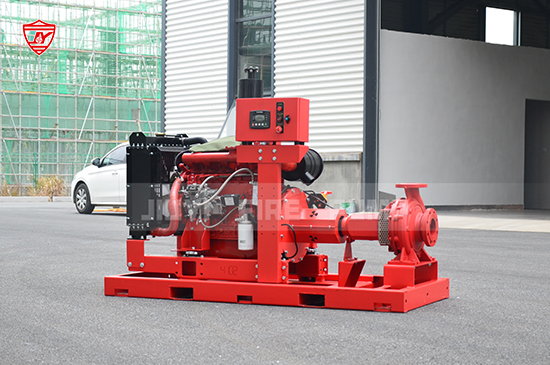
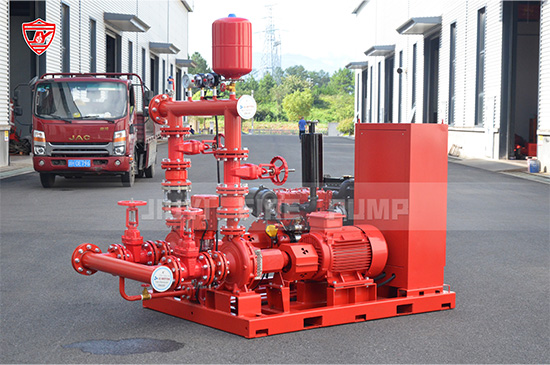
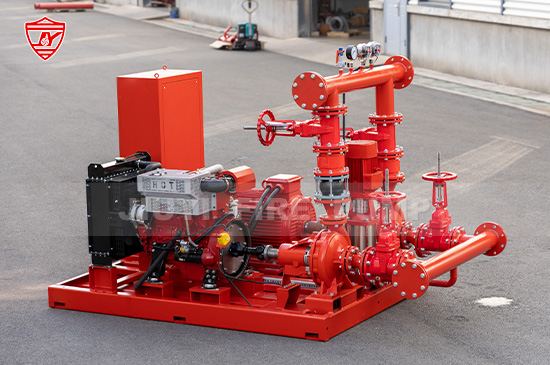
An electric fire pump combined with a diesel fire pump
Multiple electric pumps fed by independent power sources
Diesel fire pumps with separate fuel systems
Using different types of drivers significantly improves system reliability by reducing dependency on a single energy source.
No mechanical system is immune to failure. Fire pumps, like all rotating equipment, are subject to:
Bearing wear
Seal failure
Coupling misalignment
Lubrication issues
Overheating
Even with proper maintenance, unexpected mechanical failure can occur. Fire pump redundancy ensures that mechanical issues do not leave a facility unprotected during a fire event.
A standby fire pump can automatically start if the primary pump fails to meet pressure demand, ensuring continuous operation.
Fire pump systems require regular testing, inspection, and maintenance to remain compliant and reliable.
Without redundancy:
Maintenance requires system shutdown
Fire protection coverage is temporarily compromised
Permits or fire watches may be required
With redundant fire pumps:
One pump can remain in service while another is maintained
Fire protection remains fully operational
Facility downtime and operational risk are reduced
This is particularly important for facilities that operate continuously and cannot tolerate fire protection interruptions.
System availability refers to the probability that a system will operate successfully when required.
Fire pump redundancy dramatically increases availability by:
Providing backup capacity
Reducing downtime risk
Allowing automatic failover
Enhancing reliability during emergencies
High-availability fire protection systems are essential in environments where fire consequences include loss of life, major economic damage, or environmental impact.
In some applications, redundancy is not only about failure protection but also about meeting variable demand.
Examples include:
Large sprinkler zones activating simultaneously
Firefighting hose streams operating alongside sprinklers
Expansion of facility hazard classification over time
Multiple fire pumps operating in parallel can:
Share flow demand
Maintain stable pressure
Adapt to changing system requirements
Redundant designs offer flexibility for future system expansion without complete replacement.
Insurance providers and risk engineers often require fire pump system redundancy as a condition for coverage or reduced premiums.
From a risk management perspective:
Redundancy reduces loss probability
Improves fire response reliability
Demonstrates commitment to safety
Lowers long-term risk exposure
Facilities with redundant fire protection systems are viewed as lower risk and better prepared for emergency scenarios.
Certain facilities have zero tolerance for fire protection failure.
These include:
Data centers
Power generation plants
Oil and gas facilities
Chemical manufacturing plants
Airports and transportation hubs
Hospitals and healthcare facilities
In such environments, fire pump redundancy is not optional—it is essential. Failure could result in catastrophic operational, financial, or life safety consequences.
Typical redundant fire pump arrangements include:
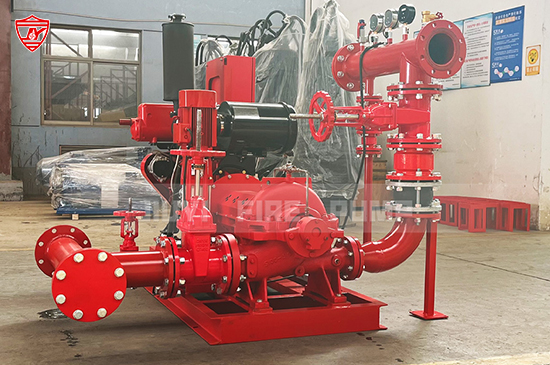
One duty pump and one standby pump
Electric pump with diesel pump backup
Multiple pumps operating in parallel
Separate controllers and power feeds
Independent suction and discharge isolation valves
The specific configuration depends on:
System demand
Code requirements
Facility risk profile
Authority approval
Engineering design strategy
A well-designed redundant fire pump system balances reliability, cost, and compliance.
As a fire pump manufacturer, understanding redundancy requirements is critical. Equipment must be designed to:
Operate reliably under emergency conditions
Integrate seamlessly into redundant systems
Meet applicable fire standards
Support long-term maintenance and testing
Manufacturers play a key role in supporting engineers and contractors by providing:
Reliable fire pump packages
Compatible controllers and drivers
Flexible configurations for redundancy
Proven performance and compliance

Fire pump system redundancy is required because fire protection systems cannot afford to fail. Redundancy eliminates single-point failures, improves reliability, ensures compliance with fire codes, and protects lives and assets.
Whether driven by code, insurance, risk management, or operational necessity, redundant fire pump systems provide the confidence that water will be available when it matters most. In fire safety engineering, redundancy is not excess—it is essential protection against the unexpected.
For facilities where safety, compliance, and reliability are non-negotiable, fire pump system redundancy is a fundamental design requirement, not an optional upgrade.