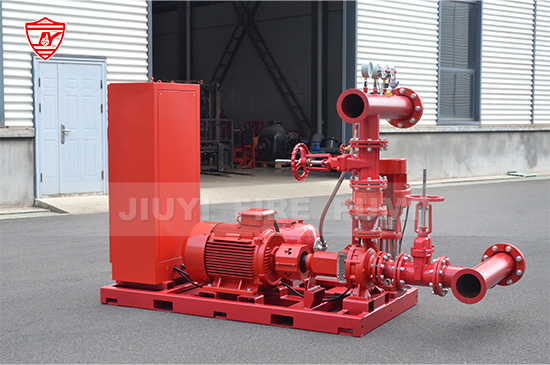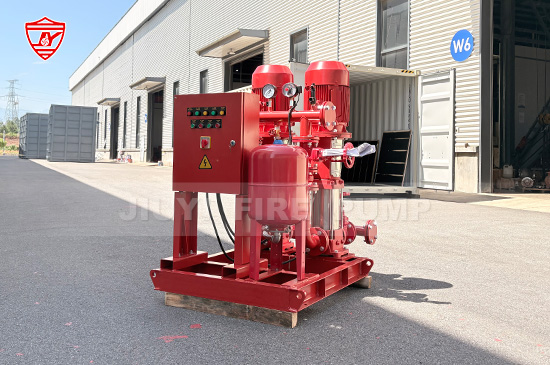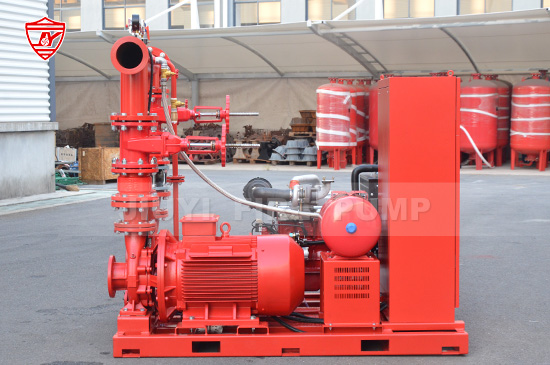
Fire protection systems are designed with one primary objective: ensuring that water is available at the required pressure and flow whenever a fire emergency occurs. Among all components within a fire protection system, the fire pump plays a critical role in delivering sufficient water to sprinklers, standpipes, hydrants, and other firefighting equipment.
However, what happens if the fire pump fails during an emergency? This question has led engineers, building owners, and fire protection professionals to focus increasingly on fire pump system redundancy. Redundancy is a key strategy used to improve system reliability and reduce the risk of failure when lives and property are at stake.
In this article, we will explain what fire pump system redundancy is, why it is important, how it is implemented, and the factors that should be considered when designing a redundant fire pump system.
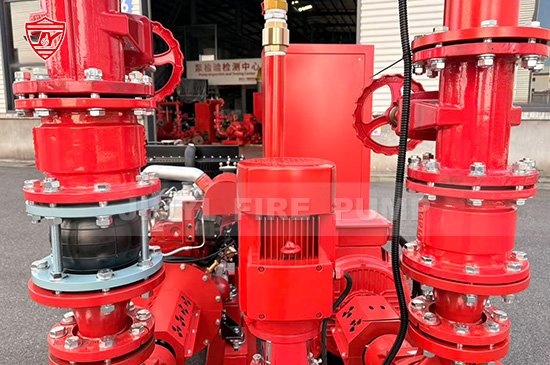
Fire pump system redundancy refers to the incorporation of backup equipment, components, or alternative operating methods within a fire pump system to ensure continued operation if the primary system fails.
Simply put, redundancy means having a secondary solution ready to perform the same function when the primary solution becomes unavailable.
In fire protection applications, redundancy may include:
The objective is to eliminate single points of failure that could compromise fire protection during an emergency.
A fire emergency is not the time to discover that a critical component has failed. Fire pump redundancy provides an additional layer of protection that helps maintain system performance under unexpected circumstances.
The primary purpose of any fire protection system is to protect occupants. If a fire pump fails during a fire event, sprinkler systems and standpipe systems may not receive sufficient water pressure.
A redundant fire pump arrangement significantly reduces this risk by ensuring that another pump can continue supplying water.
Industrial facilities, data centers, warehouses, manufacturing plants, airports, hospitals, and commercial buildings often contain assets worth millions of dollars.
The financial consequences of inadequate fire protection can be devastating. Redundant fire pump systems help protect these investments by maintaining reliable fire suppression capabilities.
Every mechanical and electrical system has the potential to fail. Equipment aging, maintenance issues, power interruptions, and unexpected mechanical breakdowns can affect fire pump performance.
Redundancy improves overall system reliability by ensuring that one failure does not disable the entire fire protection system.
Certain high-risk facilities may require redundant fire protection systems based on local regulations, insurance company recommendations, or project specifications.
Insurance providers often favor facilities that incorporate redundancy because it reduces operational risks and potential losses.
To understand the value of redundancy, it is important to recognize the factors that can lead to fire pump failure.
Electric fire pumps depend on a stable power source. Utility power interruptions, electrical faults, or transformer failures can render an electric fire pump inoperable.
Pump components such as bearings, shafts, seals, couplings, and impellers can fail due to wear, improper maintenance, or manufacturing defects.
Diesel-driven fire pumps may experience engine-related issues including fuel contamination, battery failure, cooling system problems, or insufficient maintenance.
The fire pump controller serves as the operational brain of the system. If the controller fails, the pump may not start automatically during a fire event.
Improper maintenance procedures, incorrect system settings, and operational mistakes can compromise fire pump performance.
A well-designed redundant system helps minimize the impact of these potential failures.
Fire pump redundancy can be achieved through several different approaches depending on project requirements, budget, and risk level.
One of the most common forms of redundancy involves installing two fire pumps.
In this arrangement:
If the primary pump fails to start or cannot maintain required performance, the backup pump automatically takes over.
This configuration is often used in mission-critical facilities where uninterrupted fire protection is essential.
Another popular redundancy strategy combines an electric fire pump with a diesel fire pump.
This arrangement offers several advantages:
If an electrical outage occurs during a fire emergency, the diesel fire pump can continue supplying water.
This configuration is widely used in hospitals, airports, data centers, and industrial facilities.
Some facilities enhance redundancy by providing alternative power supplies for electric fire pumps.
Examples include:
These solutions reduce the likelihood of total power loss affecting fire pump operation.
Fire pump controllers are critical components that initiate and manage pump operation.
A redundant controller arrangement ensures that if the primary controller fails, a secondary controller can continue operating the fire pump.
This strategy is commonly applied in high-reliability facilities.
Some systems utilize multiple fire pumps operating in parallel.
Instead of relying on a single large fire pump, several smaller pumps share the required flow demand.
Benefits include:
If one pump becomes unavailable, the remaining pumps may still provide partial or full system capacity.
Although redundancy can benefit nearly any fire protection system, some facilities have particularly demanding reliability requirements.
Modern data centers support critical digital infrastructure. Even a small fire incident can result in significant operational disruptions.
Redundant fire pump systems help ensure continuous fire protection for servers, networking equipment, and power systems.
Healthcare facilities must maintain uninterrupted operations during emergencies.
Patients, medical equipment, and critical care units depend on reliable fire protection systems, making redundancy highly desirable.
Airports involve large passenger populations and extensive infrastructure.
Fire pump redundancy helps maintain compliance with stringent fire safety requirements while protecting passengers and assets.
Industrial facilities often contain flammable materials, hazardous chemicals, and expensive production equipment.
Redundant fire pumps reduce operational risks and improve facility resilience.
Tall buildings frequently require fire pumps to deliver adequate pressure to upper floors.
A backup fire pump provides additional assurance that water delivery will remain available during emergencies.
Implementing redundancy involves more than simply adding another pump.
Several important design factors must be considered.
The backup pump should be capable of meeting the required system demand.
Engineers must evaluate:
Additional pumps, controllers, fuel tanks, and associated equipment require sufficient installation space.
The fire pump room should be designed to accommodate all redundant equipment while maintaining accessibility for maintenance and inspections.
True redundancy requires minimizing shared vulnerabilities.
For example:
If multiple redundant components rely on the same supporting system, a single failure may still disable the entire arrangement.
Redundant systems should allow maintenance activities without compromising fire protection.
A properly designed backup pump enables one pump to be serviced while the other remains operational.
Fire pump systems should be designed in accordance with applicable standards and local regulations.
Relevant standards often include:
Compliance ensures that redundancy measures achieve the intended level of protection.
While redundancy offers significant benefits, it also introduces certain challenges.
Additional pumps, controllers, power supplies, and installation work increase project costs.
However, many facility owners consider the investment worthwhile due to the enhanced protection provided.
More equipment means more inspection, testing, and maintenance activities.
Regular testing is necessary to ensure that backup systems will function when needed.
Facilities with limited available space may find it challenging to accommodate redundant fire protection equipment.
Early planning during project development can help address this issue.
A redundant system is only effective if all components remain operational.
Recommended maintenance practices include:
Routine inspections help identify issues before they become critical failures.
As building infrastructure becomes more complex and operational continuity becomes increasingly important, demand for redundant fire protection systems continues to grow.
Modern technologies are enhancing redundancy through:
These innovations help facility managers identify potential failures earlier and maintain higher levels of system reliability.
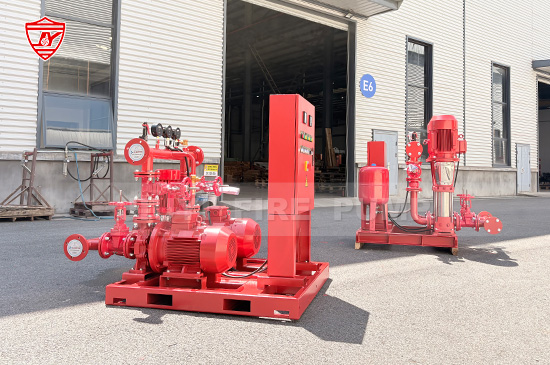
Fire pump system redundancy is a critical strategy for improving fire protection reliability and reducing the risk of system failure during emergencies. By incorporating backup pumps, alternative power sources, redundant controllers, and other reliability-enhancing measures, facilities can ensure continuous water supply when it is needed most.
Whether protecting a hospital, data center, industrial plant, airport, or high-rise building, a well-designed redundant fire pump system provides an additional layer of security that can safeguard lives, property, and business operations.
As fire safety standards continue to evolve and facility owners demand greater operational resilience, fire pump redundancy will remain an essential consideration in modern fire protection system design.