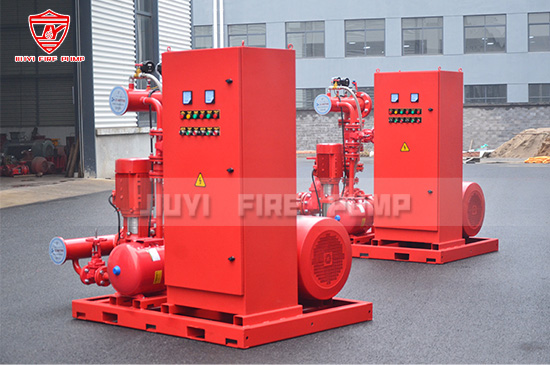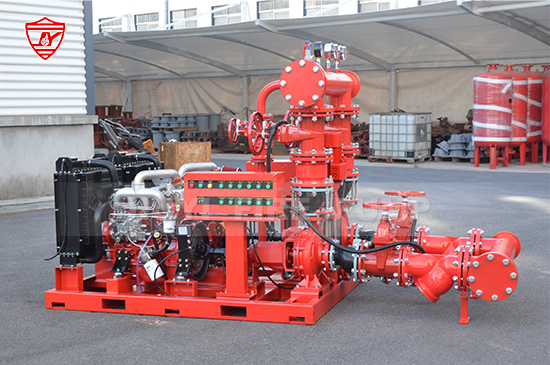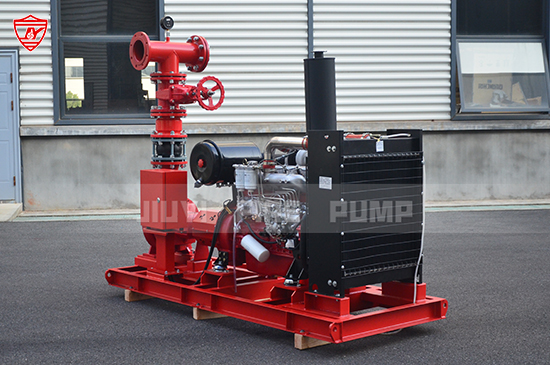
A fire pump is one of the most important active components in a fire protection system. When a fire occurs, the pump must deliver sufficient water flow and pressure to the sprinkler system, hydrants, standpipes, or other firefighting equipment. A pump that appears to operate normally may still fail to provide the required hydraulic performance under actual operating conditions.
This is why fire pump performance verification is essential.
Fire pump performance verification is the process of checking whether a fire pump can deliver the required flow, pressure, and operating performance specified by the project design and applicable standards. It helps confirm that the pump, driver, controller, suction supply, piping, valves, and related components are working together as intended.
For building owners, contractors, fire protection engineers, system integrators, and facility managers, understanding how fire pump performance is verified can help prevent unexpected failures and improve the reliability of the entire fire protection system.
.jpg)
Fire pump performance verification is a systematic evaluation of a fire pump's actual operating performance against its expected or rated performance.
The verification process normally focuses on key hydraulic parameters such as:
The measured results are compared with the pump's approved performance curve, rated specifications, project requirements, and applicable testing criteria.
The purpose is not simply to determine whether the pump starts. A pump can start successfully and still fail to provide adequate flow or pressure. Performance verification therefore goes further by evaluating how the pump performs at different operating points.
For example, a fire pump may be tested at churn or no-flow condition, rated flow, and an overload or higher-flow condition. These operating points provide a more complete picture of the pump's hydraulic performance.
Fire protection systems are designed to provide reliable water delivery when it is most needed. If the fire pump cannot meet the required hydraulic demand, sprinklers and other firefighting devices may not receive sufficient water.
Performance verification provides several important benefits.
Every fire pump has defined performance characteristics. Verification confirms that the installed pump can achieve the expected pressure and flow under actual operating conditions.
This is particularly important for large industrial facilities, warehouses, high-rise buildings, commercial properties, and other applications where water demand can be significant.
Poor performance is not always caused by the pump itself.
Problems may result from:
Testing helps identify these problems before they become critical during an emergency.
A properly documented performance test provides a baseline for future maintenance and inspections.
Future test results can be compared with the original commissioning data. If flow or pressure gradually decreases, this may indicate developing problems such as wear, corrosion, blockage, mechanical damage, or changes in the water supply.
A fire pump is only one part of the overall fire protection system, but its performance can directly affect system capability.
Regular verification helps ensure that the pump remains ready to provide the required water supply when a fire protection system demands it.
The exact testing procedure depends on the pump type, application, project specifications, and applicable requirements. However, several parameters are commonly evaluated.
Flow rate is one of the most important measurements.
It indicates how much water the pump can deliver at a particular operating condition. Flow may be measured using a calibrated flow meter or an approved test arrangement.
The measured flow is then compared with the required system demand and pump performance curve.
Discharge pressure indicates the pressure generated by the pump at the discharge side.
A pump may produce acceptable pressure at low flow but experience a significant reduction in pressure as flow increases. Testing multiple operating points helps reveal this behavior.
Suction pressure provides information about the water supply available to the pump.
Abnormally low suction pressure can affect pump performance and may indicate problems with the water source, suction piping, valves, strainers, or other components.
Pump performance is generally evaluated by considering the difference between discharge pressure and suction pressure, with appropriate consideration of measurement conditions.
This provides a more meaningful indication of the pressure being developed by the pump than looking at discharge pressure alone.
For many fire pumps, operating speed is an important factor in achieving the intended hydraulic performance.
An incorrect rotational speed can cause the actual pump performance to differ from the expected performance curve.
The driver must also be capable of supplying the required power.
Depending on the system, the driver may be an electric motor or diesel engine. Performance verification should therefore consider the condition and operation of the complete pump assembly rather than viewing the pump as an isolated component.
A typical performance verification process begins with preparation.
Before testing, technicians should confirm that the pump, driver, controller, valves, gauges, test equipment, and water supply are ready for operation.
The testing process generally includes the following stages.
The pump nameplate, approved data, performance curve, rated flow, rated pressure, driver information, and project requirements should be reviewed before testing.
This provides the reference values against which the measured results can be evaluated.
The pump and associated equipment should be visually inspected.
Important items include suction and discharge piping, valves, pressure gauges, controller connections, electrical or diesel systems, coupling, alignment, and general installation condition.
The pump is started using the appropriate operating procedure.
During startup, technicians observe whether the pump starts correctly and reaches stable operating conditions.
For diesel-driven fire pumps, additional attention may be given to engine speed, fuel supply, cooling, exhaust, battery condition, and engine operating parameters.
The pump may first be evaluated under a no-flow or churn condition.
This provides information about the pressure the pump develops when little or no water is being discharged through the system.
The system is then adjusted to achieve the specified rated flow.
Flow and pressure measurements are recorded after the pump reaches stable operation.
The result is compared with the expected pump performance.
Where required, testing at a higher flow point can provide additional information about the pump's operating characteristics.
This helps demonstrate whether the pump continues to provide appropriate performance as water demand increases.
The measured values are compared with the pump curve and applicable project requirements.
All important readings should be recorded accurately, including flow, suction pressure, discharge pressure, pump speed, and relevant driver information.
The final test record provides valuable evidence of the pump's condition at the time of verification.
A fire pump performance curve is a graphical representation of how a pump is expected to perform at different flow rates.
Typically, flow is shown on the horizontal axis and pressure or head is shown on the vertical axis.
As flow increases, pump pressure generally decreases. The curve therefore helps engineers and technicians understand the relationship between flow and pressure.
During performance verification, actual test points can be compared with the approved pump curve.
If the measured performance differs significantly from the expected curve, further investigation may be necessary.
Possible causes include pump wear, incorrect rotation, insufficient water supply, installation problems, measurement errors, or other system conditions.
When a fire pump fails to meet expected performance, the pump itself is not necessarily defective.
Several factors should be investigated.
The available water supply may not provide sufficient suction pressure or volume.
Changes in municipal water supply, storage tank level, suction piping, or other upstream conditions can affect pump performance.
Blocked strainers, incorrectly positioned valves, undersized piping, excessive elbows, or poor suction arrangements can increase hydraulic losses.
For electric motor-driven pumps, incorrect motor rotation can significantly affect pump performance.
Rotation should be verified during commissioning and after relevant electrical work.
Impeller wear, casing damage, shaft problems, bearing issues, or other mechanical conditions can reduce hydraulic performance.
Incorrectly calibrated gauges, flow meters, or test equipment can produce misleading results.
For this reason, reliable testing depends not only on operating the pump correctly but also on using suitable measurement equipment.
Performance verification is particularly important during several stages of the fire pump's lifecycle.
Before shipment, fire pump manufacturers may conduct performance testing to verify hydraulic characteristics and product quality.
Factory testing provides an important quality-control step before the equipment reaches the project site.
After installation, the fire pump should be tested to confirm that the complete installed system performs as expected.
This is especially important because site conditions can differ from factory test conditions.
Fire pumps should also be tested periodically according to the applicable requirements and the facility's fire protection maintenance program.
Regular testing helps identify changes in performance before they become serious problems.
Performance should also be considered after significant repairs, replacement of major components, changes to the water supply, or modifications to the fire protection system.
Reliable verification begins with reliable manufacturing.
A professional fire pump manufacturer should control performance throughout the entire production process, from hydraulic design and casting to precision machining, assembly, testing, and final inspection.
Accurate hydraulic models help establish predictable pump performance. Precision manufacturing ensures that critical components remain within the required tolerances. Proper assembly and alignment help reduce mechanical losses and operational problems.
Most importantly, comprehensive factory testing provides manufacturers with an opportunity to verify actual pump performance before delivery.
For customers, this means that performance verification is not simply a site activity. It should be part of a broader quality-control process that begins at the manufacturing stage and continues through installation, commissioning, and ongoing maintenance.
The ultimate purpose of performance verification is reliability.
A fire pump may remain unused for long periods, but when a fire occurs, it may be required to operate immediately and deliver a large volume of water under demanding conditions.
This makes preventive verification extremely important.
A documented performance history can help facility managers identify gradual changes in pump behavior. Comparing current results with previous test data can reveal trends that may not be obvious during a simple visual inspection.
For example, a gradual reduction in pressure at a known flow rate may indicate developing hydraulic or mechanical problems. Identifying these changes early provides an opportunity to investigate and correct the problem before an emergency occurs.
.jpg)
Fire pump performance verification is a critical part of maintaining a reliable fire protection system. It confirms whether a fire pump can provide the required flow and pressure and helps identify installation, hydraulic, mechanical, or operational problems.
Effective verification should consider the complete pump system, including the water supply, pump, driver, controller, piping, valves, and measurement equipment.
For fire pump manufacturers, quality performance verification begins long before the equipment reaches the project site. Careful hydraulic design, precision manufacturing, professional assembly, factory testing, and documented performance data all contribute to dependable fire pump operation.
For building owners, contractors, engineers, and fire protection professionals, understanding fire pump performance verification helps ensure that the equipment installed today will be ready to perform when it matters most.