In fire protection systems, a fire pump package set plays a critical role in ensuring that water pressure and flow are sufficient to combat fire emergencies effectively. Whether installed in a high-rise building, industrial complex, or warehouse, the reliability of the fire pump system directly determines how efficiently a fire suppression system operates.
This article explains what a fire pump package set is, how it works, its key components, types, standards, installation considerations, and why choosing a certified fire pump manufacturer matters.
 What Is a Fire Pump Package Set?
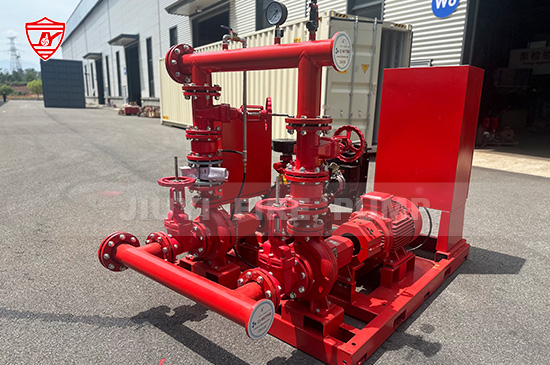
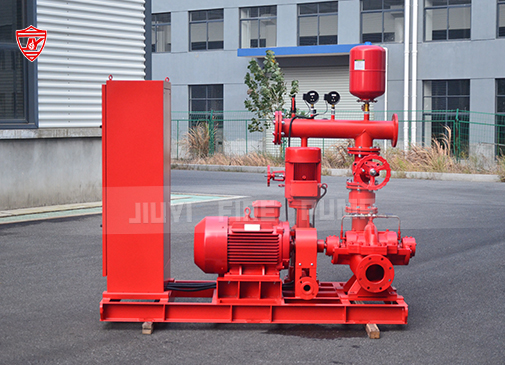
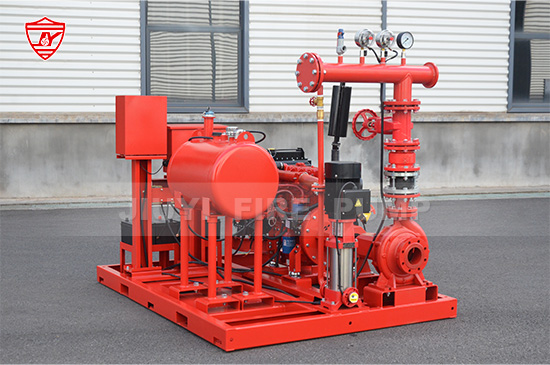
A fire pump package set is a fully assembled and tested unit designed to supply high-pressure water for fire protection systems, such as sprinklers, hydrants, and hose reels. It typically includes a main fire pump, driver (electric motor or diesel engine), controller, jockey pump, and related accessories — all mounted on a common base or skid.
In other words, it’s a complete, ready-to-install system built to meet NFPA 20 standards (Standard for the Installation of Stationary Pumps for Fire Protection).
Fire pump package sets are used in buildings where the available water pressure from the public supply or storage tank is insufficient to meet the fire system’s demand.
During a fire, rapid response is critical. Sprinklers and hydrants need a consistent, high-pressure water source to suppress the fire before it spreads. In many cases, municipal water pressure drops during peak usage or is not strong enough for upper floors in tall buildings.
A fire pump package set ensures:
Adequate pressure to reach all parts of the system
Continuous water supply during fire emergencies
Compliance with safety standards and insurance requirements
Reliable automatic operation, reducing human intervention
Without a proper fire pump system, even a well-designed sprinkler network may fail to perform effectively.
A standard fire pump package set includes several integrated components that work together to deliver water under pressure. Let’s look at each part in detail:
This is the heart of the system. It can be an end suction pump, split case pump, or vertical turbine pump, depending on the installation and water source. Its main task is to increase water pressure and flow.
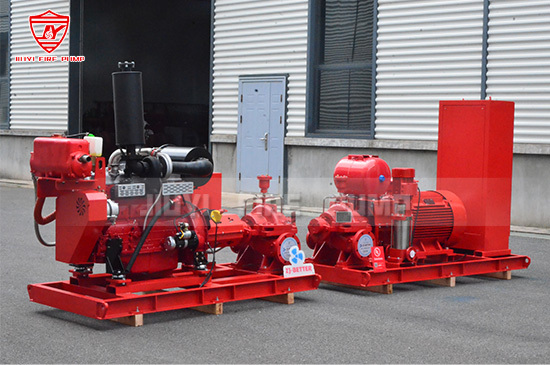
The driver powers the main pump. There are typically two options:
Electric Motor – Suitable for installations with reliable power supply.
Diesel Engine – Ideal for locations where power may fail or be unstable.
Some systems also combine both for redundancy.
The fire pump controller automatically starts the pump during a pressure drop caused by a fire. It manages signals from pressure switches and ensures compliance with NFPA 20.
A jockey pump maintains system pressure during normal conditions by compensating for small leaks or pressure drops, preventing unnecessary starts of the main fire pump.
The entire assembly is mounted on a common steel base with pre-installed suction and discharge piping, valves, gauges, and fittings — making it compact and easy to install.
These may include check valves, gate valves, pressure gauges, flexible joints, and flow meters for system monitoring and testing.
Fire pump package sets can be classified based on pump type and driver type:
End Suction Fire Pump Set – Compact and economical; often used in small to medium buildings.
Horizontal Split Case Fire Pump Set – High efficiency and easy maintenance; preferred for large-scale fire systems.
Vertical Turbine Fire Pump Set – Used when the water source is underground or below pump level, such as in tanks or wells.
Electric Fire Pump Package – Clean, quiet, and easy to maintain; suitable for stable power environments.
Diesel Engine Fire Pump Package – Operates independently of electrical supply; perfect for emergency backup or remote areas.
Combined Electric & Diesel Fire Pump Set – Dual configuration for maximum reliability and redundancy.
The fire pump package set is connected to a water supply (tank or underground reservoir) and the fire protection network. When a sprinkler or hydrant opens due to a fire, system pressure drops.
This pressure change triggers the controller, which starts the jockey pump first. If the pressure drop continues, the main fire pump (electric or diesel) automatically starts and boosts the water pressure to the required level.
Once the fire is extinguished and the system pressure is restored, the pump automatically stops, ready for the next emergency.
This automatic sequence ensures that the fire system operates immediately, reliably, and without manual intervention.
For performance and safety, fire pump package sets must comply with recognized international standards such as:
NFPA 20 (USA) – The primary standard for fire pump installation and performance.
UL Listed / FM Approved – Ensures the pump and components meet rigorous fire safety standards.
ISO 9001 Certification – Indicates a quality management system for manufacturing.
Choosing a UL Listed fire pump package is essential for international projects or where insurance approval is required.
Proper installation and maintenance are key to ensuring the reliability of a fire pump system.
The pump should be installed in a dedicated fire pump room with easy access and proper ventilation.
Ensure alignment between pump and driver to prevent vibration.
Install suction and discharge piping according to NFPA 20 recommendations.
Electrical wiring and control panels must follow local fire safety regulations.
Conduct weekly test runs to ensure automatic operation.
Regularly check oil levels, battery charge (for diesel units), and pump bearings.
Inspect pressure gauges and controllers periodically.
Replace worn-out seals and couplings promptly.
Preventive maintenance ensures the fire pump system performs optimally when needed most.
Fire pump package sets are widely used in various industries and facilities, including:
High-rise residential and commercial buildings
Industrial plants and factories
Warehouses and logistics centers
Power stations and refineries
Airports and seaports
Hospitals and educational institutions
Each application has unique requirements, but the goal remains the same — reliable water supply during fire emergencies.
Compared to site-built systems, factory-assembled fire pump packages offer several benefits:
Ease of Installation: Delivered as a complete unit, reducing on-site labor and time.
Quality Assurance: Factory-tested under controlled conditions before delivery.
Compact Design: Optimized layout saves space in pump rooms.
Reduced Risk of Errors: All components pre-matched and pre-wired.
Compliance Guaranteed: Designed according to UL, FM, or NFPA standards.
For contractors, consultants, and end users, choosing a complete fire pump package simplifies the project and ensures consistent performance.
Selecting the right fire pump manufacturer is crucial for system reliability. Look for:
UL/FM certifications for international compliance
Experience in fire protection systems
After-sales service and spare parts availability
Customized design capability for different project needs
Proven quality control and testing before shipment
A trusted manufacturer not only provides high-quality equipment but also technical support for design, installation, and maintenance.
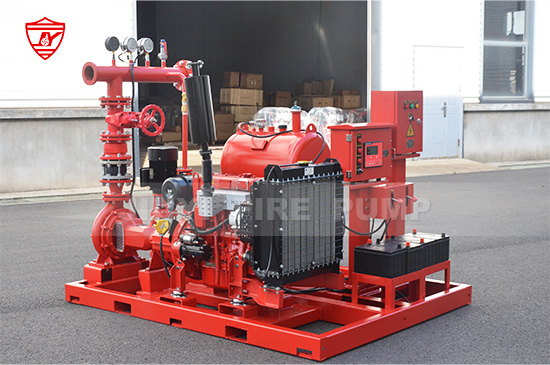
A fire pump package set is the backbone of any fire protection system, ensuring the necessary water pressure and flow to control or extinguish fires effectively. Composed of a main pump, driver, controller, and jockey pump, it delivers automatic and reliable performance during emergencies.
By selecting a certified and factory-tested fire pump package, you ensure compliance with NFPA 20 standards, simplify installation, and guarantee safety in critical moments. Whether for commercial, industrial, or residential use, a well-designed fire pump package set provides peace of mind — knowing your fire protection system will perform when it truly matters.